The Havana issue
Centro Habana, Havana: the city at street volume
Between Habana Vieja and Vedado, Centro Habana is Havana without varnish: rumba alleys, Malecón sunsets, Chinatown lunches and the kind of street life that makes the whole capital feel close enough to touch.
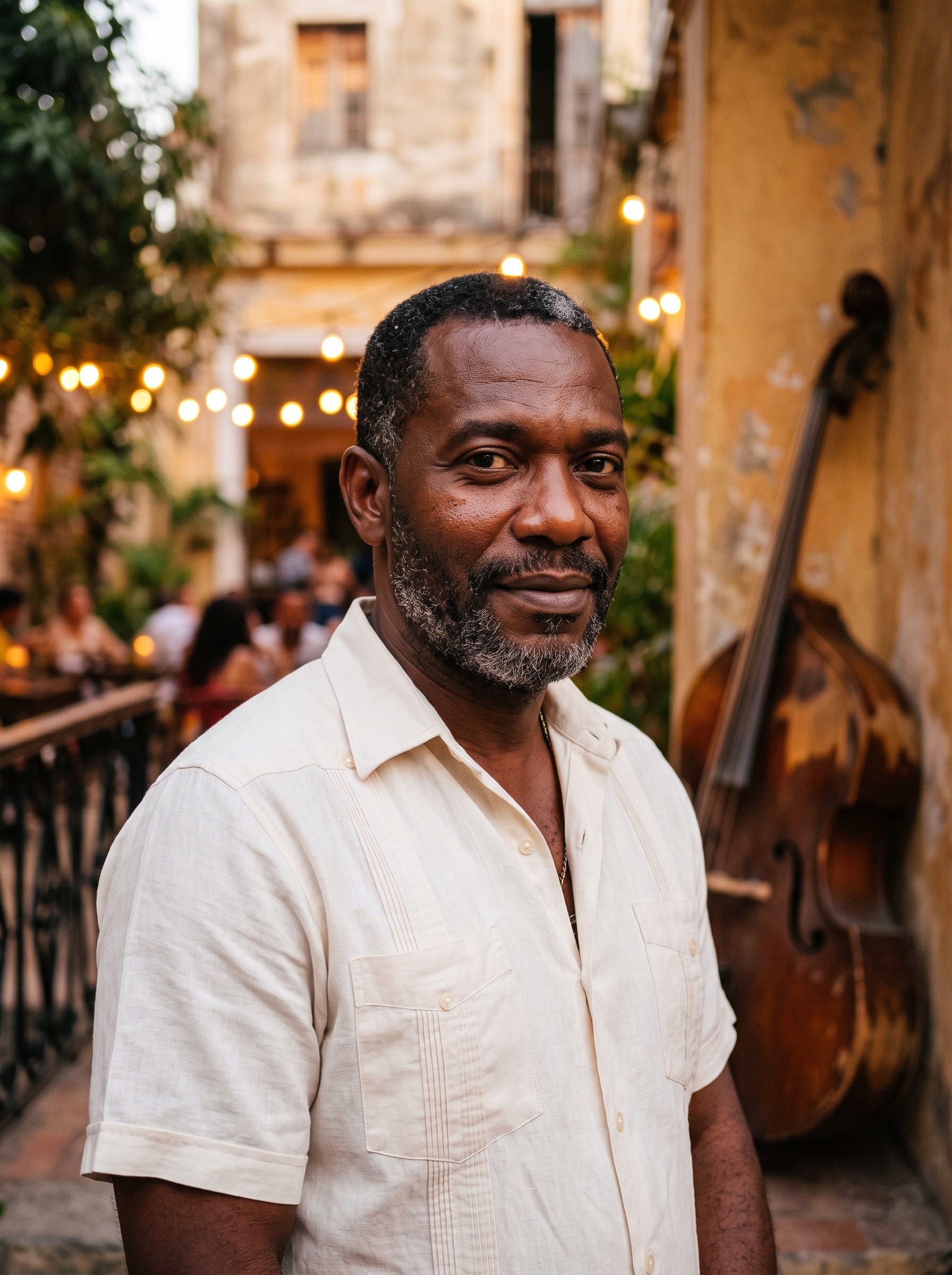
By Reinaldo FuentesSunday rumba to the Fábrica's small hours
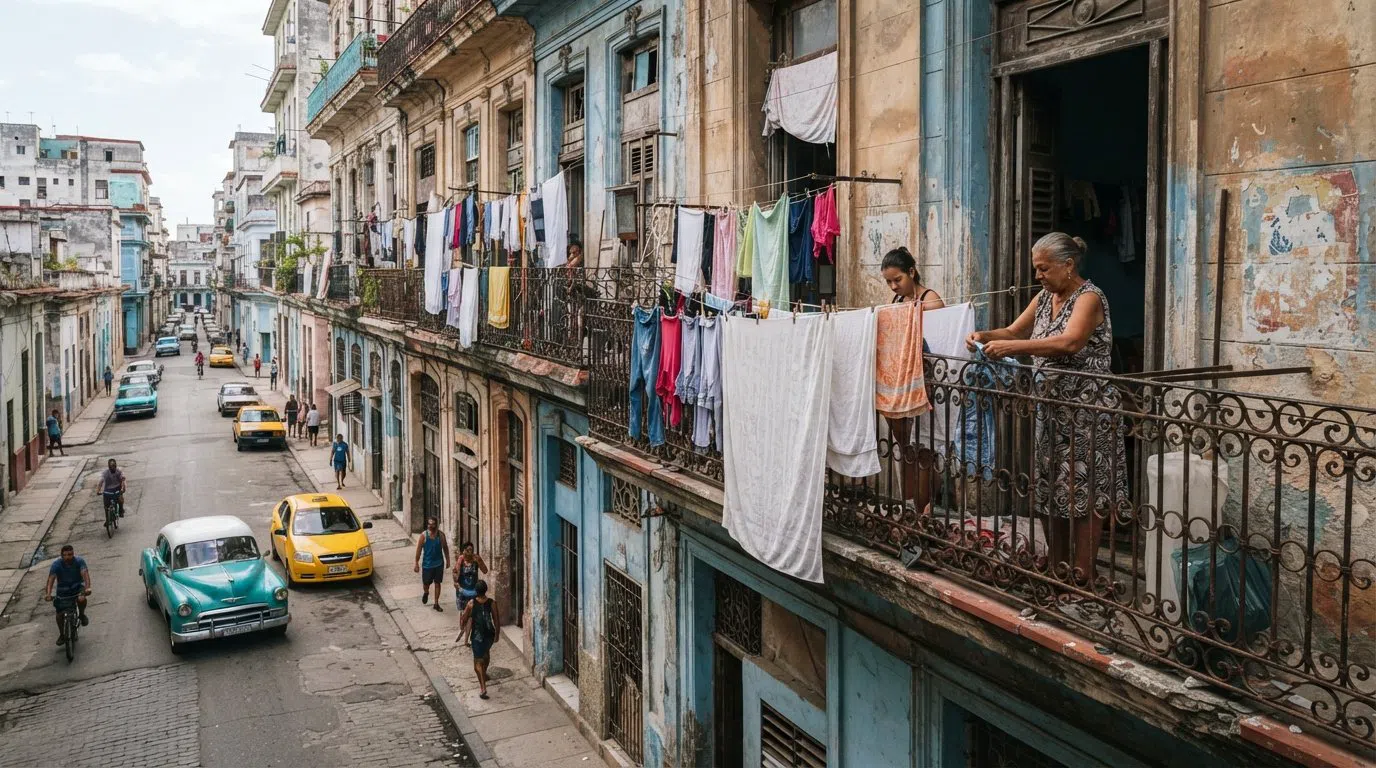
Centro Habana announces itself in fragments: a saxophone scales up from an open window, a rope pulley creaks with groceries, dominoes crack against a curb, and the smell of frying oil drifts out of a doorway before the diesel does. This is the belt of Havana most tour buses glide through without slowing, the rough, crowded, gloriously uncurated middle where the city lives at full volume. Walk it once and you understand why people come back. Not for polish. For pulse.
What Centro Habana is known for
Centro Habana is the connective tissue of the capital, the roughly 20-block wedge you cross going from Habana Vieja to Vedado. It is bounded by the sea to the north and the Prado promenade to the east, and its reputation comes from what it refuses to be: not restored, not museum-clean, not arranged for the comfort of strangers. What it does have is the most cinematic street life in Havana, the kind that refuses to stay in the background.
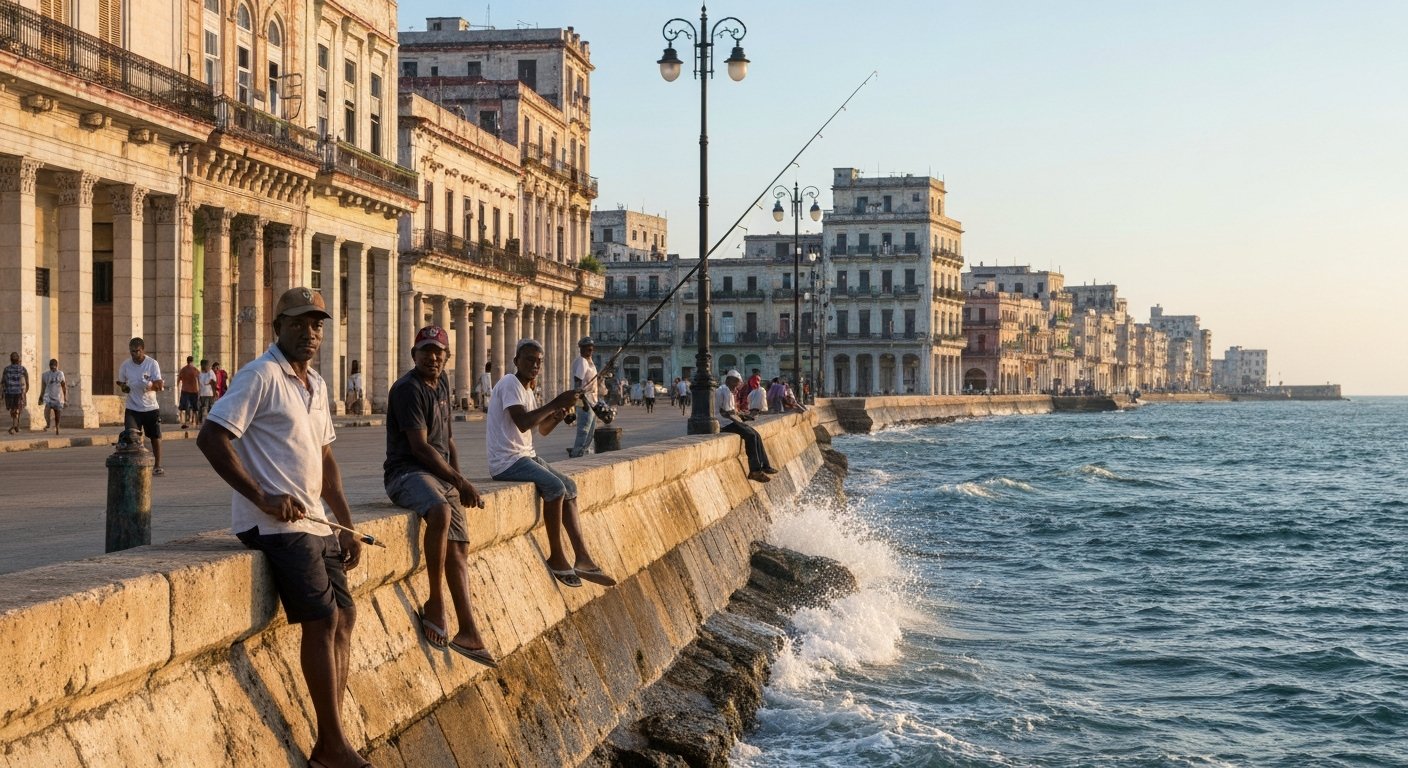
The northern edge is the Malecón, and in Centro the seawall does what good urban edges always do: it gathers the city. Between Calle Galiano and Calle Belascoaín, fishermen cast from the wall by day and, by evening, the whole barrio seems to arrive with its shoulders down and its bottle of rum shared out. The light changes fast out there. One minute the facades are just battered concrete and peeling paint; the next they are gold, and everyone on the wall looks like they’ve been waiting for that exact moment all day.
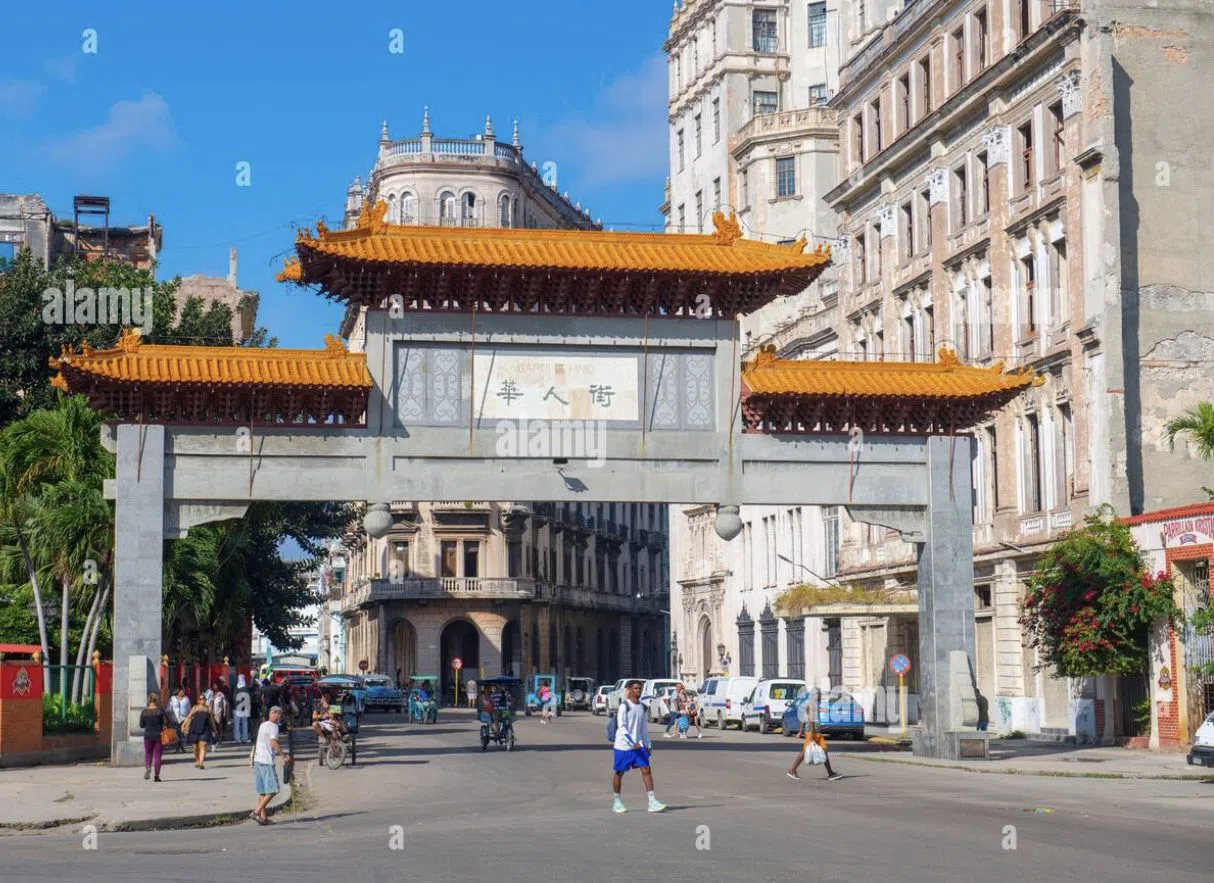
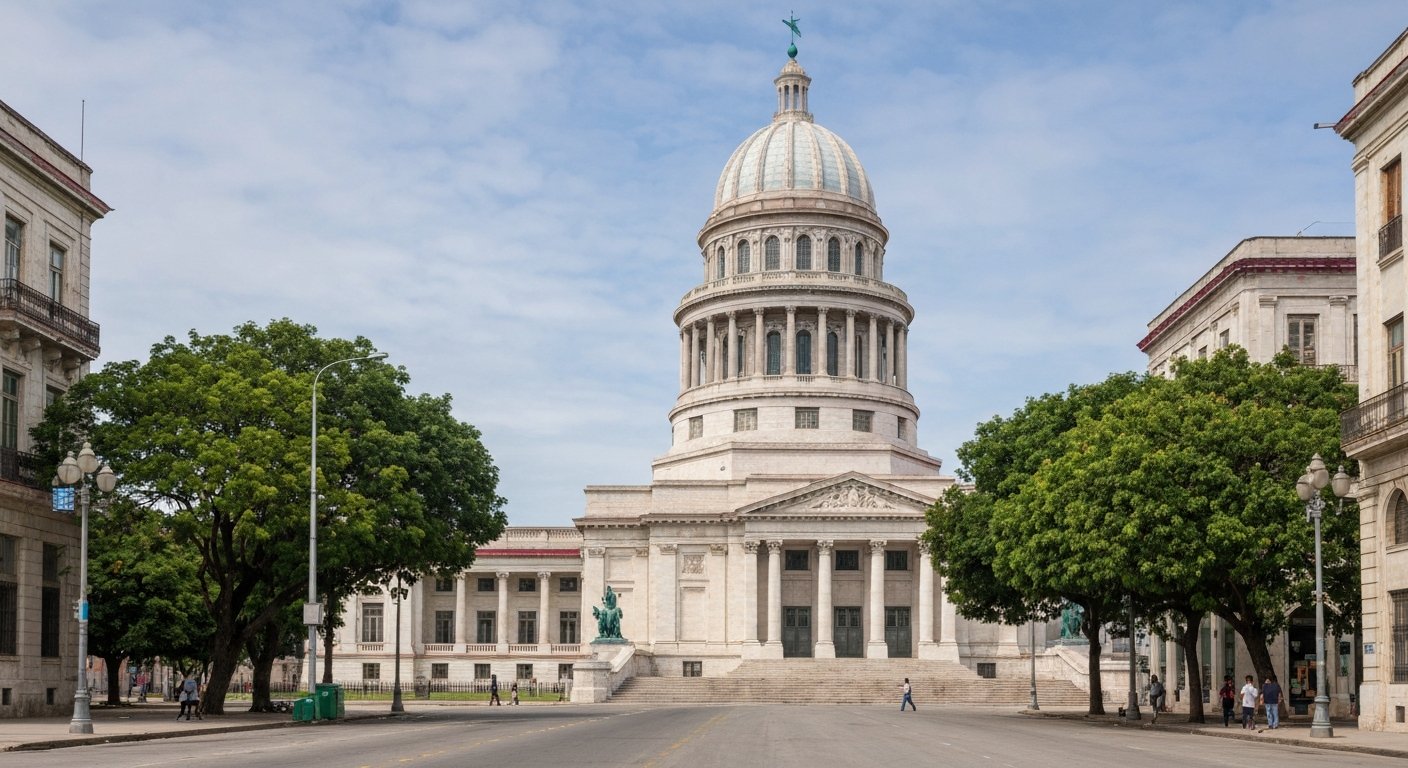
Cut inland and the city changes register. You hit Barrio Chino, Latin America’s oldest Chinatown, where the restaurant triangle at Cuchillo de Zanja condenses a whole food economy into a few busy blocks. Farther west, in Cayo Hueso, the alley of Callejón de Hamel turns the neighbourhood toward drums, colour and Afro-Cuban memory. And on the eastern seam, technically part of the border with Habana Vieja but impossible to separate from Centro’s skyline, stand El Capitolio and Paseo del Prado: the dome, the promenade, the old ceremonial face of the city.
This is not the Havana of restored balconies and polished cocktail menus. It is the Havana of stoops and stoic repair jobs, of people living their lives in public because the street is the living room. If you want an easy, prettified introduction to the city, sleep elsewhere and visit by day. If you want the city’s nerve endings, stay long enough to hear them.
Plan your Havana trip
Live prices from our booking partners.
Free cancellation on many rooms. We may earn a commission when you book.
Where to eat & drink
Centro Habana’s eating and drinking scene splits neatly in two. There is one world-class paladar hidden up a crumbling stairwell, and then there is the rest of the barrio: cheap, scrappy, local, and very much alive.
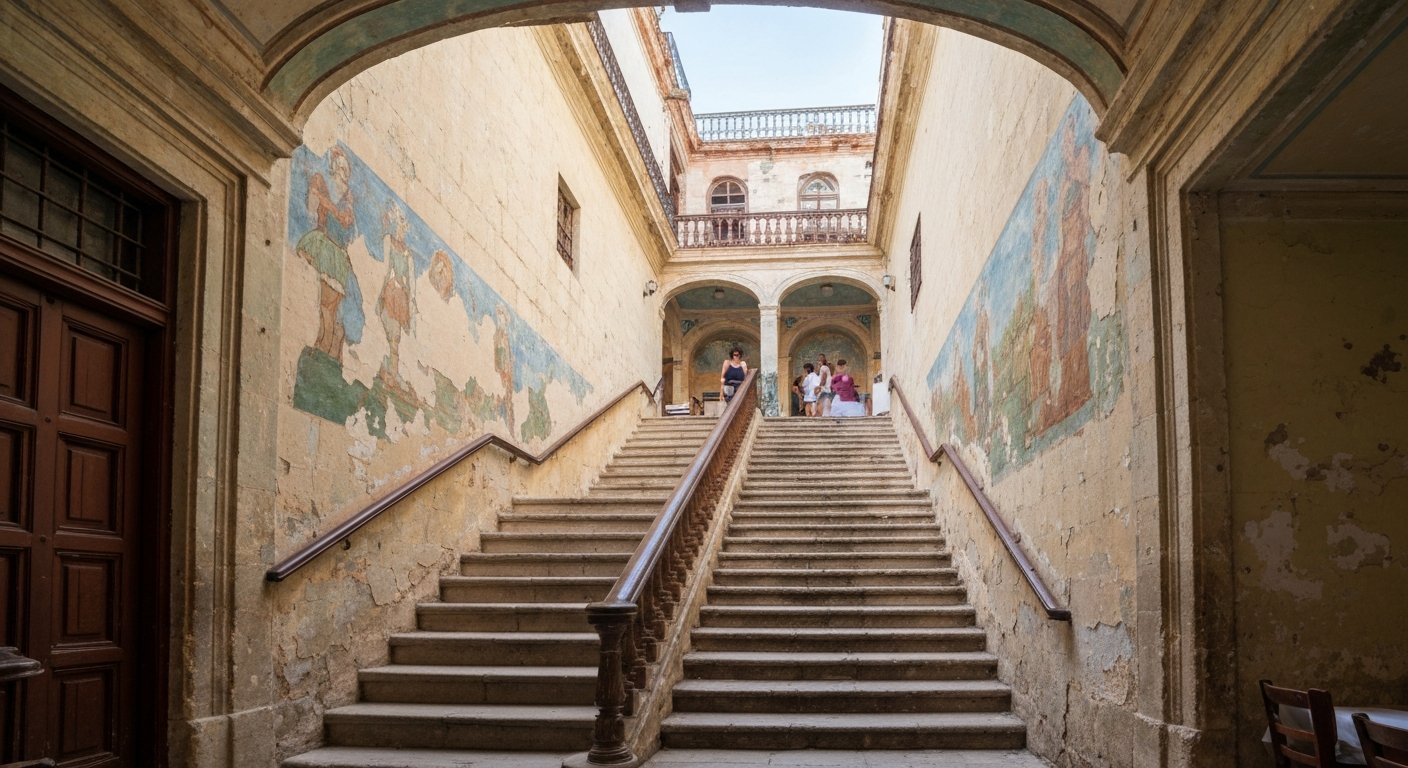
The headline act is La Guarida, at Concordia 418 between Gervasio and Escobar, in the mansion where Fresa y Chocolate was shot. You climb three flights of a deliberately un-restored building, past peeling frescoes and the kind of stairwell that tells you exactly where you are, before the room opens up and the food starts speaking for itself. The kitchen takes Cuban cooking seriously. Think proper ropa vieja, reliably good lobster, and a rooftop that has become part of the story. The separate Bar Mirador has been open since 2014, and it gives you cocktails and tapas over the Malecón with the city spread out below like a stage set that still has to be lived in.
Book well ahead. That is not a suggestion. It is the difference between eating here and hearing about it later.
On the waterfront, Sociedad Asturiana Castropol at Malecón 107, between Genios and Crespo, is a different mood entirely. The building is bright, the downstairs grill is casual, and the upstairs seafood room is more formal, but the reason to come is the sea-facing terrace at sunset. You sit there with the wall, the water and the wind doing half the work, and the rest is on the grill.
For the opposite end of the scale, head into Barrio Chino and the Cuchillo de Zanja triangle — the streets of Cuchillo, Zanja and San Nicolás — where cheap kitchens crowd together and the food is more Cuban than Chinese, however the signboards may dress it. The long-standing name to know is Tien Tan, the best-known kitchen in that knot of backstreets. It is not the place for ceremony. It is the place for lunch that tastes like the neighbourhood it feeds.
Drink in Centro Habana is mostly about where you are standing, not what is printed on the menu. On the Malecón, people make their own bar. In the interior, the street does the pouring. And when the evening is right, the city itself becomes the soundtrack.
Going out
There is one institution here that matters to dancers and one ritual that matters to everyone else. The institution is Casa de la Música de Centro Habana, on Galiano, or Avenida de Italia, between Concordia and Neptuno, in the old Teatro Cuba building. This is where the serious floor lives. The bands are the point. The timba is the point. The dancers know it, and the room knows it. There is a late-afternoon matinée and a hotter, pricier evening session, and cover charges can swing wildly depending on who is on the bill. On big nights, you may be steered toward buying a bottle for a table. That is part of the game. So is the fact that this place has more room and a rowdier, more local energy than its posher Miramar twin.
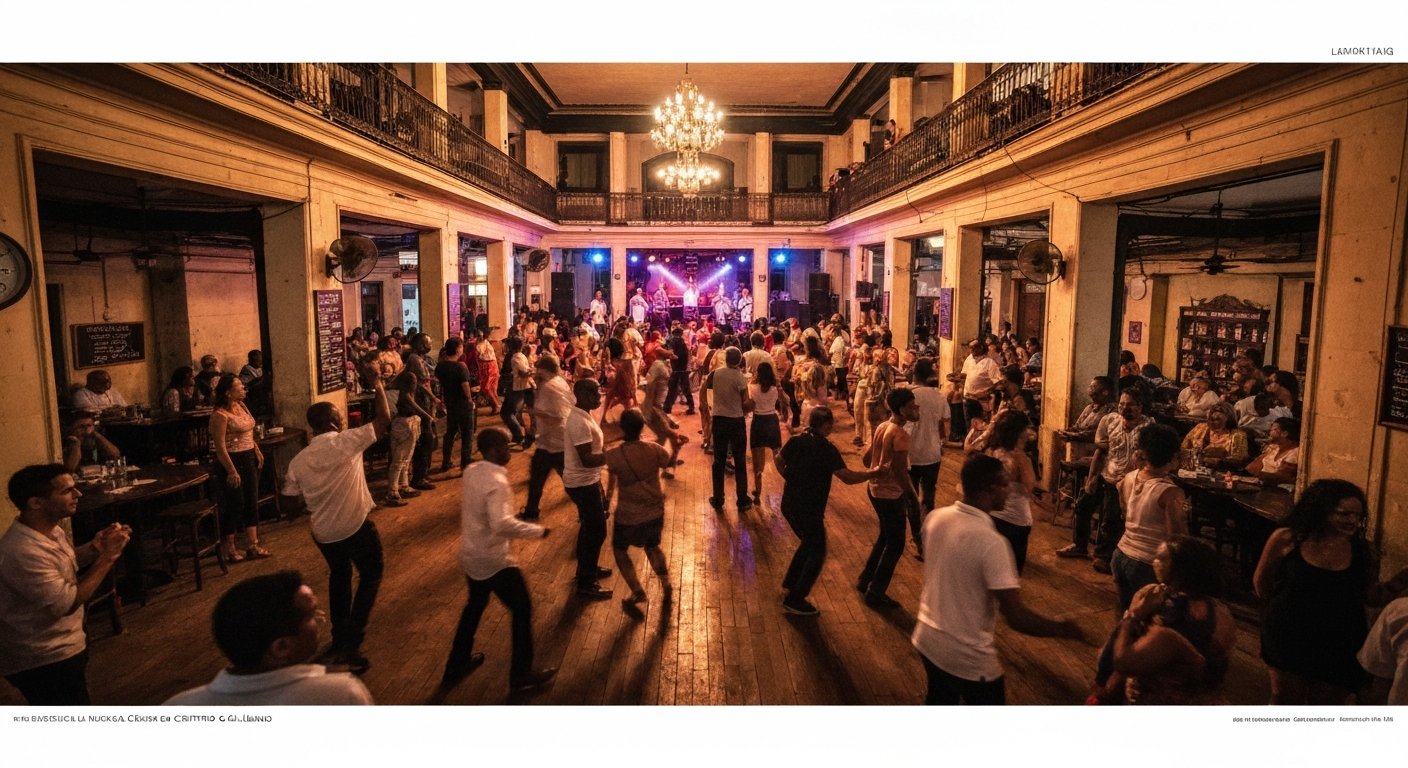
If you want to hear what Havana dance music sounds like when it is not being ironed flat for a hotel floor show, this is where you go. Not to watch. To feel the room shift when the band locks in.
The other ritual is the Sunday rumba at Callejón de Hamel, and that belongs as much to the public square as to nightlife. In the afternoon, the alley fills with drumming, dancing and a crowd that is both local and visitor-heavy, but still unmistakably alive. The point is not slickness. The point is call and response, bodies and beats, the alley as instrument.
Beyond those two, Centro Habana’s after-dark life is informal. The Malecón becomes a free open-air bar most nights, with people sharing a bottle of rum on the seawall while street musicians work the air. That is the move. Stay on the lit waterfront. Let the interior streets wait until morning.
Things to do
The single best thing to do in Centro Habana is walk it slowly. The neighbourhood rewards a loose route, not a checklist. But there are anchors, and they matter because they give the wandering shape.
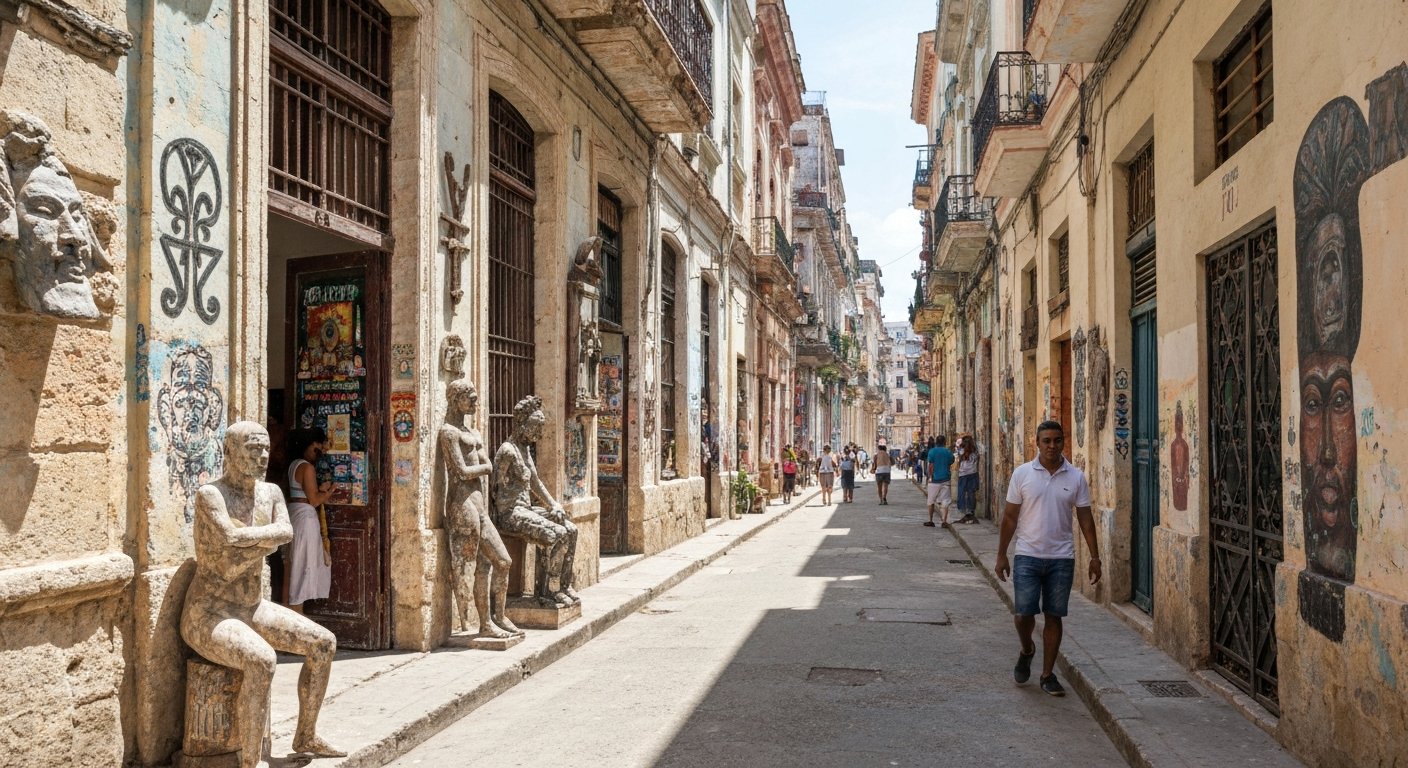
Callejón de Hamel is the standout. It is a short alley in Cayo Hueso, running between Aramburu and Hospital streets, which the artist Salvador González Escalona began painting in 1990 as the city’s first public monument to Afro-Cuban culture. The walls are dense with orishas, spiritual symbols, poems and salvaged sculpture built from bathtubs and totems. González’s own studio and gallery sit off the alley. Come on Sunday around midday if you want the rumba. Come any other day if you want to read the walls without the crowd leaning in. It is free, though performers and hustlers will ask for tips, so carry small notes and know your own limits.
The Malecón is the other essential. Walk the Centro stretch toward Vedado in late afternoon, when the low sun turns the battered facades gold and the seawall starts to fill with people who have nowhere else to be. That is not a complaint. It is the point. The wall is where the barrio exhales.
On the eastern seam, climb the 55 steps to the restored El Capitolio and then stroll the marble-benched Paseo del Prado, the tree-lined promenade that marks the border with the old town. It is a useful pair because it shows you how Centro Habana sits between two versions of the city: the ceremonial and the lived-in.
Don’t miss in Centro Habana
Callejón de Hamel
Paseo del Prado
The Malecón seawall
Shopping
Shopping in Centro Habana is not about souvenirs. It is about the everyday Cuban economy, and that makes it more interesting than a polished retail run ever could be.
The spine of it is Boulevard de San Rafael, the pedestrianised stretch running roughly five blocks from the Prado end, behind the Hotel Inglaterra, toward Galiano. Before the Revolution, this and neighbouring Galiano were the capital’s grand shopping streets, anchored by the fabled El Encanto department store on the San Rafael–Galiano corner. El Encanto burned down in 1961, and the boulevard today carries the memory of that old commercial confidence in a more worn, more improvised form. You find small clothing shops, homeware, hardware, peso stalls and street vendors, all of it under a layer of wear and tear that city clean-up drives keep trying to outrun.
For food shopping with real character, dive into the Cuchillo de Zanja market end of Barrio Chino, where fruit-and-vegetable stalls thread between the Chinatown restaurants. Bring cash in small denominations. Bring patience too. This is the informal economy in motion, and it has its own logic.
Where to stay in Centro Habana
Centro Habana is where you stay for value and atmosphere rather than comfort. Accommodation is overwhelmingly casas particulares — licensed private rooms and apartments in family homes — and they run noticeably cheaper here than in Habana Vieja or Vedado while keeping you within walking distance of both. That is the bargain. The trade-off is also plain: buildings are old and unpredictable, lifts and consistent hot water are not a given, and the streets outside are rough and dimly lit.
The smart move is to stay in the northern band close to the Malecón and Paseo del Prado, where you are a short flat walk from the old town, from the seawall’s evening crowds, and from taxis. The deeper you go into the interior grid, the rougher and quieter-at-night it gets. Pockets near the Prado end and along the Malecón toward Galiano give you the best balance of price, position and reassurance. Bring cash for the whole stay — casas are cash-only and cards linked to US banks won’t work anywhere in Cuba.
Hotels in Centro Habana
Our best-rated stays in this neighbourhood. Prices are approximate “from” rates — confirmed at the provider when you continue. We may earn a commission if you book through our partners — at no extra cost to you.
Live availability for this area appears on the Havana home page.
Getting around
Centro Habana has no metro — Havana has none — so you move on foot and by taxi. The good news is that the neighbourhood is compact and central. It is a 10–15 minute flat walk from the Prado end into the plazas of Habana Vieja, and a similar walk west along the Malecón brings you into Vedado. Almost everything worth seeing in Centro is walkable by day.
For longer hops, flag a classic-car colectivo — a shared fixed-route taxi — or a private taxi. Short private rides across the centre are cheap by Western standards, but agree the fare before you get in, in cash. The hop-on-hop-off Habana Bus Tour also loops through the area. For the airport, José Martí International (HAV) is about 25–35 minutes’ drive southwest depending on traffic, and the sensible move is to arrange a taxi through your casa.
At night, take a taxi rather than walking the interior streets, and stick to the lit Malecón if you are on foot. That is not fear talking. It is local common sense.
Centro Habana is rough around the edges because it is real around the edges. That is why it matters. The city’s old town may give you the postcard, but this is where you hear the room tone. The dominoes. The drums. The sea. The quarrels. The laughter. The band finding the clave. Havana, at street volume.
Gallery
Centro Habana in pictures
Centro Habana — your questions
Is Centro Habana a good area to stay in Havana?
Yes, if you want value and a more authentic city feel. It puts you within walking distance of both Habana Vieja and Vedado, with cheaper casas particulares than the old town. The trade-off is rougher buildings, patchier amenities and a street grid that feels less comfortable after dark. Stay near the Malecón or Prado end for the best balance.
Is Centro Habana safe?
Broadly yes by day, but it is the grittiest central district in Havana. The main risks are petty theft, pickpocketing and hustling rather than violent crime. Stick to busy streets and the lit Malecón at night, avoid the interior grid late, and keep valuables out of sight.
When should I go to Callejón de Hamel?
Sunday around midday, when the alley hosts its live Afro-Cuban rumba. That is when the drumming, dancing and crowd make the place come alive. The murals and Salvador González's studio-gallery are there any day, but Sunday is the main event.
What is Centro Habana best for?
Street life, live salsa and rumba, budget casas, Afro-Cuban culture and eating where locals actually eat. It is less about polished sights and more about the texture of the city itself.