Havana neighbourhood guide
Cojímar, Havana: Hemingway’s Harbour Village Still Living by the Tide
A slow, salt-stung walk through Cojímar, where a 1649 watchtower, a fisherman’s bust and a lunch of paella still keep time with the water.
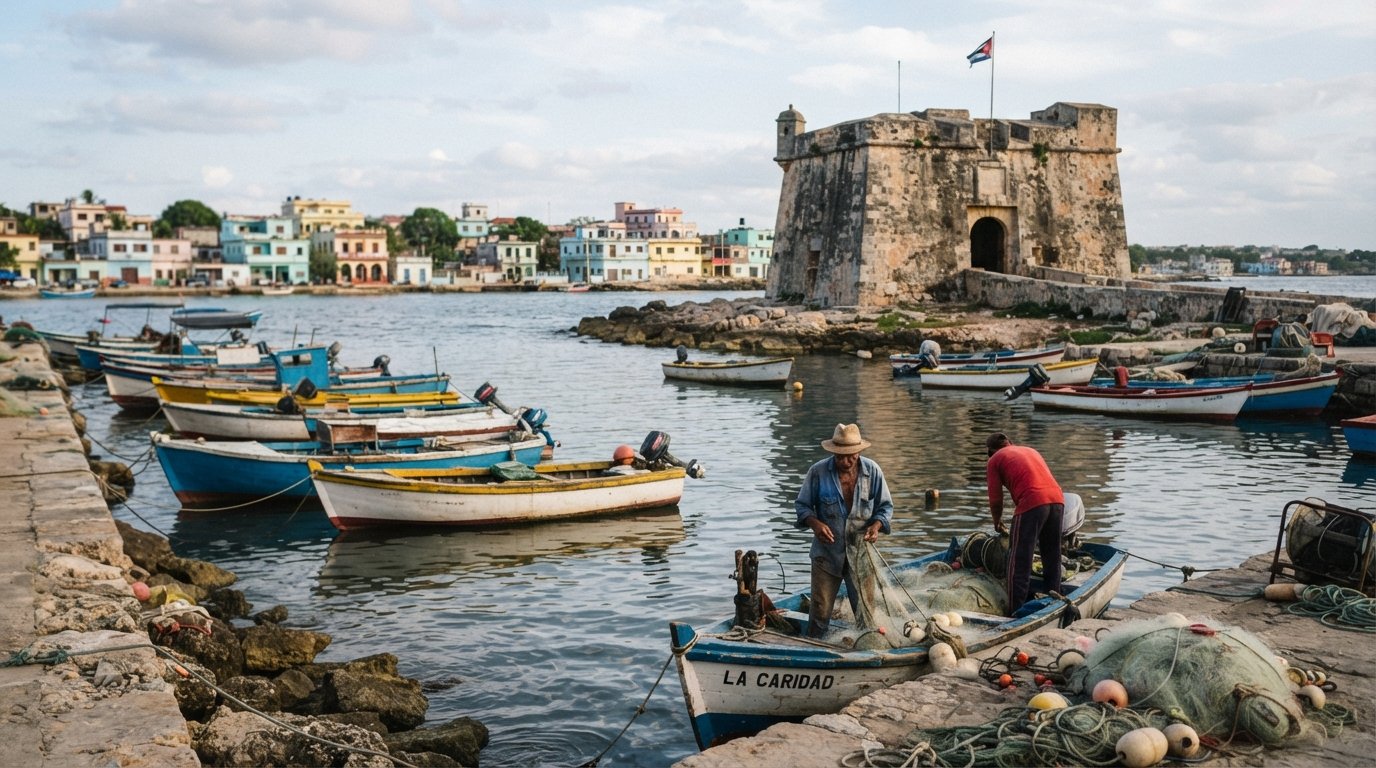
Seven kilometres east of Havana, the road drops toward a slack green river-mouth and the village starts to feel like a held note. Cojímar doesn’t announce itself. It eases in. A bridge over the river. A few pastel houses. Men with hand-lines standing thigh-deep off the rocks. Then the old stone tower at the waterline, squat and stubborn, as if it has been waiting since 1649 for the next skiff to come in.
This is the Havana neighbourhood that Hemingway turned into myth, and then left behind as a working port. The fame is real, but it sits lightly here. You feel it most in the silence between the boats, in the way the harbour seems to breathe with the tide rather than with tourists. Central Havana has its clatter and its performance. Cojímar has the scrape of oars, the smell of fish, the occasional rooster, and lunch if the sea was kind. That is the whole proposition. It is enough.
What Cojímar is known for
One book made this village famous, but the village was already itself before Hemingway arrived. He kept the Pilar here in the 1940s and 50s, sailing out with Gregorio Fuentes into the Gulf Stream, and the friendship fed straight into The Old Man and the Sea. The Nobel Prize came later, in 1954. The legend, though, is anchored in a very local act of memory: when Hemingway died in 1961, the fishermen of Cojímar gathered scrap metal — propellers, anchors, engine parts — melted it down, and had Fernando Boada Martínez cast it into a bronze bust of Papa. They unveiled it in 1962. It is not a gimmick. It is a thank-you.
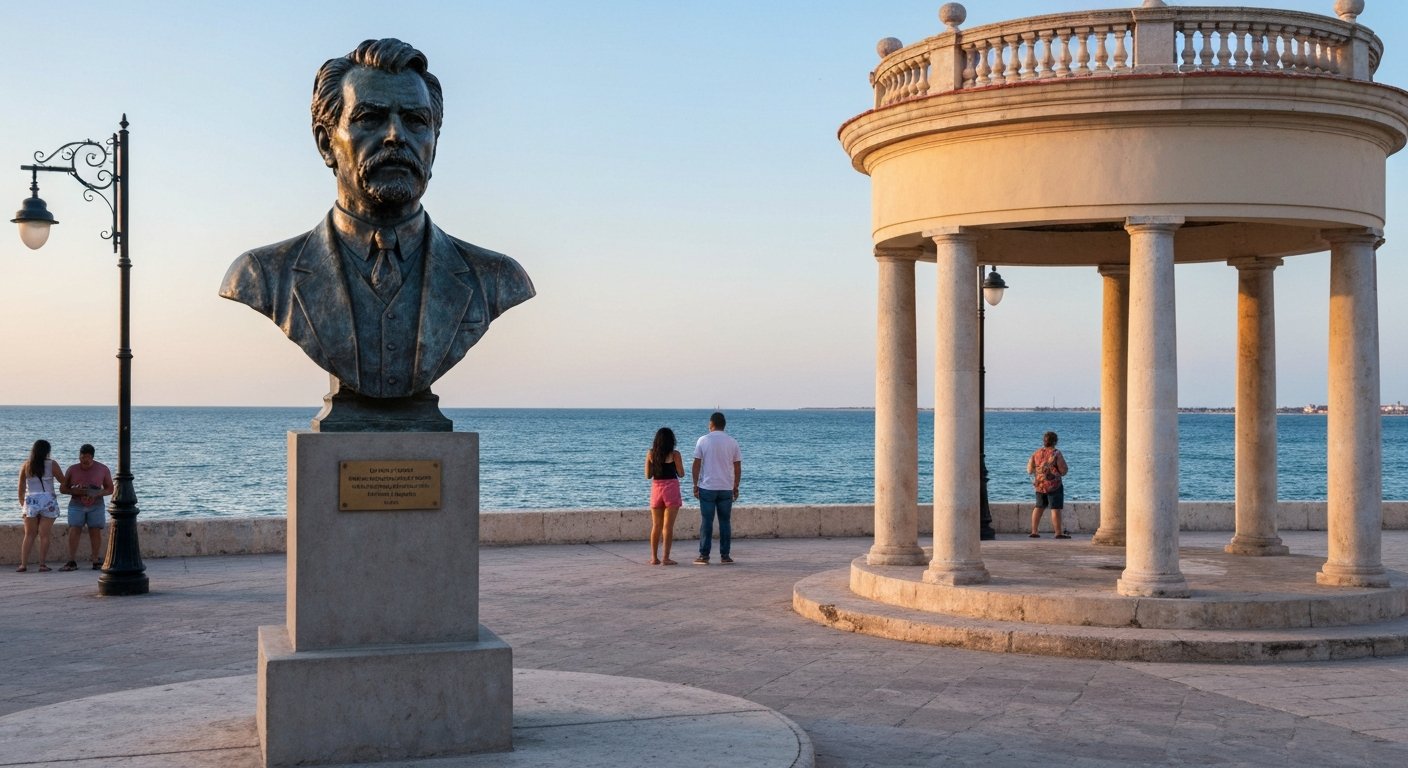
Stand there a moment and look past the rotunda. The harbour is small, but it carries a whole story: the bridge over the Cojímar river, the skiffs nosing at the edge, the low shore opening to the Gulf. It’s the kind of view that makes literary pilgrimage feel less like a checklist and more like a return. Hemingway is everywhere in Cuba, of course. But here he is not a logo. He is part of the salt air.
The other landmark is older than the book by three centuries. The Torreón de Cojímar was built in 1649 as a Spanish coastal watchtower, a twin of the Torreón de la Chorrera in Vedado. In 1762, when the British attacked and captured Havana, it became the first fortification they seized. It still stands, now used by the Cuban coastguard, and it remains the best place to understand the village in one glance.
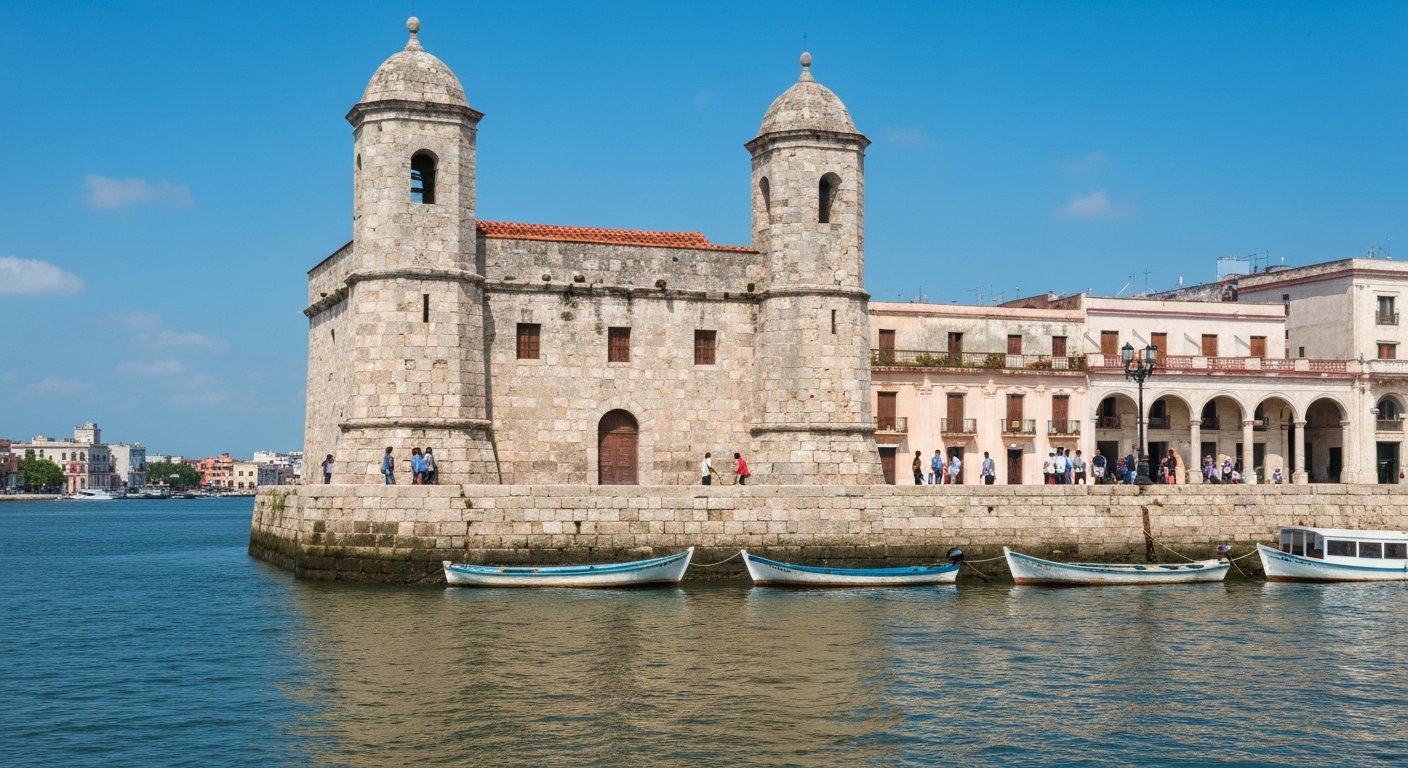
From the little esplanade beside the tower — a miniature, weather-beaten version of the Malecón — the whole place comes into focus. The harbour is narrow. The light is wide. Across the river to the west lies Alamar, the big Soviet-built housing estate that became the cradle of Cuban rap. That contrast is part of Cojímar’s strange charm: one bank is a sleepy jetty and fishing boats, the other a modern barrio that still sends its beats drifting over the water. Cuba in one frame. Old and new. Tide and bassline.
Where to eat & drink
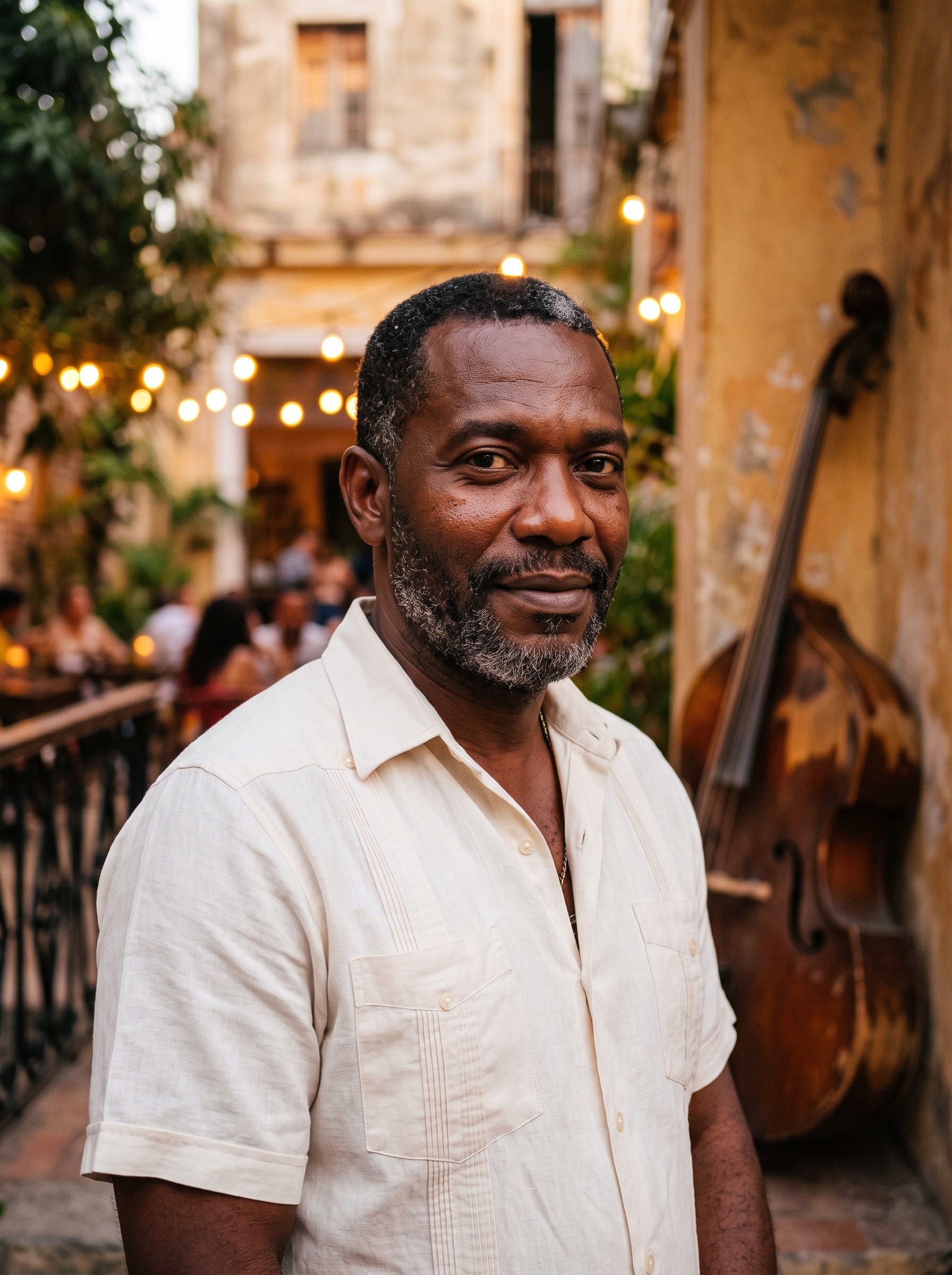
Cojímar is a lunch town. Come hungry, come unhurried, and do not expect the kind of polished dining scene Havana’s trendier districts trade on. The point here is not choice for its own sake. It is seafood with a view of the water it came from. The room that carries the most history is La Terraza de Cojímar, on Calle Real at the corner of Candelaria. It opened in 1925 as a fishermen’s tavern called Las Arecas, celebrated its centenary in May 2025, and it is the actual place where Hemingway drank and talked with Gregorio Fuentes. Palmares runs it now, and the harbour terrace is still there, sheltered and looking out over the working port.
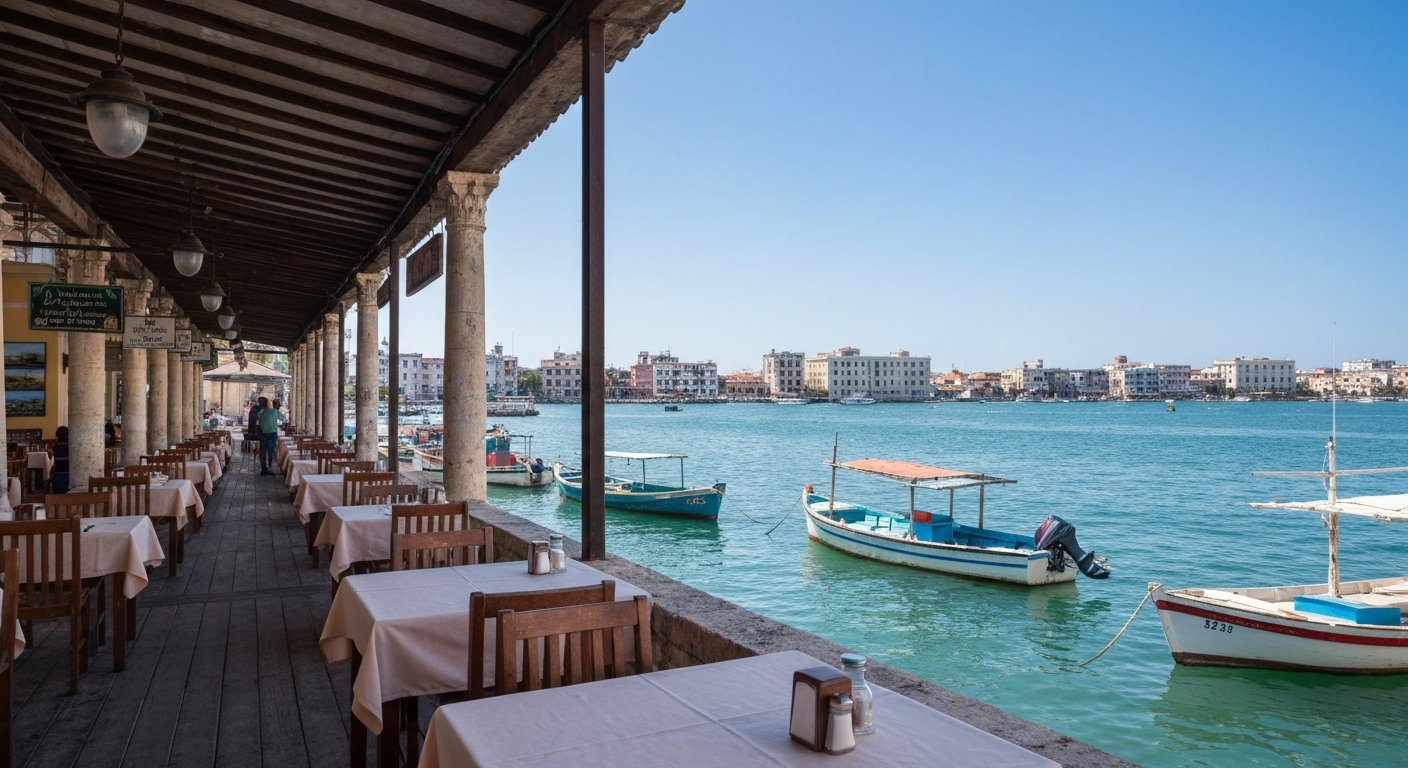
The room matters as much as the menu. The walls carry Raúl Corrales photographs. The menu keeps to the classics: paella, sopa del pescador, grilled fish. There is a house Don Gregorio cocktail, and a daiquirí if that is your mood. The food gets mixed reviews, which is exactly the point to understand before you arrive. Order the paella and the fish. Keep your standards realistic. Let the room do the heavy lifting. This is not about fireworks. It is about eating in the place that still remembers the conversations.
If you want the local favourite for value, walk to Casa Grande, the paladar run by young chef Jorge Falcón. The signature dish is the grilled lobster tail, seared on the plancha and finished in butter. That is the plate to ask for. The pork ribs are hearty too, and the fish changes with what came in that day. Casa Grande feels more like a neighbourhood answer to the tourist legend: less ceremony, more cooking.
Then there is Ajiaco Café, which has been going since 2011 and leans into a farm-to-table rhythm that suits Cojímar’s slower pulse. Much of the produce comes from its own organic plot. The mojitos are made with dark rum and honey instead of light rum and sugar, which tells you something about the place before the first sip does. It also runs cooking classes and farm tours, so if you want to turn lunch into an afternoon, this is the one that stretches the day without breaking the mood.
Things to do
Cojímar is not a place for ticking off sights. It is a place for walking slowly enough to notice how the village arranges itself around the water. Start at the Torreón de Cojímar and take the little esplanade beside it. The harbour opens in front of you. The skiffs sit low. The bridge frames the river. It is a small promenade, but it has the same elemental pull as Havana’s Malecón: stone, spray, distance.
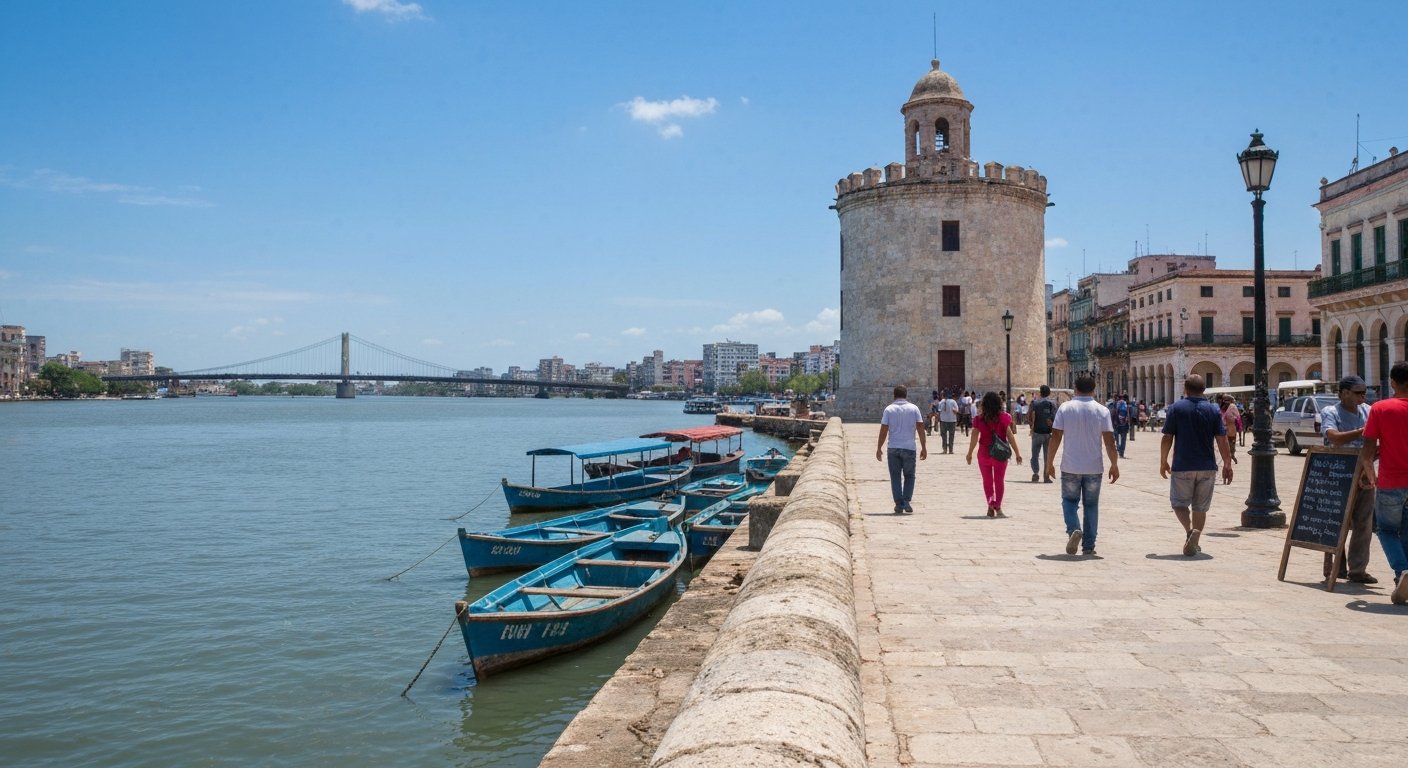
A few steps away stands the Monumento a Hemingway, the bronze bust under its small neoclassical rotunda, gazing out to sea. The sculpture was cast from fishermen’s donated scrap metal, which gives it a kind of moral weight you can’t fake. It faces the water he wrote about, and the whole gesture feels earned. Not souvenir-shop sentiment. Something older. Something local.
From there, the village gives itself up in sections. The boats. The low houses. The road bridge. The water sliding out to the Gulf. It is all close enough to hold in one frame, but not so compressed that it feels staged. That matters. Cojímar’s charm depends on not overplaying itself.
The natural pairing is Museo Hemingway Finca Vigía, Hemingway’s preserved hilltop house in San Francisco de Paula, a short drive back toward the city. You can’t go inside the villa, but the doors and windows are open so you can see the study, the books, the hunting trophies and the typewriter exactly as he left them. The restored Pilar sits under cover in the garden beside the empty swimming pool. If you are doing the Hemingway circuit properly, this is the other half of the day. Cojímar is the harbour. Finca Vigía is the hill.
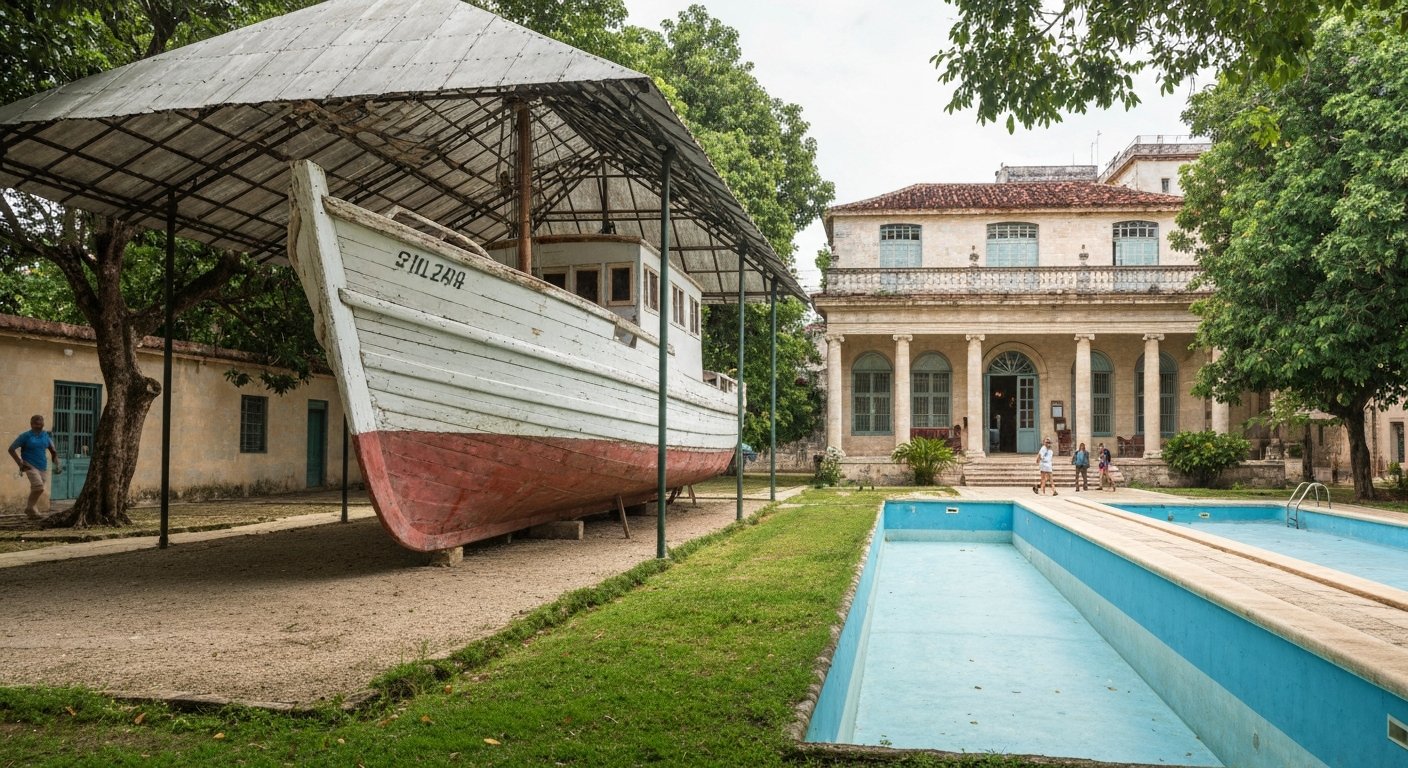
Most drivers will happily string the two together. They should. The pairing makes sense of the man and the place. In Cojímar, Hemingway is the fisherman at the water’s edge. At Finca Vigía, he is the writer at the desk. Together they tell the same story from opposite ends.
If you glance across the river, you are looking at Alamar, the vast 1970s housing project that became the cradle of Cuban hip-hop and the home of the rap festival that has run since 1995. It is not a sight in the conventional sense. It is a backdrop, a living neighbourhood, a reminder that this sleepy fishing bank shares a river with a very different Cuba. That contrast is one of the pleasures of standing here. The old port and the new beat. Both real.
Don’t miss in Cojímar
Torreón de Cojímar
La Terraza de Cojímar restaurant
Where to stay in Cojímar
Honestly, most people don’t stay here, and they probably shouldn’t. Cojímar is built for a half-day visit, not an overnight. There is no cluster of hotels and no deep bench of well-known casas particulares the way you find in Habana Vieja or Vedado. A few local casas do exist for travellers who genuinely want to wake up in a working fishing village, with the sea outside and none of the old-town noise, but that comes with trade-offs: fewer walkable sights, almost no nightlife, and a dependence on taxis for everything.
For most itineraries, the smart move is to sleep in central Havana and treat Cojímar as the lunch-and-walk excursion it does best. If you want the old-town energy, stay in Habana Vieja. If you want a broader, easier base with more transport options, Vedado makes sense. Cojímar is the day trip that gives back exactly what you put into it: time, patience, and a little appetite.
Where to stay here
Hotels in Cojímar
Our best-rated stays in this neighbourhood. Prices are approximate “from” rates — confirmed at the provider when you continue. We may earn a commission if you book through our partners — at no extra cost to you.
Live availability for this area appears on the Havana home page.
Getting around
Cojímar sits about 7 km east of central Havana, reached through the harbour tunnel and along the Vía Monumental highway. The simplest way there is a taxi — a yellow state cab or a private car from Old Havana — and you should expect roughly US$10–15 each way for a 15–20 minute ride. A classic American convertible costs more, but if you are the sort of person who wants the arrival to feel like the beginning of a story, that is the version that earns its keep. Agree the fare before you leave. Better still, agree the return pickup time too. Rides back are not something you want to improvise at the water’s edge.
The budget option is the metrobús P-8, which runs from near the Capitolio in central Havana out to Villa Panamericana, a short walk from Cojímar. It is cheap and local, but slow and crowded. Fine if you are in no rush. Less fine if you are trying to catch lunch before the kitchen closes or the light before it softens.
Once you are in the village, you hardly need wheels at all. Cojímar is tiny and entirely walkable. The tower, the bust, the esplanade and La Terraza are all within a few minutes of one another on foot. That is part of the pleasure. Nothing is far enough away to break the spell. If you want to keep going, the beaches of Playas del Este are another 30–40 minutes further east, which makes Cojímar easy to fold into a longer coastal day.
By dusk, the village empties back into itself. The fishermen go home. The harbour goes quiet. The tower holds the line. Cojímar never tries to become a scene, and that is why it stays with you. It gives you a lunch, a walk, a view, and a reminder that the most durable places are often the ones that never stop doing their actual work.
Good to know
Cojímar — your questions
Is Cojímar worth visiting?
Yes, if you like Hemingway or want a calm break from central Havana’s intensity. It’s the real fishing village behind *The Old Man and the Sea*, with a photogenic 1649 tower, the fishermen’s bronze bust of Hemingway, and honest seafood by the harbour. Best as a two-to-three-hour half-day, ideally paired with Finca Vigía. If you’re expecting big sights or nightlife, you’ll be underwhelmed.
How do I get from Havana to Cojímar?
It’s about 7 km east through the harbour tunnel. Easiest is a taxi from Old Havana — roughly US$10–15 and 15–20 minutes — but agree the fare and, ideally, a return pickup before you leave, as rides back are hard to find in the village. The cheap local alternative is the P-8 metrobús from near the Capitolio to Villa Panamericana.
Where should I eat in Cojímar?
La Terraza de Cojímar on Calle Real at Candelaria is the Hemingway landmark — go for the paella, fisherman's soup and the Don Gregorio cocktail with a harbour view, though the food is more about atmosphere than fireworks. For the best food, Casa Grande for plancha-grilled lobster and Ajiaco Café for its farm-to-table cooking are the local favourites.
Should I stay overnight in Cojímar?
Usually no. Cojímar is better as a half-day visit than a base. There are a few local casas, but you’ll be trading away nightlife, dining choice and easy transport. Most travellers are better off sleeping in Habana Vieja or Vedado and coming out here for lunch and a walk.
Gallery