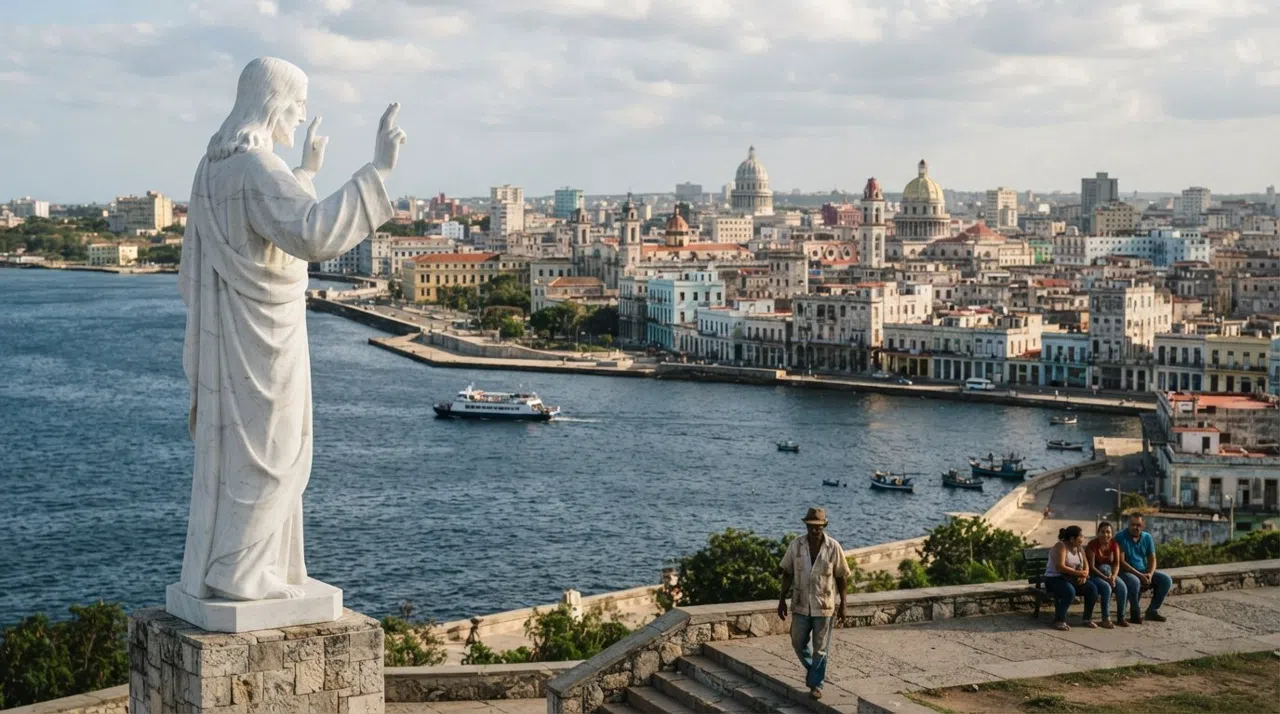
A five-minute ferry ride from the crush of Habana Vieja drops you at the foot of a steep hill where laundry flaps over the harbour and children kick a stickball through lanes most visitors never bother to climb. Casablanca is not Havana performing for you. It is Havana at work, looking back at the city from the far side of the bay, with pastel houses stacked on the slope and a 20-metre marble Christ keeping watch above them.
What Casablanca is known for
One landmark owns the skyline here: the Cristo de La Habana, the white Carrara-marble figure on the crest of the hill, all 20 metres of it, with blank eyes that seem to follow you from every angle. Jilma Madera won the commission in 1953, assembled the statue from 67 blocks of Italian marble, and unveiled it on Christmas Eve 1958, just before the whole island turned over into a different era. The face was made deliberately mixed, because Cuba is mixed; the eyes were left empty, because Madera wanted the Christ to look at everyone from everywhere. Havana being Havana, somebody will tell you the raised right hand is holding a cigar and the left one a mojito.
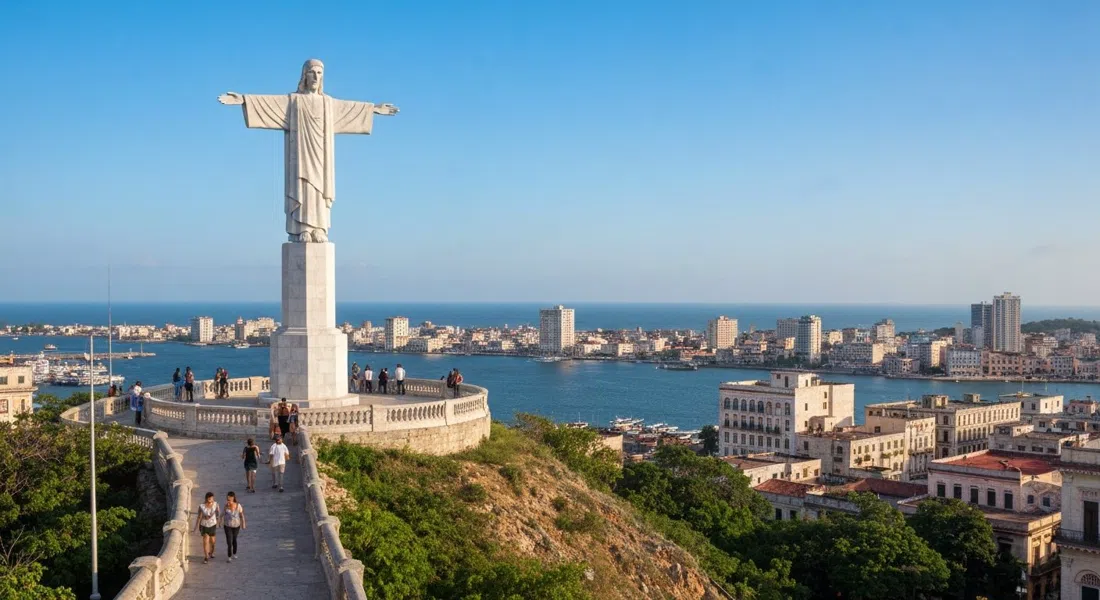
What makes Casablanca memorable is not only the statue, though. It is the way the hill opens the whole city in one sweep. Behind the Cristo sit the green-domed buildings of the National Observatory, on the hill since 1908, and beside it rises the massive stone shoulder of San Carlos de la Cabaña. Below, the bay cuts a clean channel between this ward and the old city. From up here you can read Havana like a map: the Malecón curving west, the Capitolio dome, cruise ships nosing into the harbour, El Morro’s lighthouse marking the mouth of the water. That is the trick of Casablanca. It gives you distance, and with distance comes the city’s shape.
The neighbourhood’s name is older than the Christ, older than the observatory, older than the fortress. A small settlement grew up here in the 16th century around a whitewashed Royal Treasury and shipyard on this shore — the “white house” that gave the ward its name. That older Casablanca is mostly gone, but the sense of being a place that worked before it was admired still hangs around. This is a residential ward, a few thousand people at most, not a tourist set dressed up with cafés and souvenir stalls. The hill is the point. The quiet is the point. The view is the point.
Where to eat & drink
Be honest before you cross the water: Casablanca is not where you come to graze. There is no restaurant strip, no proper paladar scene, no easy crawl from one bar to the next. The neighbourhood’s guides all end up saying the same thing in different words — no shops, barely a paladar, one or two casas, and not much else. That is not a flaw so much as a warning. You come here with a full stomach or a patient itinerary.
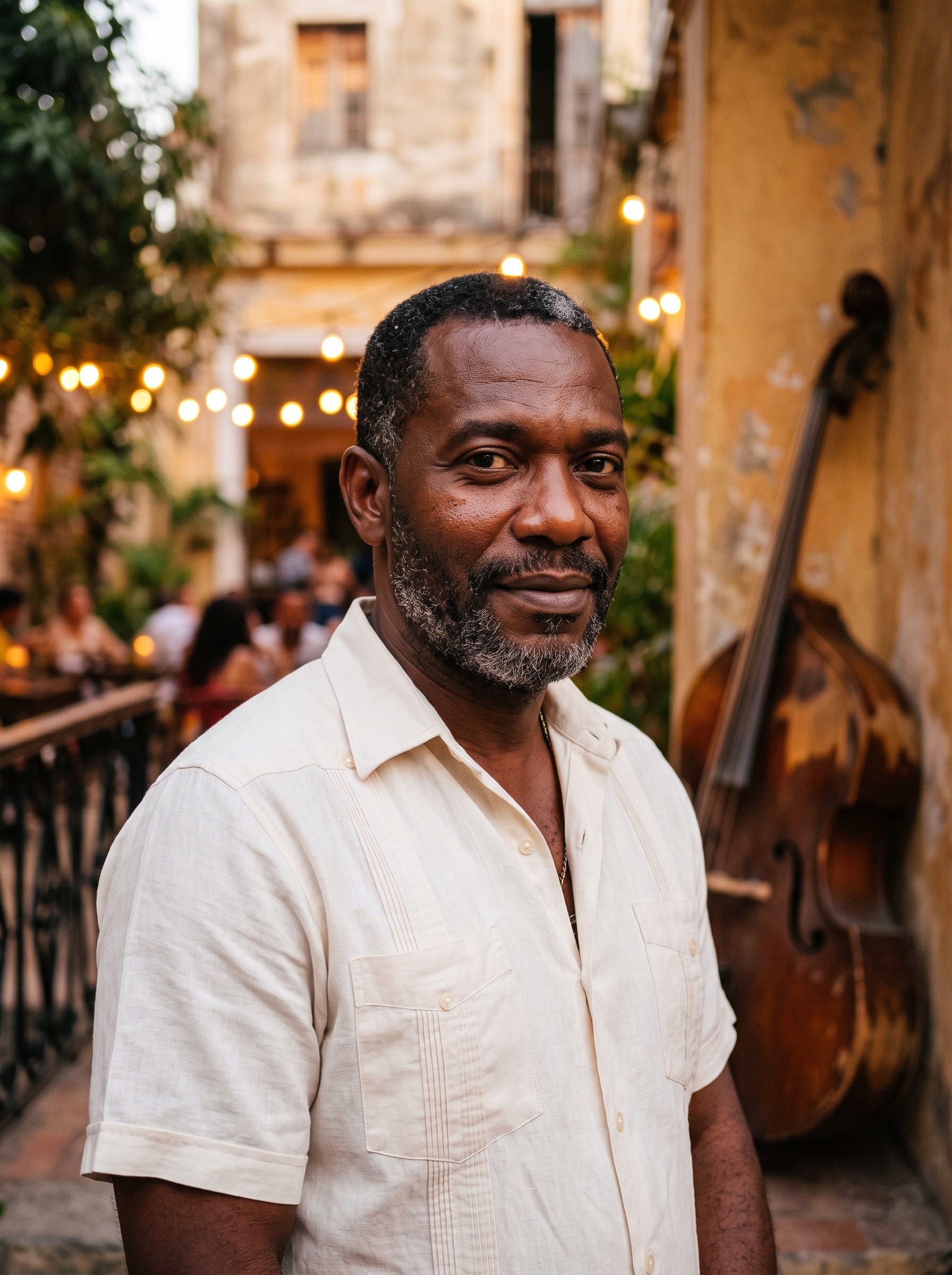
What you will find, and what you should not dismiss, are the small human provisions that keep a hill like this going. Families sell coffee, cold water, soft drinks and simple snacks from doorways and little stalls near the ferry dock and on the climb toward the Cristo. In the heat, that is enough to feel like a blessing. A cold bottle and a quick espresso can matter more than a menu. Carry small cash. Carry your own water. Assume nothing will take a card.
If you want to eat properly, do it back in Habana Vieja after you return by ferry, where the restored-mansion paladares and rooftop bars are thick on the ground. If you want a harbour view with your meal on this side of the bay, the smarter move is to finish your day at the Parque Histórico-Militar Morro-Cabaña, where the fortress complex has cafés and stalls. Casablanca itself is for walking, pausing, and looking out. Not for lunch.
Things to do
The classic move is simple and satisfying: come across by ferry, climb to the Cristo, then keep going along the ridge toward the fortresses. From the landing, the path rises fast. It is a short walk, but a sharp one, and the Caribbean heat does not care about your intentions. The payoff comes quickly. At the top, the terrace beneath the statue gives you the city laid out below like a stage set seen from the fly tower.
Entry to the Cristo de La Habana and its terrace costs only a couple of dollars, which is absurdly cheap for the view you get. The panorama beats any rooftop bar in town. You get the curve of the Malecón, Centro Habana and Vedado stacked behind it, the Capitolio dome, and directly below, the harbour mouth where ships thread past El Morro’s lighthouse. The statue sits 51 metres above the sea on La Cabaña hill, so the sightline is not decorative. It is commanding.
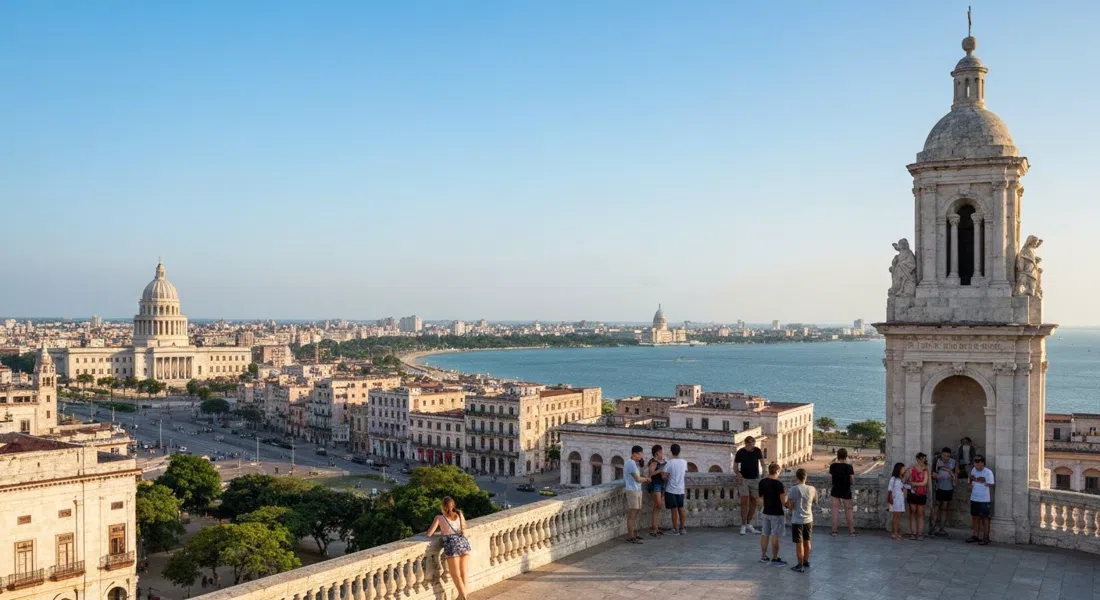
From there, keep walking the ridge. The Fortaleza de San Carlos de la Cabaña sits beside Casablanca like a stone continent, one of the largest colonial forts in the Americas and still one of the city’s great anchors. A little farther on is the Castillo de los Tres Reyes del Morro, the harbour-mouth castle with its 1844 lighthouse and climbable tower. Admission to El Morro is around $6, with a couple more dollars if you want to climb the tower. That is not a bad exchange for a view over the channel and the sea traffic below.
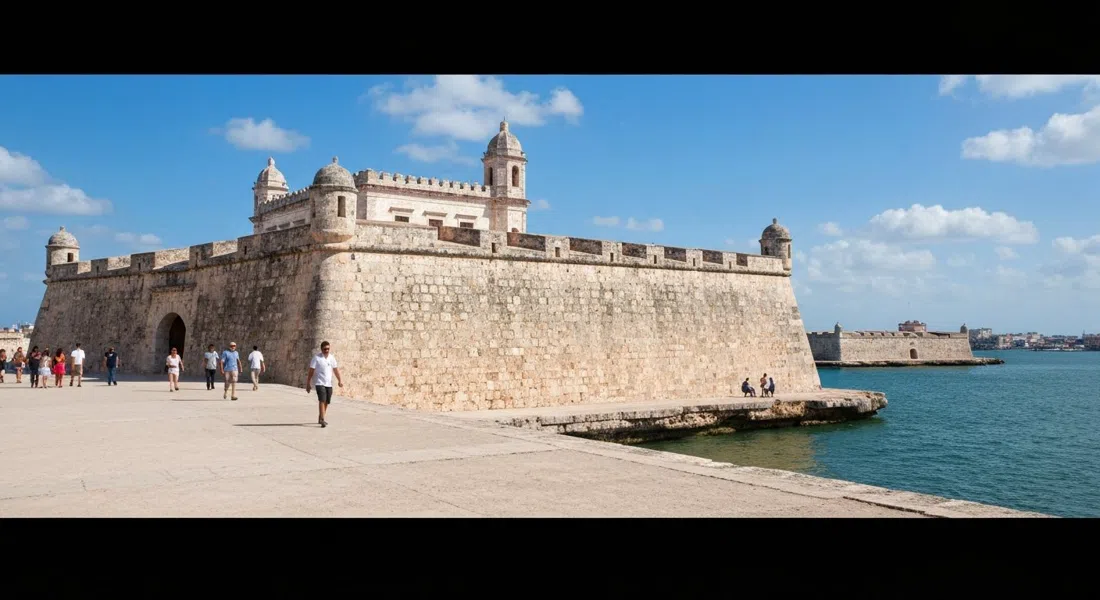
The best way to stitch the whole thing together is to think in a loop rather than a destination. Taxi through the tunnel to El Morro, walk across to La Cabaña, continue to the Cristo, then descend back to the ferry. It is a half-day that mixes colonial military history with the simplest kind of urban pleasure: standing still and taking in a city from above. If you are shooting photographs, late afternoon is the hour to keep. The light turns the water gold and softens the hard edges of the fortifications.
The National Observatory is worth a look too, if only because its green domes sit so neatly into the hilltop skyline. Established in 1908, it is part of the ward’s visual grammar. You do not need a long visit to understand why it matters. In Casablanca, the buildings are secondary to the ridge they occupy. The land does the talking.
Going out
Casablanca does not really go out. That is the plain truth. There are no bars to chase, no clubs to drift between, and the ferry thins out after dark. The only evening ritual that reliably pulls people back across the ridge is the El Cañonazo de las Nueve at La Cabaña.
It is one of Havana’s old surviving habits, a nightly cannon-firing ceremony that dates to the days when a shot marked the closing of the walled city gates. Today it is performed at 9pm sharp by young soldiers in 18th-century Charles III–era uniforms — officer, drummer, standard-bearer, artillerymen and a lamplighter — with the theatrical build-up starting around 8:30. It is loud. Properly loud. Stand back from the gun. Come early, especially at weekends, because the ramparts fill up fast.
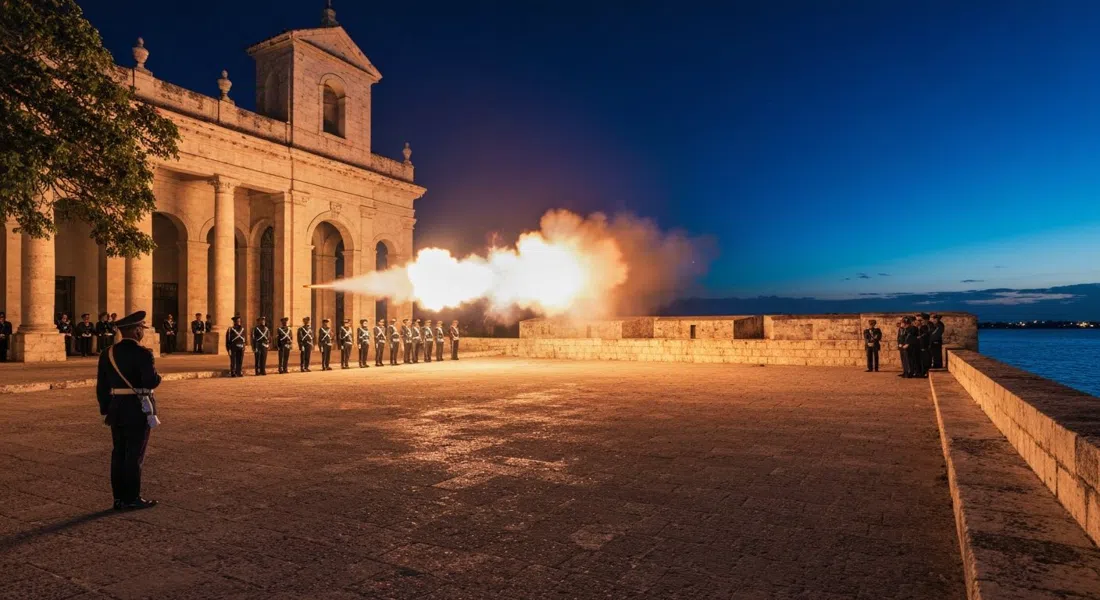
And because Casablanca’s ferry is not something you want to trust late at night, most people do the sensible thing: taxi through the harbour tunnel, watch the ceremony, then head straight back to Habana Vieja or Vedado for the real night out. That is the rhythm here. Casablanca gives you the opening movement. Havana proper handles the encore.
Where to stay in Casablanca
Almost nobody bases a Havana trip here, and for most travellers that is the right instinct. Casablanca is short on restaurants, short on shops, and short on the classic-Havana buzz. It also depends on a ferry with limited evening service, which is enough to make the place feel like a day-trip hill rather than a base.
Still, a few stays exist for travellers who care more about quiet, greenery and harbour views than convenience. The standout is Havana Casablanca, a restored garden villa inside the Morro-Cabaña park, rented whole, with a pool and panoramic views back across the bay to Old Havana and the Malecón. It sounds, and is, more like an escape than a standard room booking. At the more modest end is Hostal CasaBlanca, a simple casa-style option in the Cristo–Morro–Cabaña zone for travellers who want quiet and views on a budget.
If your idea of a good Havana day involves walking out your door into plazas, paladares and a dense street life, stay in Habana Vieja or Vedado and come here for the hill. Casablanca is not a base. It is a pause.
Getting around
The fun way in is the lanchita, the little passenger ferry across the harbour. It leaves from the Emboque de Luz / Muelle Luz terminal on the Old Havana waterfront, at the corner of San Pedro and Santa Clara just south of Plaza San Francisco. It runs roughly every 10–30 minutes, depending on how many boats are working, and costs about a dollar — or a few Cuban pesos for locals. The crossing takes 10–15 minutes. There is airport-style bag screening and a guard on the dock, a legacy of ferry hijackings back in 2003, so allow a couple of extra minutes and do not arrive expecting a casual stroll onto the boat.
The ferry alternates between the Casablanca and Regla docks, so ask a crew member “¿Casablanca?” before boarding. From the Casablanca landing it is a steep few-minutes’ walk up to the Cristo. That climb is part of the experience; it is also why you should not attempt this in the wrong shoes or without water.
The other option is a taxi through the harbour tunnel, roughly $15 one way. That is also the practical way to reach El Morro and La Cabaña by road, and the sensible return after the 9pm cannon ceremony. Do not count on the ferry late at night. Do not build a dinner reservation around it. Use it by day, enjoy the crossing, and let the hill do the rest.
One last note for train romantics: the famous Hershey electric train, which once terminated at Casablanca’s little tram-stop station, has been out of action from here since Hurricane Irma in 2017. Only the Hershey–Jaruco stretch runs, and the promised diesel revival was not operating as of 2025. The station is a landmark now, not a departure point.
Casablanca rewards the traveller who understands that not every neighbourhood needs to be full of things. Sometimes one statue, two fortresses and a ferry are enough. Here, the city opens itself without the noise. You cross the bay, climb the hill, and Havana arranges itself below you in full view.