The Havana issue
Walking Callejón de Hamel and Cayo Hueso in Havana
Sunday drummers, painted walls and the climb to the university steps, with the places to eat and sleep within a kilometre of the alley.
By Oliver NashReading Havana barrio by barrio
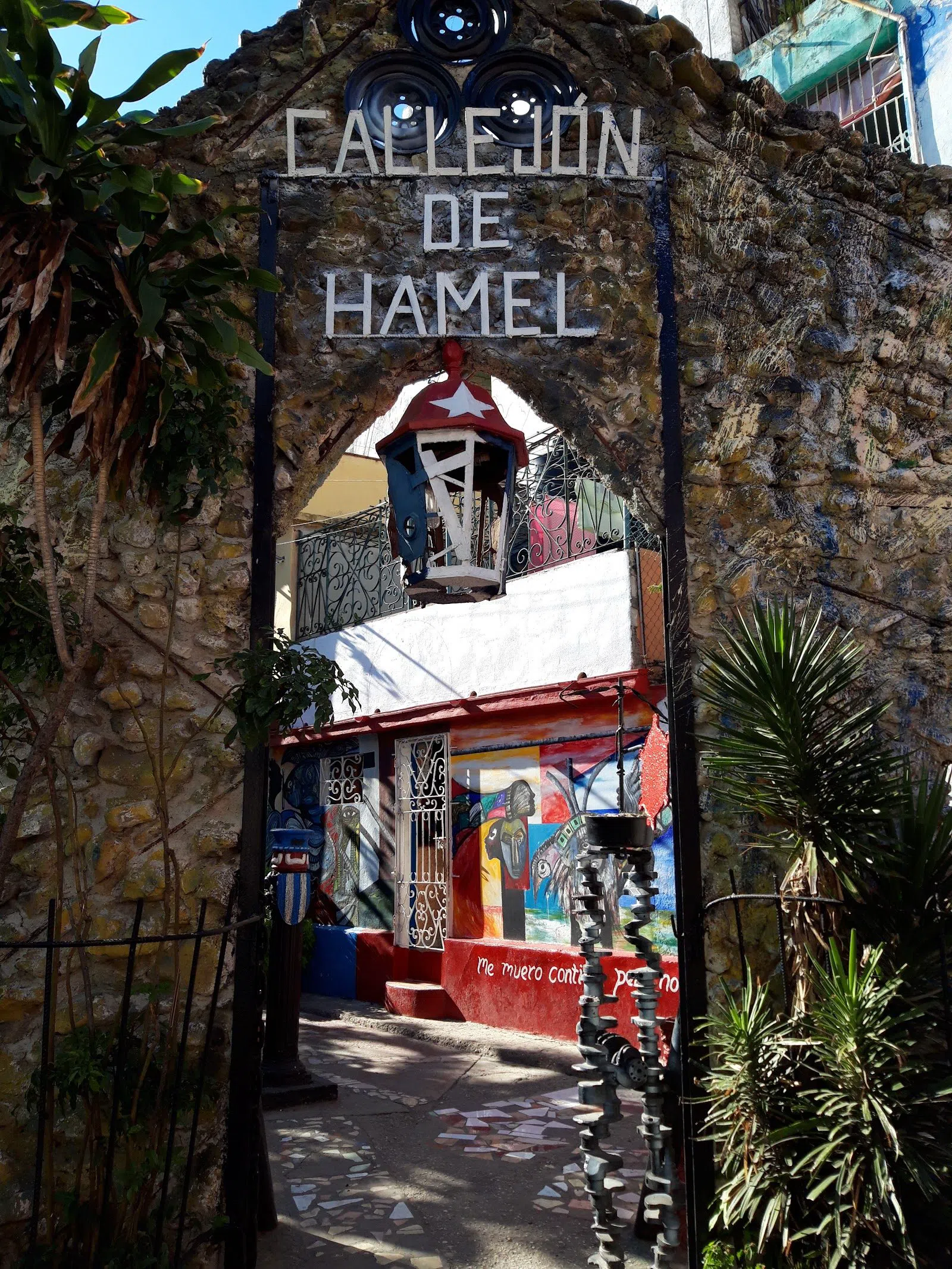
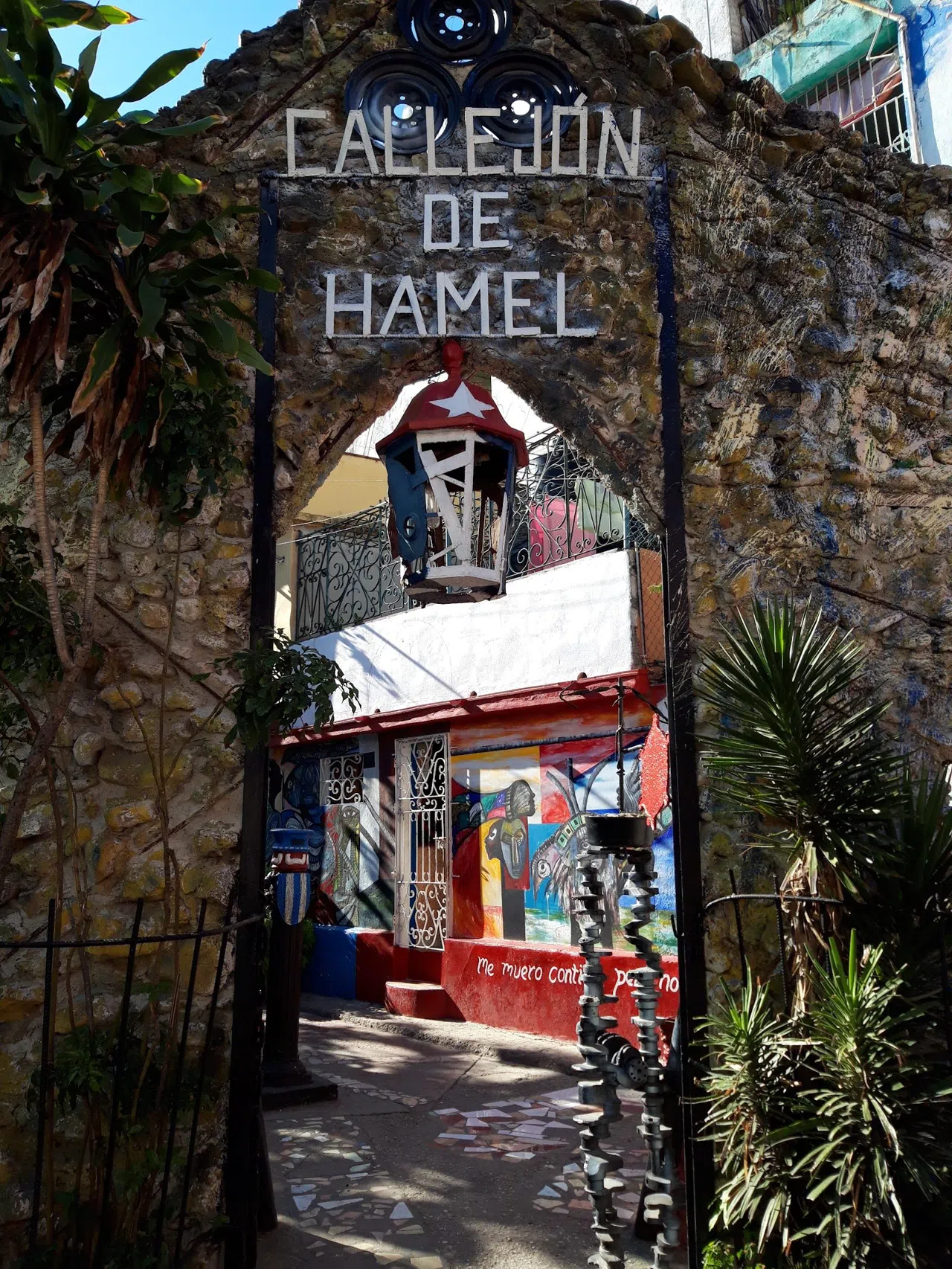
The drummers at Callejón de Hamel (Cayo Hueso) start at noon on Sunday, and by 11:30 the circle around them is five deep. The alley is 200m long and ends at a wall. Entry is free.
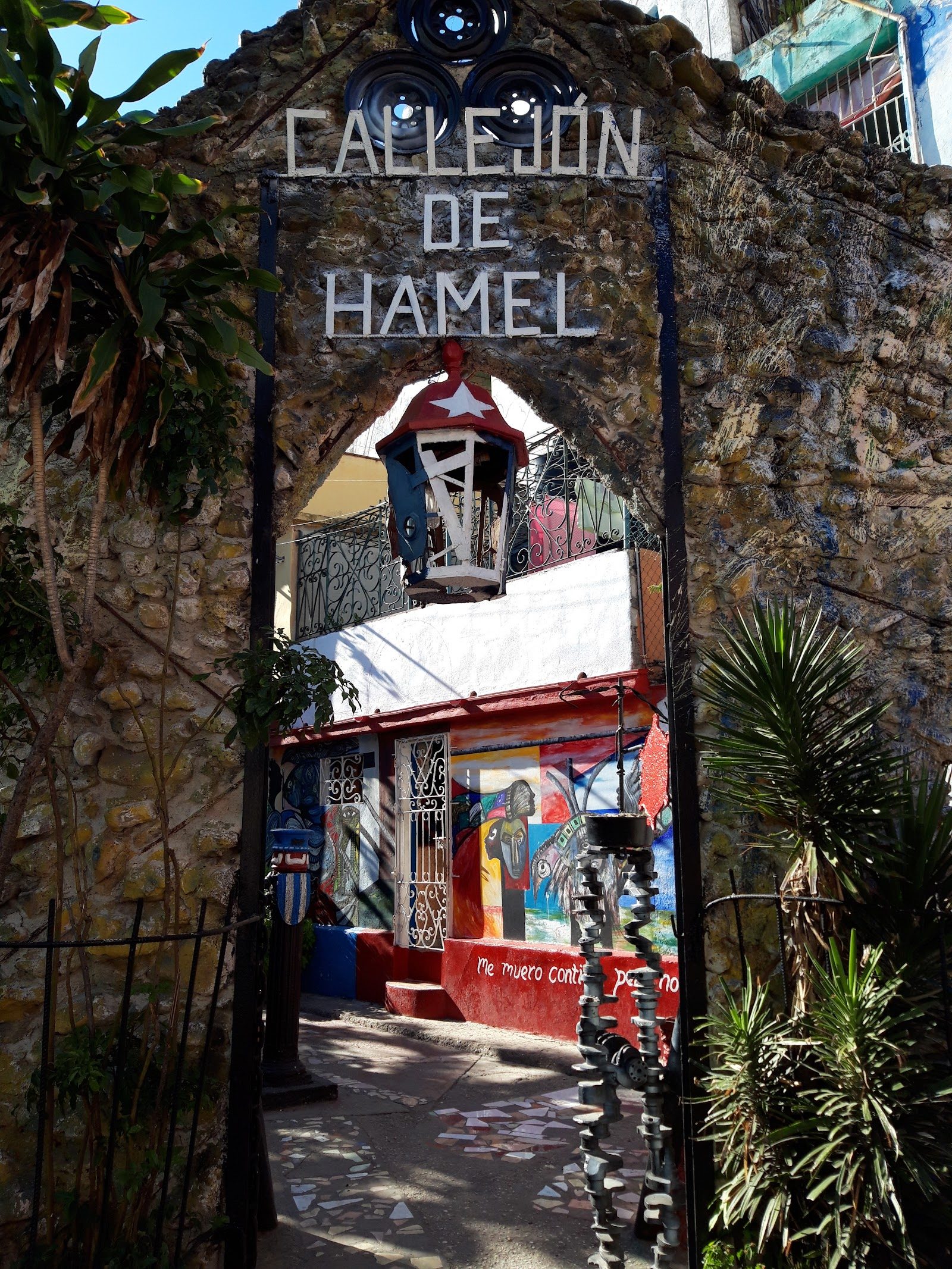
The alley and its rumba
Both walls run floor to roof in ochre, red and cobalt, painted with Afro-Cuban murals of the Yoruba orishas and with proverbs in looping script. Sculptures welded from old bathtubs and bicycle wheels are bolted to the brickwork, gears and all, and one hand-painted bathtub is a shrine. This project is the reason this corner of Cayo Hueso is on anyone's map.
Salvador González Escalona founded it and died in April 2021. The murals and the drumming carry on without him, at noon on Saturdays as well as Sundays. You cannot buy a canvas from him in person, whatever older pages still promise.
Come before 11:30 on Sunday. After that you are looking at the backs of other visitors. Tour buses stop on San Lázaro at the mouth of the alley and their groups walk in from there.
Plan your Havana trip
Live prices from our booking partners.
Free cancellation on many rooms. We may earn a commission when you book.
Parque Trillo, three blocks from the murals
Parque Trillo (Cayo Hueso) is the barrio's own plaza, 300m from the alley, a square city block of tall shade trees and cracked concrete paths with peeling pastel colonnades closing it on all four sides. A white marble statue of the independence general Quintín Banderas, put up in 1953, stands on a plinth at the centre. Domino tables and children's football fill the rest of it.
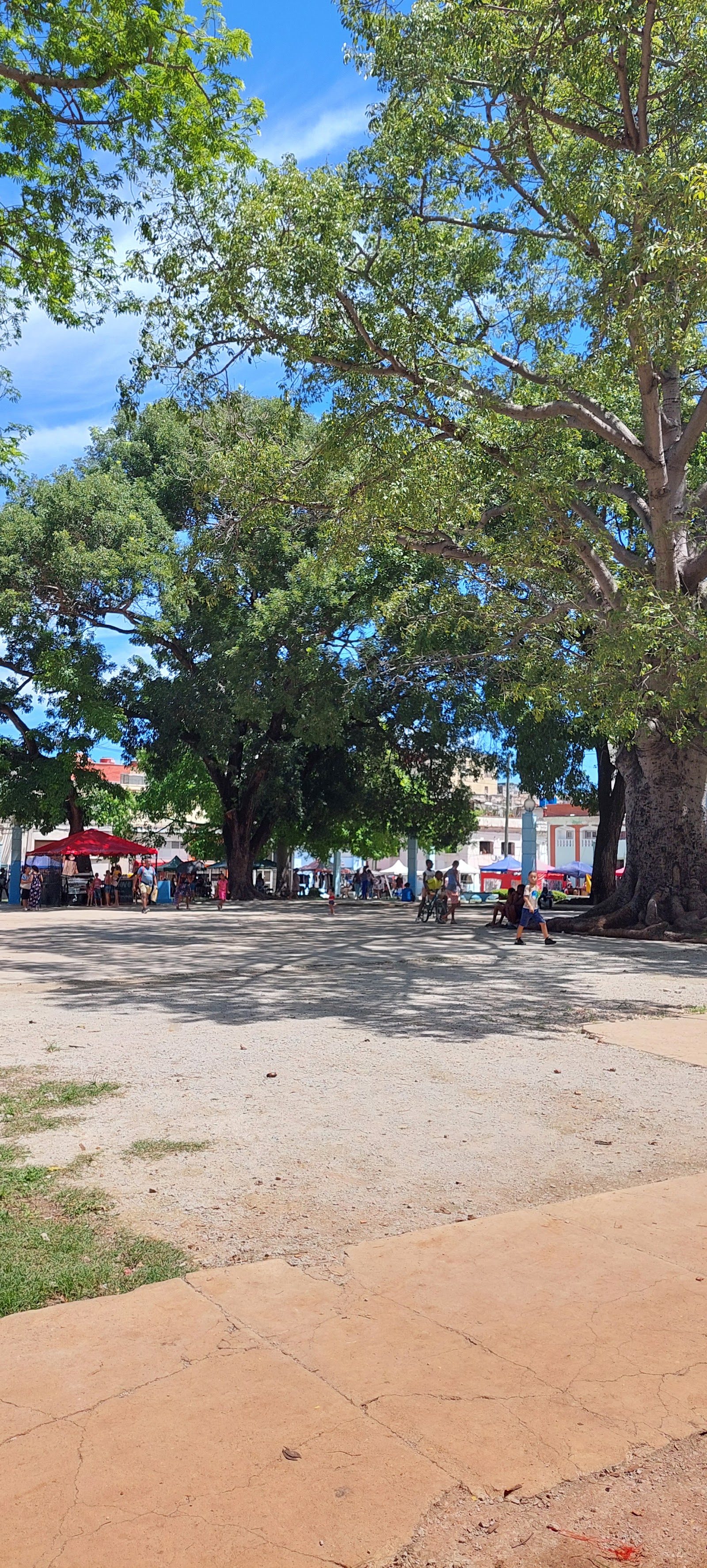
Residents went to the press in August 2026 over uncollected rubbish piling up on the square. It is still the obvious place to gather people before the walk to Hamel, with no gate and no hours.
The Carmen church on Infanta
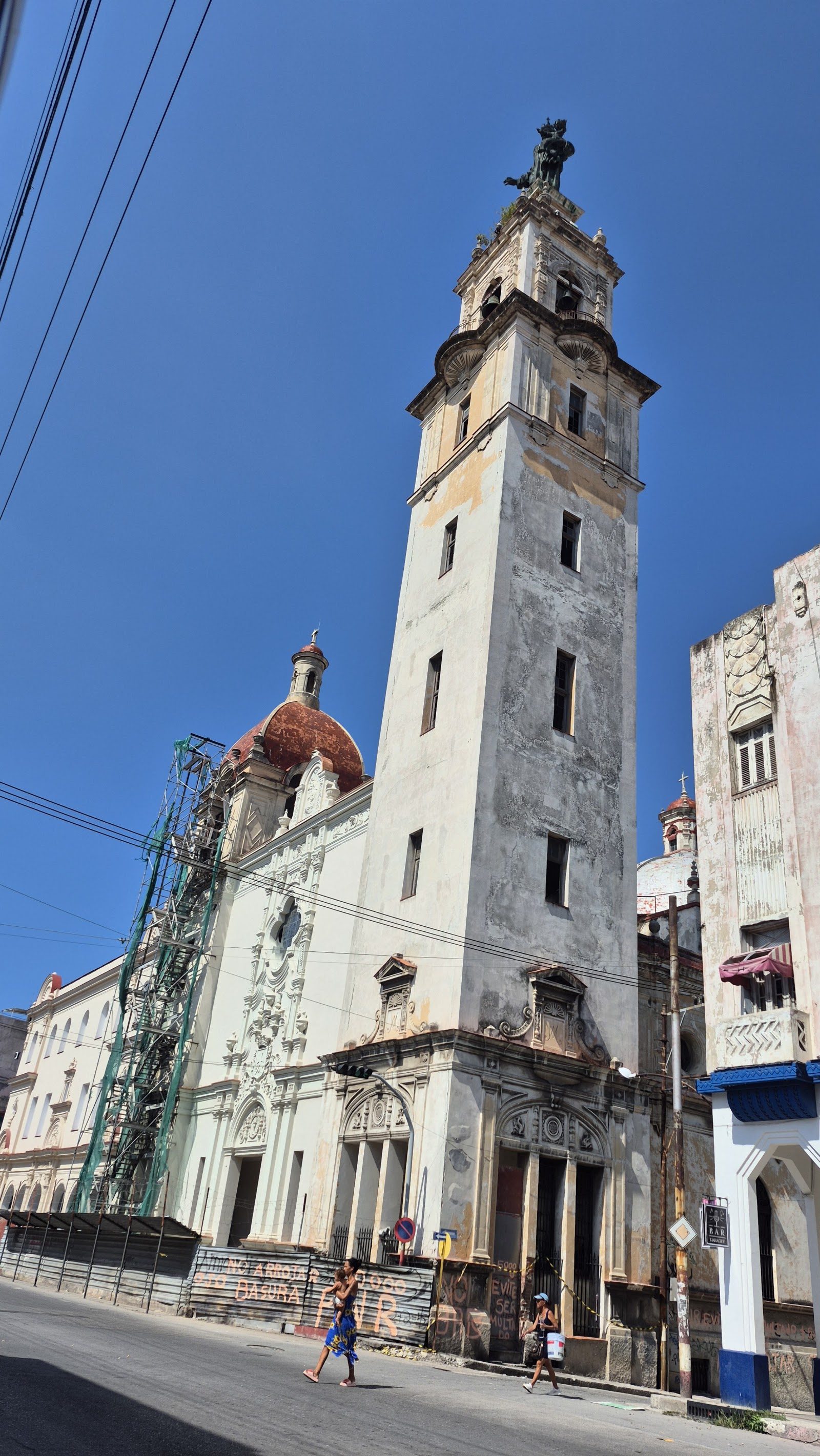
Iglesia y Convento de Nuestra Señora del Carmen (Infanta between Neptuno and Concordia) is 500m from the alley and the one monumental landmark inside walking distance. The bell tower reaches 60.5m, the tallest structure in Centro Habana, and the bronze Virgen del Carmen on the summit is 7.5m tall and weighs nine tonnes. You can pick her out from streets all over the district. Navigate Cayo Hueso by her.
The facade on Infanta is Spanish baroque-revival. The interior holds polychrome mosaic, a gilded carved-wood altarpiece and painted frescoes. This is a working parish. Visit outside Mass, cover your shoulders and keep your voice down.
Uphill on San Lázaro to the university
San Lázaro runs west from the alley and climbs. At the top of it, 900m from Hamel, Universidad de La Habana (San Lázaro) opens with the escalinata, 88 stone steps rising to a neoclassical colonnade. The bronze Alma Mater sits at the head of them with her arms thrown wide, students spread out below her on the stone. Behind the colonnade are the quadrangles of a campus founded in 1728.
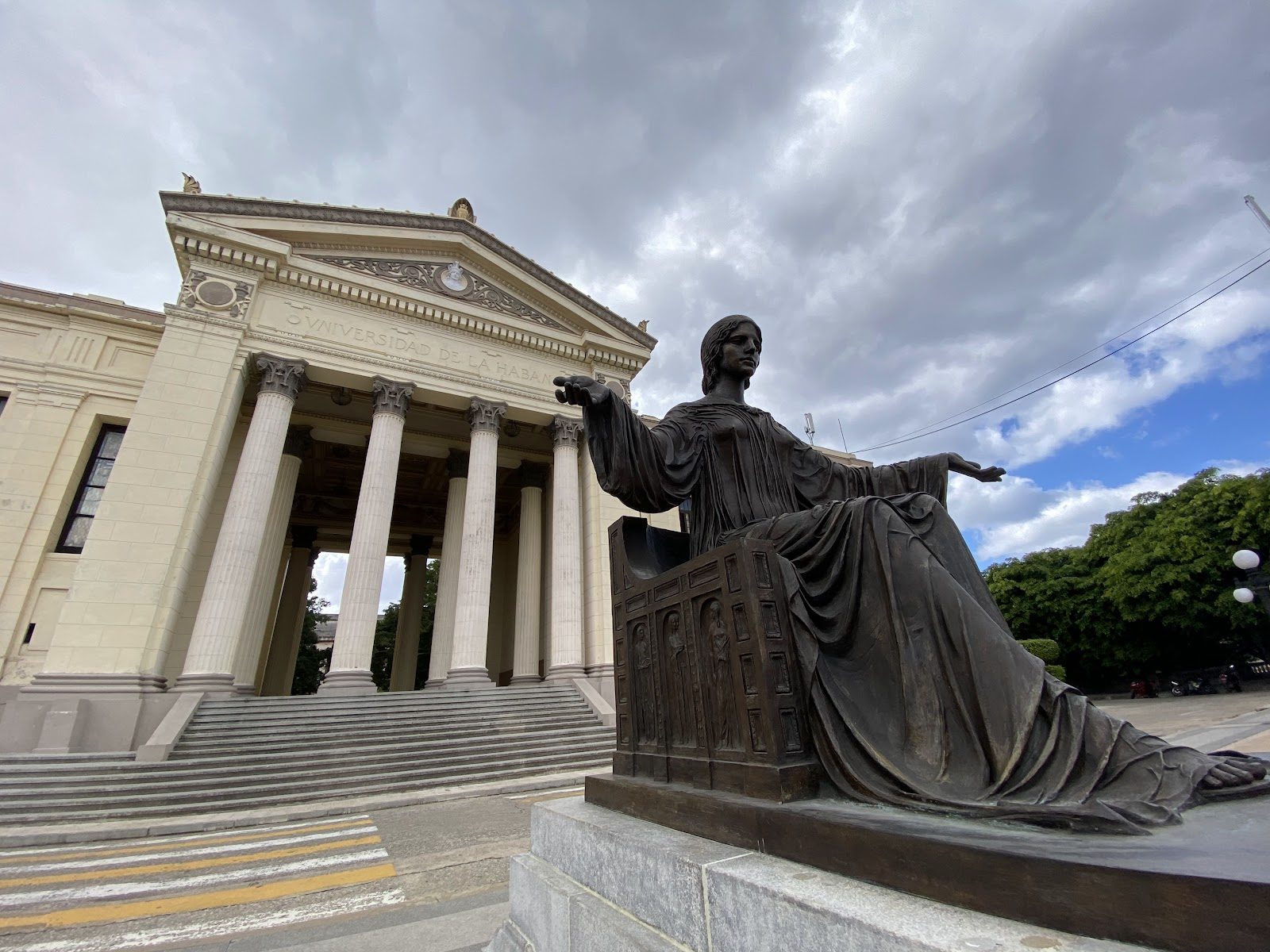
The steps and the forecourt are free and open to anyone. Getting inside a faculty building depends on whoever is keeping the door that day. This is also the seam where Centro Habana becomes Vedado.
Museo Napoleónico beside the campus
Museo Napoleónico (San Miguel 1159) stands next to the university, 1km from the alley, and is the best move in wet weather. The building is a four-storey 1920s Renaissance palazzo with a loggia and a roof terrace over Havana. Dark-panelled rooms hold Empire furniture and Sèvres porcelain, along with Napoleon's death mask, his hat and one of his molars; a tower study at the top is lined with books. $$.
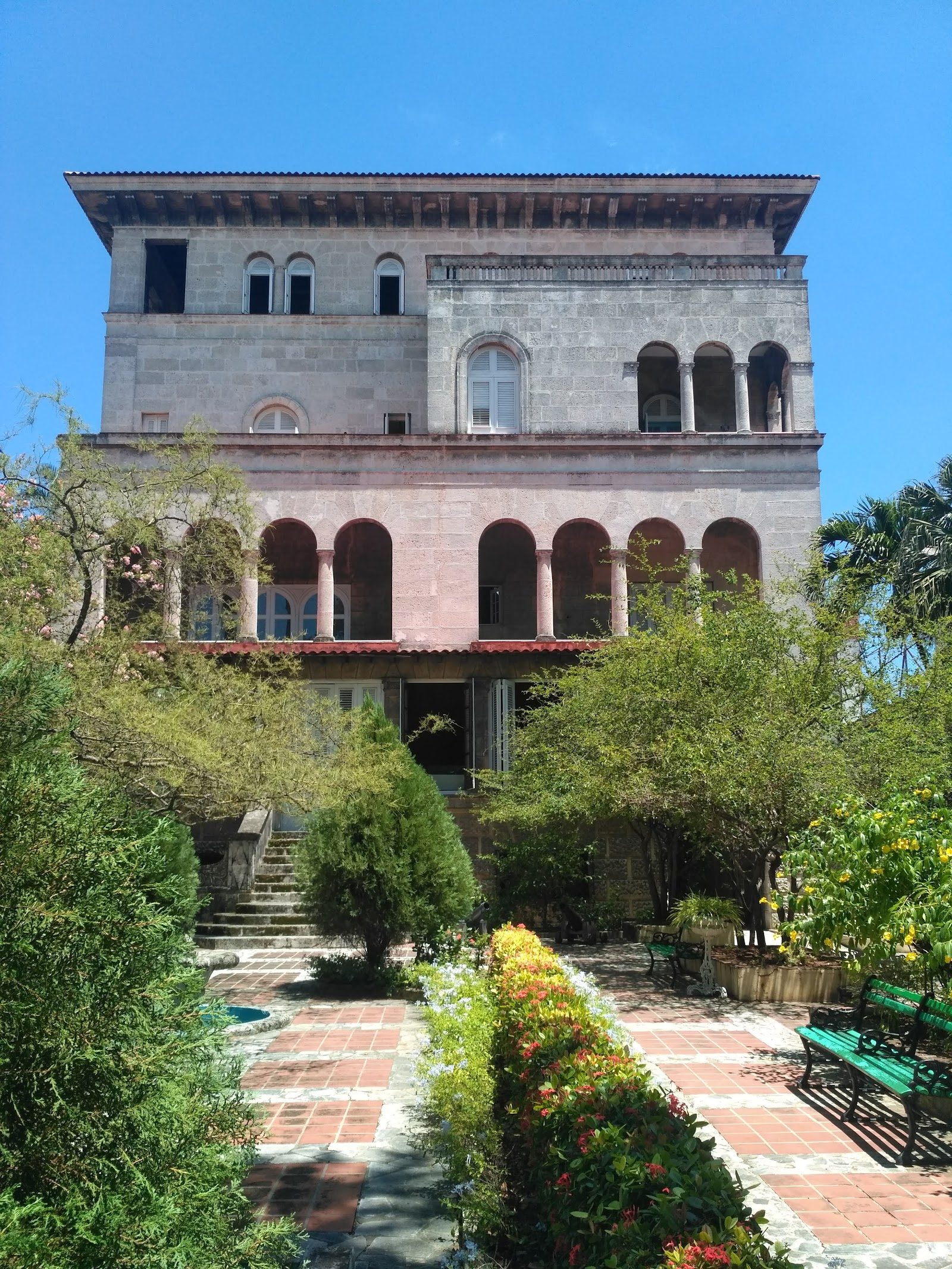
It opens Tuesday to Saturday, 09:30 to 17:00, and Sunday until 12:30. The rooms are small and the stairs narrow. Split a party larger than 10.
Lunch after the rumba
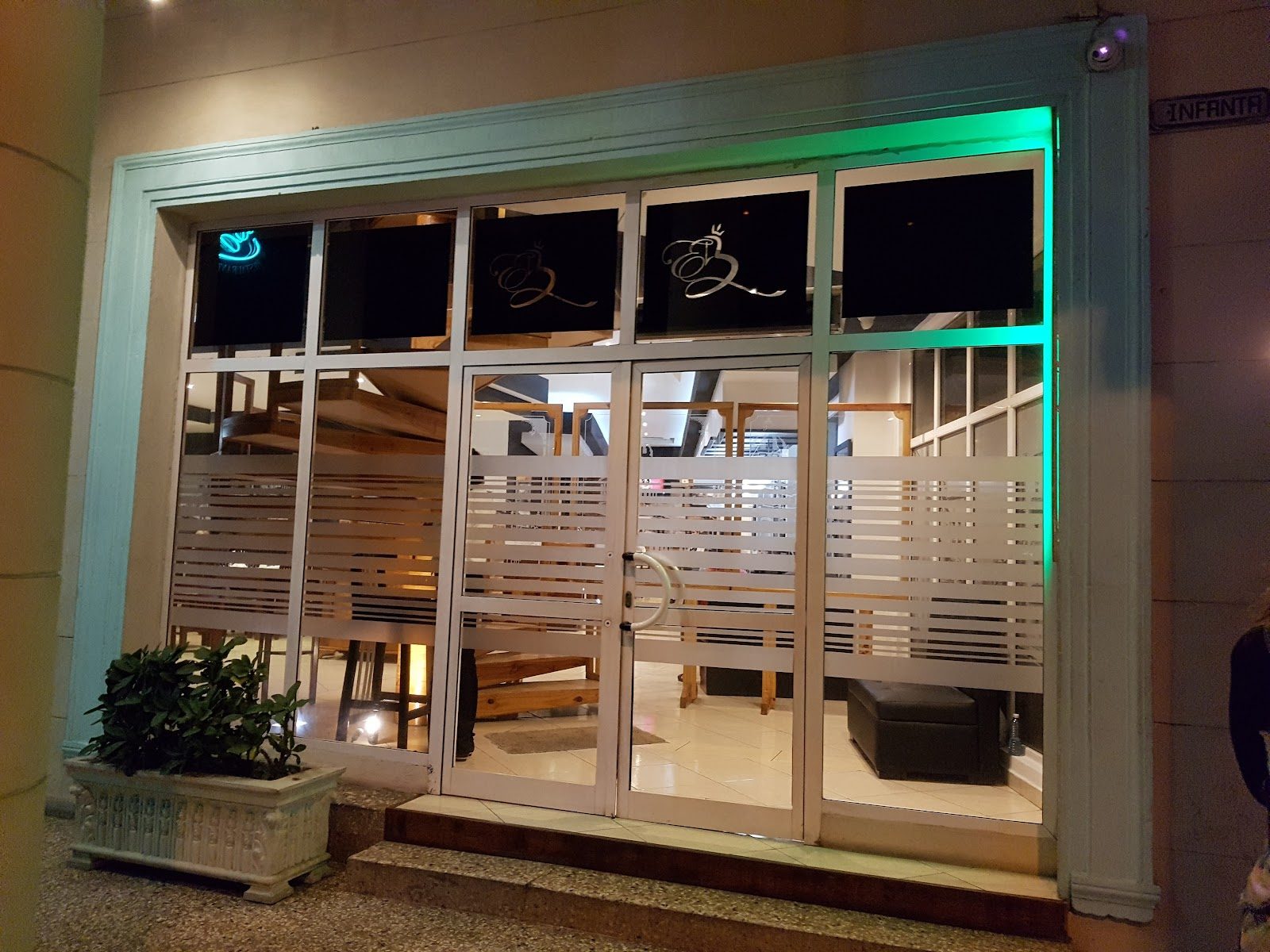
El Biky (corner of Infanta and San Lázaro) sits 350m from the alley and opens 08:00 to 23:45 daily. A long lit pastry counter of glossy cakes and meringues fronts the glass-walled ground floor; behind it are a marble-topped cafeteria and a two-section bar in dark wood, and a formal dining room takes the top floor above the street. $$. Walk-ins are normal at every level. Book the upstairs restaurant to seat a party together, and check the bill before you pay, because a few diners report items they never ordered.
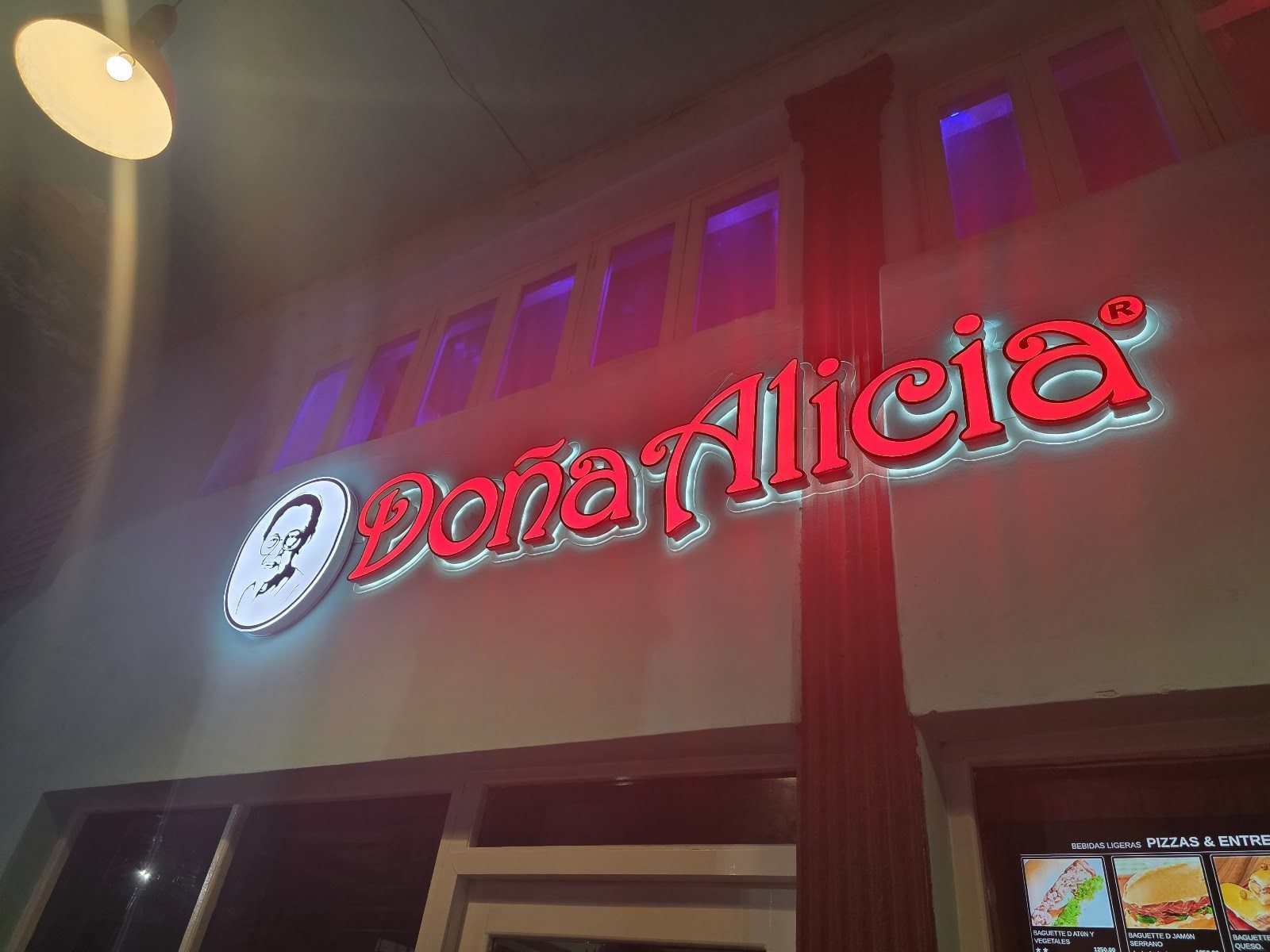
Doña Alicia (Reina y Belascoaín) is the best-rated kitchen in the area at the moment, 900m from the alley and serving until 01:00. The corner dining room is bright and modern, with tablets clamped to every table for ordering and a wheeled robot carrying plates across the floor, an unexpected sight amid the crumbling arcades of Centro Habana. $$.
The paladares on Concordia and San Rafael
La Guarida (Concordia 418) is Havana's most famous paladar, 800m east of the alley, and was named Cuba's best restaurant at the 2024 World Culinary Awards. You reach it through a crumbling grand tenement, up a chipped marble staircase past laundry on the landings and stained-glass transoms, into a dining room of distressed walls hung with film stills and photographs. The rooftop terrace looks out to sea. Fresa y Chocolate was shot in these rooms.
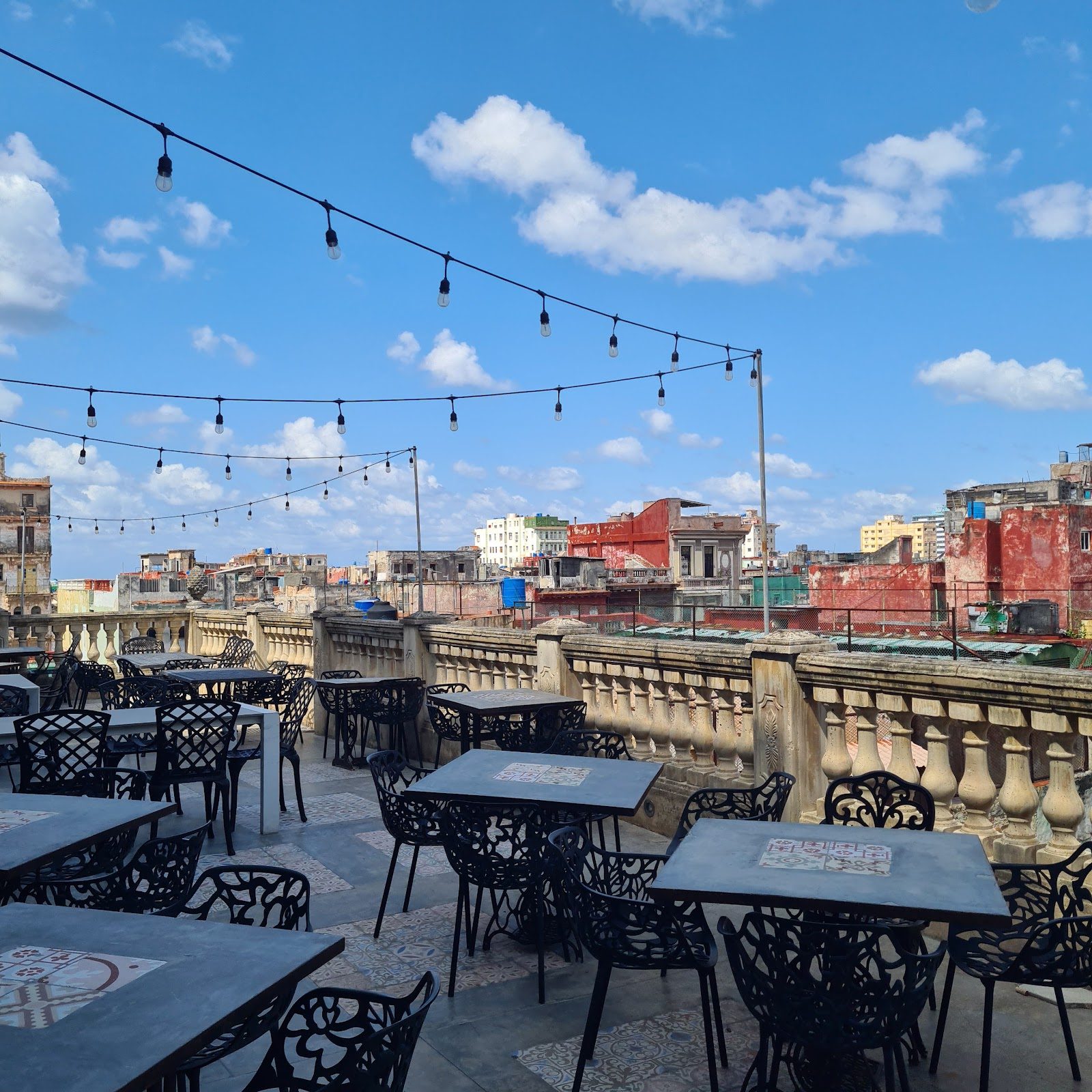
Service runs 12:00 to 16:00 and 18:00 to 23:45. $$$$. Reservations are essential in the evening, and the dining rooms are small, so book well ahead of the date you want.
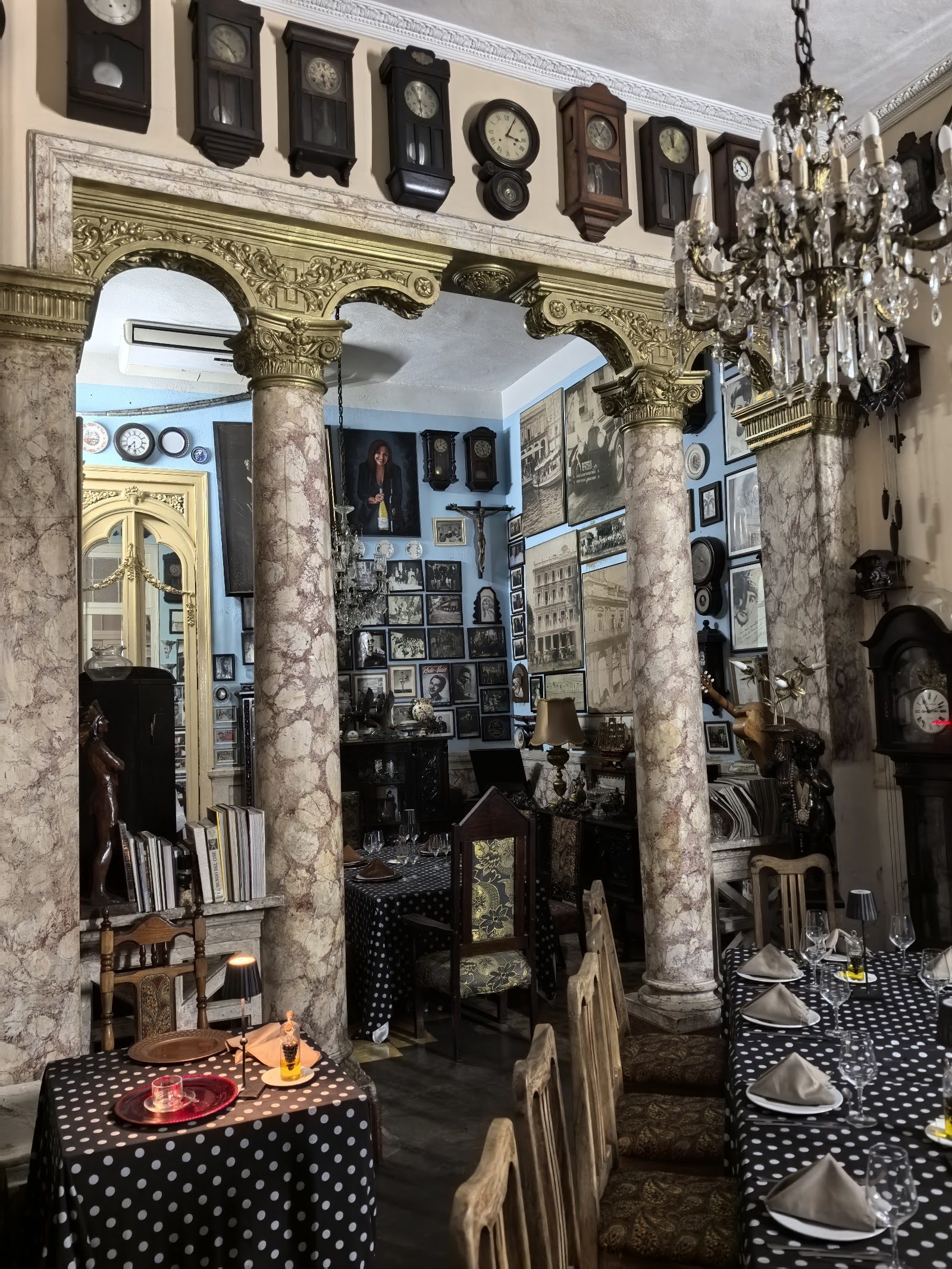
San Cristóbal Paladar (San Rafael 469) is 1km east and closed on Sunday, which is the day most people come for the rumba. Put it in the diary for a Saturday and book by phone on +53 7 8601705. The ground floor of an early-1900s mansion is crammed salon-style with gilt mirrors, santería figures, boxing photographs and framed Cuban memorabilia, under stained glass and beside caged birds, over white tablecloths. The table where the Obamas ate in 2016 is still pointed out. $$$.
Casa de la Música de Galiano after dark
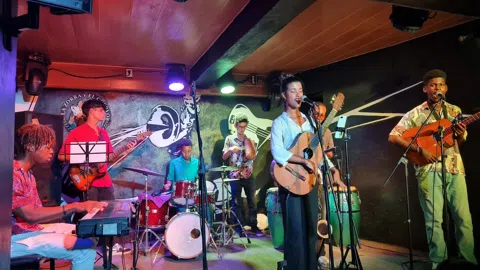
Casa de la Música de Galiano (Galiano between Neptuno and Concordia) is the timba and son room of Centro Habana, 1.2km from the alley, run by EGREM and programming through 2026. The hall has been re-fitted dark, with a wide stage, a banked sound rig and a sprung dance floor that packs out. Horn sections play in matching shirts, and rum and ice go on the small round tables. $$$.
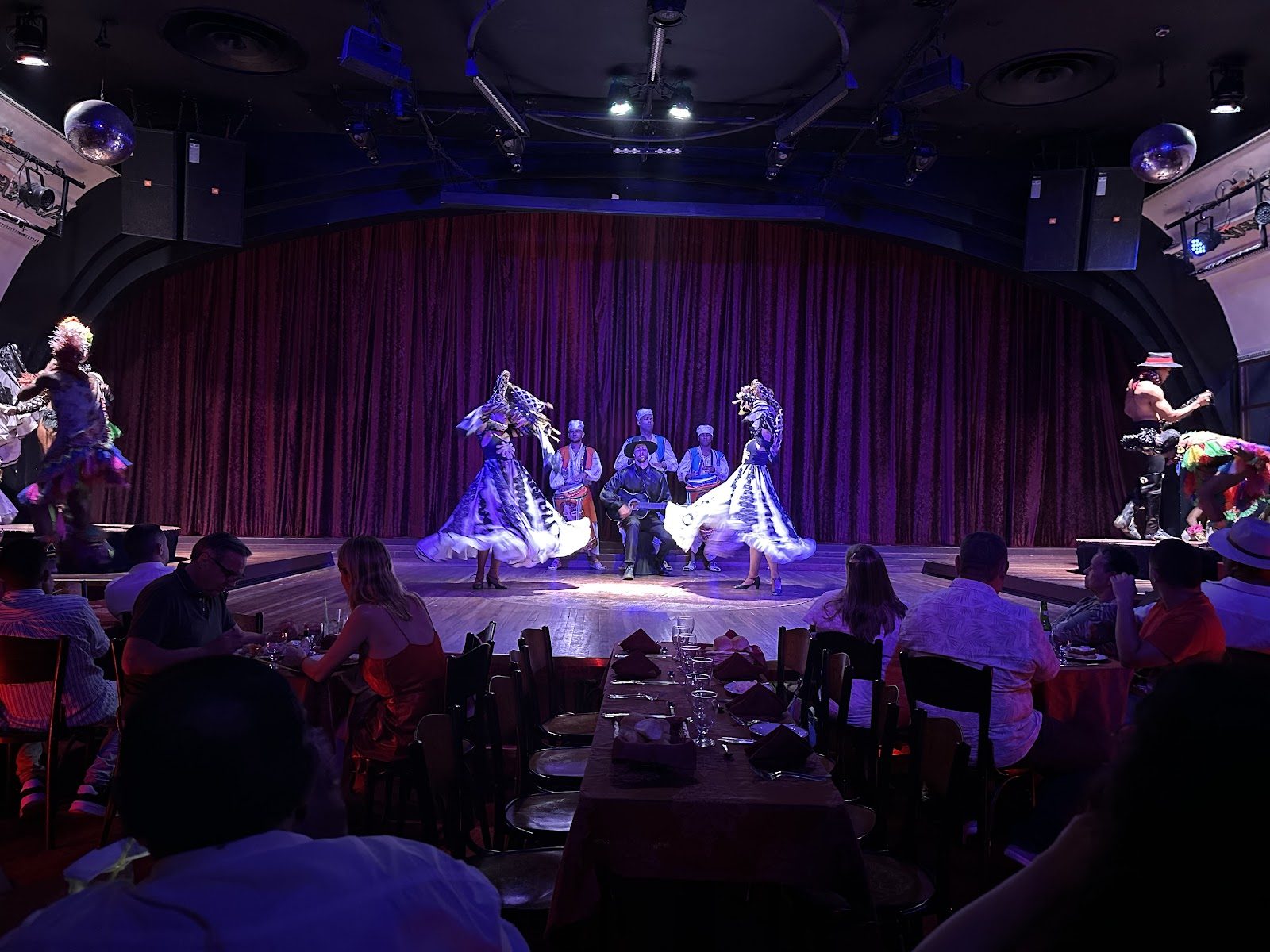
You pay a cover charge at the door. The matinee runs 17:00 to 21:00 and is the easier slot to walk into; the 22:00 session is the serious one. Any price quoted to you in CUC predates 2021, when that currency was abolished.
Hotels on the Malecón
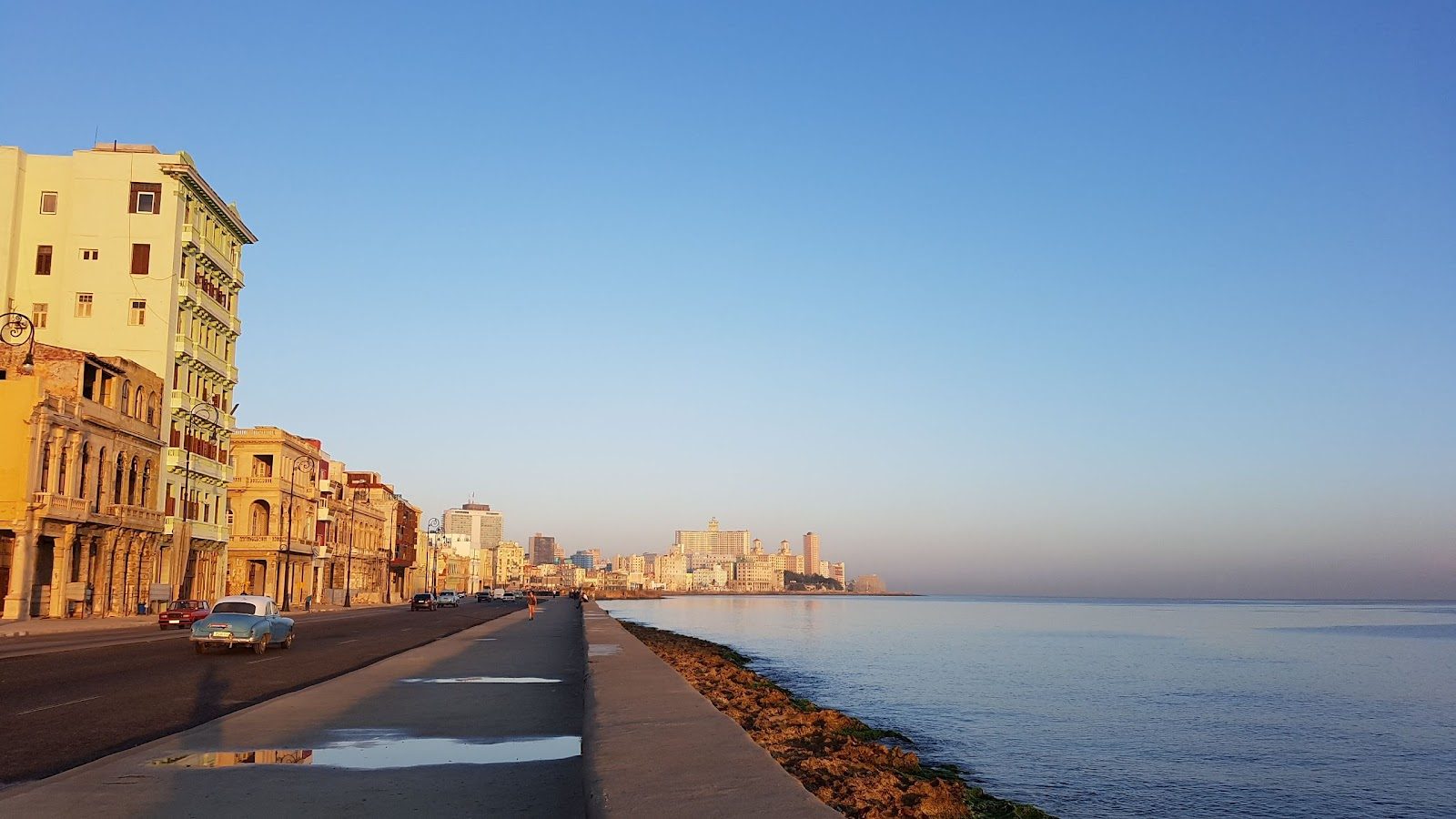
Hotel Terral (Malecón and Lealtad) is the closest good hotel to the alley at 900m, and the only Habaguanex property on the Malecón itself. The block is small, sharp-edged and modernist, standing on the sea wall with a glass frontage to the Atlantic, pale timber and nature-motif interiors, and private terraces over the waterfront. The house is 14 rooms, 12 standard and two junior suites, so a coach party will not fit. Front rooms take the traffic noise off the seafront. $$$. You can book it on the operator's own site.
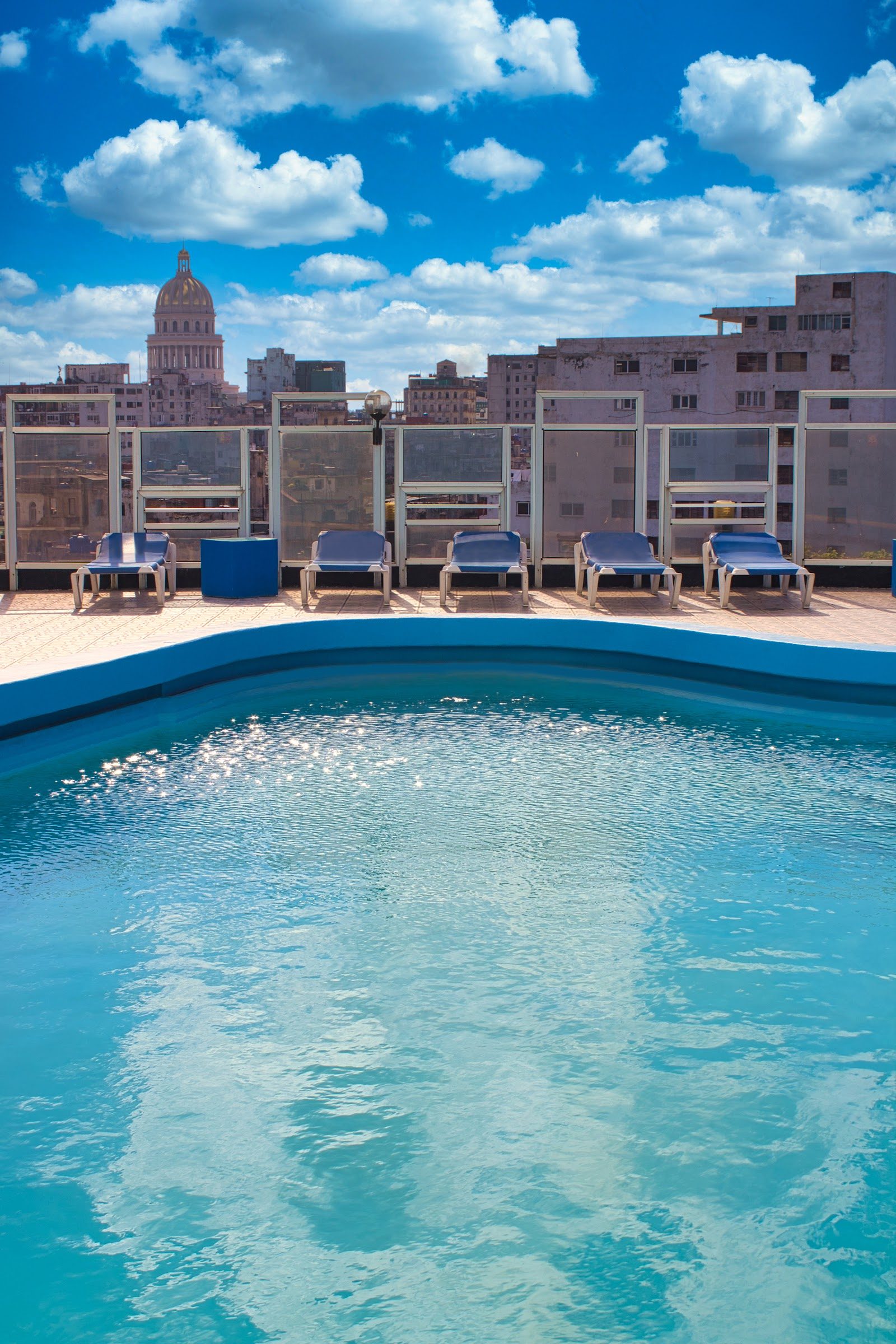
Hotel Deauville (where Galiano meets the Malecón) is 1.1km from the alley, a slab-sided 1950s high-rise standing alone on the sea wall. The sixth-floor pool deck looks straight out over the water and back across the rooftops of Centro Habana. It has reopened after a four-year closure and holds 144 rooms, 100 of them in service. $$. On maintenance it ranks near the bottom of Havana's hotels. Hotel Deauville also appears on the US State Department's Cuba Prohibited Accommodations List. US travellers cannot lawfully stay there.
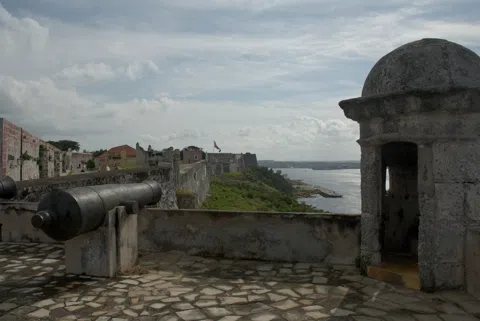
Hotel Nacional de Cuba is 1.3km from the alley and the grandest stay in reach, a twin-towered Moorish-deco hotel of 1930 on a bluff above the Malecón, approached by an avenue of royal palms, with wicker chairs in long arcaded gardens that face the sea. $$$$. Walk up even if you sleep elsewhere. The free guided history tour goes Monday to Saturday at 10:00 and covers the gangster years, the Missile Crisis tunnels and the clifftop battery guns, which are UNESCO-listed.
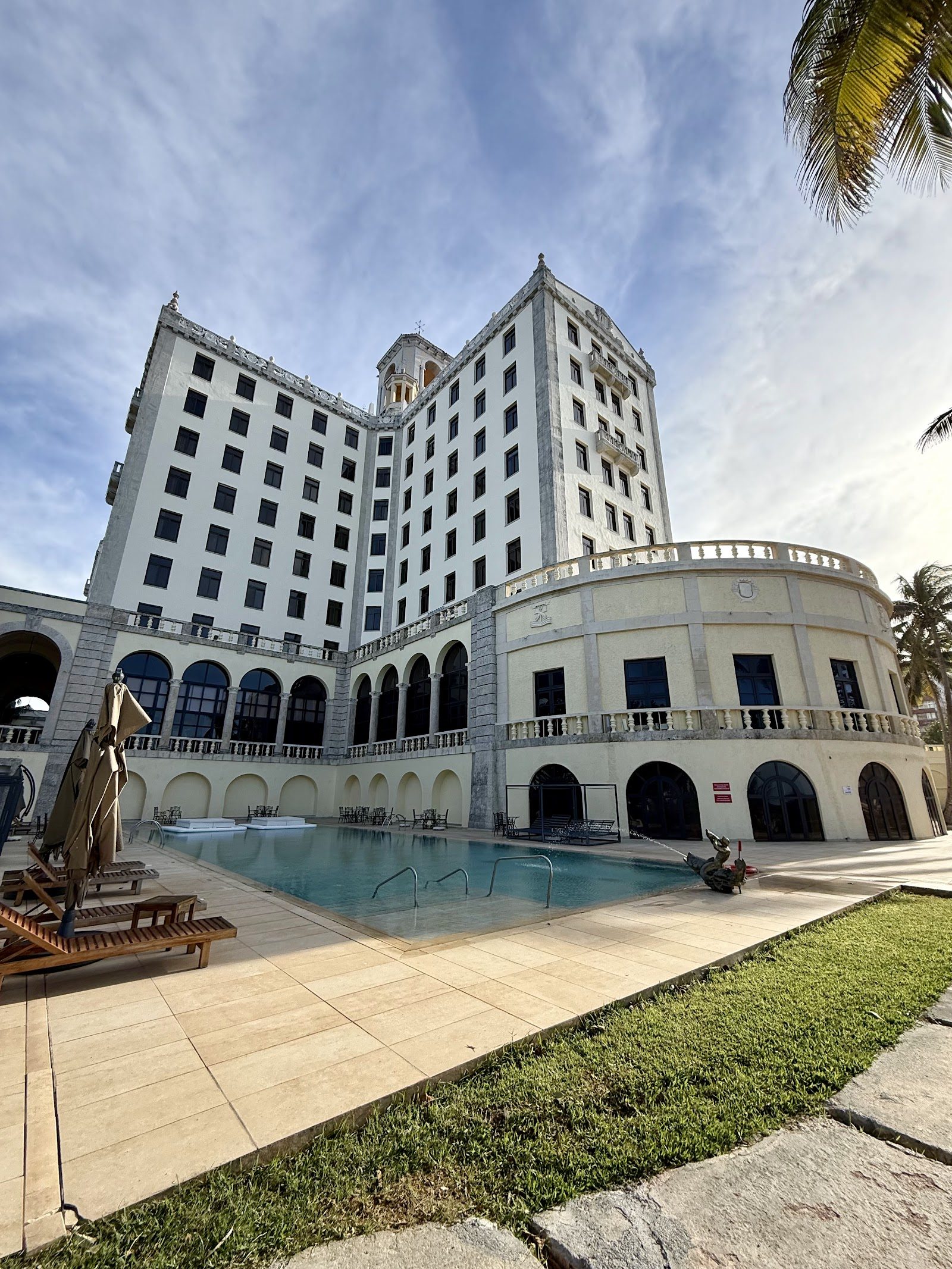
Non-guests are welcome in the gardens and the bar. Two 19th-century coastal guns stand on the lawn, a 305mm Ordóñez and a 280mm Krupp. A Hall of Fame corridor inside is hung with signed celebrity portraits.
Days, hours and booking
Sunday is the day for the alley, and it is the day San Cristóbal Paladar is shut and the Museo Napoleónico closes early. Reserve La Guarida before you travel, and phone San Cristóbal for a Saturday table.
See the Havana guide and the Havana hotel search.
Gallery
Callejón de Hamel in pictures
Callejón de Hamel — your questions
When does the rumba happen at Callejón de Hamel?
Noon on Sundays, and Saturdays as well. Come before 11:30 on a Sunday; by then the crowd round the drummers is five deep. The alley itself is a free public street.
Can you still buy art from the founder, Salvador González Escalona?
No. He died in April 2021. The murals and welded sculptures are still there, the rumba still runs on Saturdays and Sundays, and any page selling canvases from the artist in person is out of date.
Where can I eat near the alley on a Sunday?
El Biky is 350m away at Infanta and San Lázaro, open 08:00 to 23:45 daily, and Doña Alicia at Reina y Belascoaín serves until 01:00. San Cristóbal Paladar closes on Sundays, so book a Saturday table on +53 7 8601705.
What is there to see within walking distance of Callejón de Hamel?
Parque Trillo is 300m away and the Carmen church, with its 60.5m bell tower, 500m. The 88-step university escalinata is 900m uphill on San Lázaro, and the Museo Napoleónico 1km, open Tuesday to Saturday 09:30 to 17:00 and Sunday until 12:30.
Which hotel is closest to Callejón de Hamel?
Hotel Terral is 900m away on the Malecón at Lealtad and has 14 rooms. Hotel Deauville, 1.1km away, has 144 rooms, ranks near the bottom of Havana hotels on maintenance, and sits on the US Cuba Prohibited Accommodations List.
Do I need to book La Guarida?
Yes, and in the evening they are essential, since the dining rooms are small. Service runs 12:00 to 16:00 and 18:00 to 23:45.