The Havana issue
What to Settle Before You Book Havana on a US Passport
The visa, the licence category, the cash and the blackouts: everything a US traveller has to fix before the flight, and the private houses, paladares and workshops that fill the record for you.
By Oliver NashReading Havana barrio by barrio
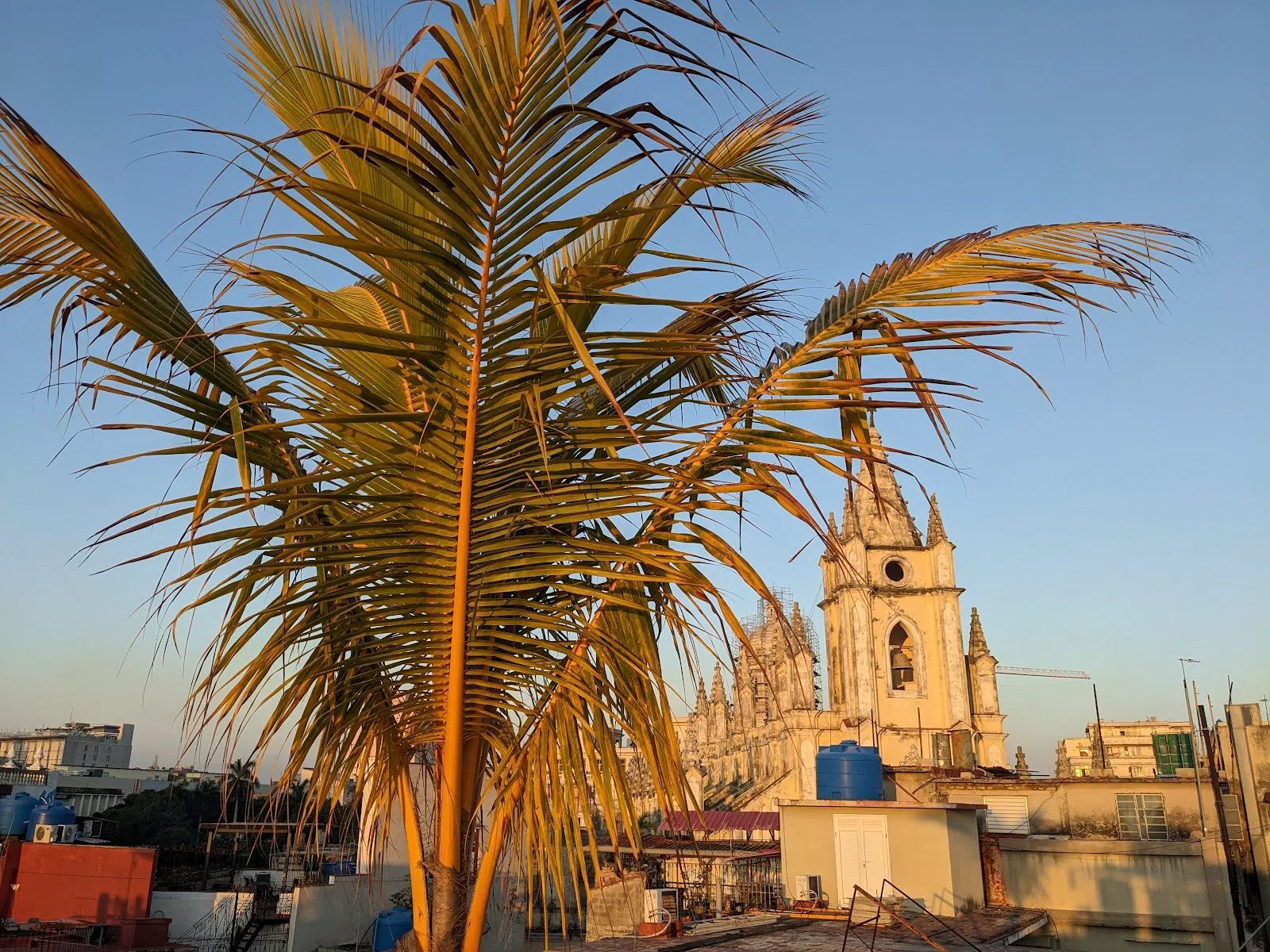
The Malecón is a seawall, a six-lane road and the city's front porch all at once, and on a January evening the spray comes over it in sheets while a speaker on somebody's roof works through the same four songs. Havana is not a hard city to enjoy. It rewards walking, it feeds you properly, and it talks back. It is a hard city to book from a United States address, and almost all of that difficulty is administrative: a visa, a licence category, a thick envelope of cash and a power grid that keeps its own hours. Every piece of it can be settled at your desk before you go.
The visa is a form now, not a card in your passport
Cuba's tourist visa is bought online ahead of departure. The electronic version has largely replaced the paper tourist card, though some airlines still sell a card at check-in on their own routes. The two systems coexist badly, so the single most useful email you will send is to your carrier, quoting your flight number and asking which one applies to you. Send it when you book, not the week before you fly, because if the answer is the online visa you want the confirmation sitting in your inbox for days rather than hours.
Separately, everyone arriving fills in D'Viajeros, Cuba's advance traveller declaration covering customs, health and contact details, inside the 48 hours before landing. It produces a QR code, and the immigration hall reads the code, not your explanations. Screenshot it and save it offline, because you cannot count on airport Wi-Fi.
Travel medical insurance is a condition of entry rather than a piece of advice. Cuban officials do not accept every US policy, and enforcement varies by desk, so the sane approach is to carry a printed policy that names Cuba explicitly and to accept that you may be sold a Cuban policy on arrival anyway. Two more items belong in the same pre-booking hour. If anyone in your party travels on a visa-waiver passport, a Cuban entry stamp ends their ESTA eligibility and sends them to a US visa interview for every future trip. And US citizens born in Cuba are generally required to enter on a Cuban passport, which takes months to arrange. Neither is something you want to discover at the gate.
Plan your Havana trip
Live prices from our booking partners.
Free cancellation on many rooms. We may earn a commission when you book.
Pick the licence category you can defend
Tourism to Cuba is still prohibited under US law. What is permitted is travel that fits one of the general licence categories, and for an independent traveller that means Support for the Cuban People. There is no application and no approval, since you self-certify, but the category carries real conditions: a full-time schedule of activities that engage ordinary Cubans and put your money into the private sector, and records kept for five years. Records means receipts, booking confirmations, the name of the family whose house you slept in, a day-by-day itinerary you actually followed. The older people-to-people educational route has been narrowed repeatedly and should not be the plan you build on.
The other half of the compliance question is the State Department's Cuba Restricted List, a roster of hotels, marinas and shops tied to state and military holding companies that Americans may not transact with. Booking one of those rooms through a third-country website does not launder the transaction. That works out well rather than badly: the private end of Havana's hospitality is where the good rooms and the better food have been for years.
Where you sleep is half the paperwork
Casa Vitrales (Old Havana) is the cleanest expression of the rule: eight keys, six superior rooms and two junior suites, in a restored house whose stained glass gives it its name, with a roof that looks over the old town. It runs $70 to $130 a room including breakfast, cash on arrival, booked direct by email or WhatsApp well ahead. Groups of six to sixteen can take the whole house. Your money goes to the family rather than a state chain, and the receipt they write is the record you keep.
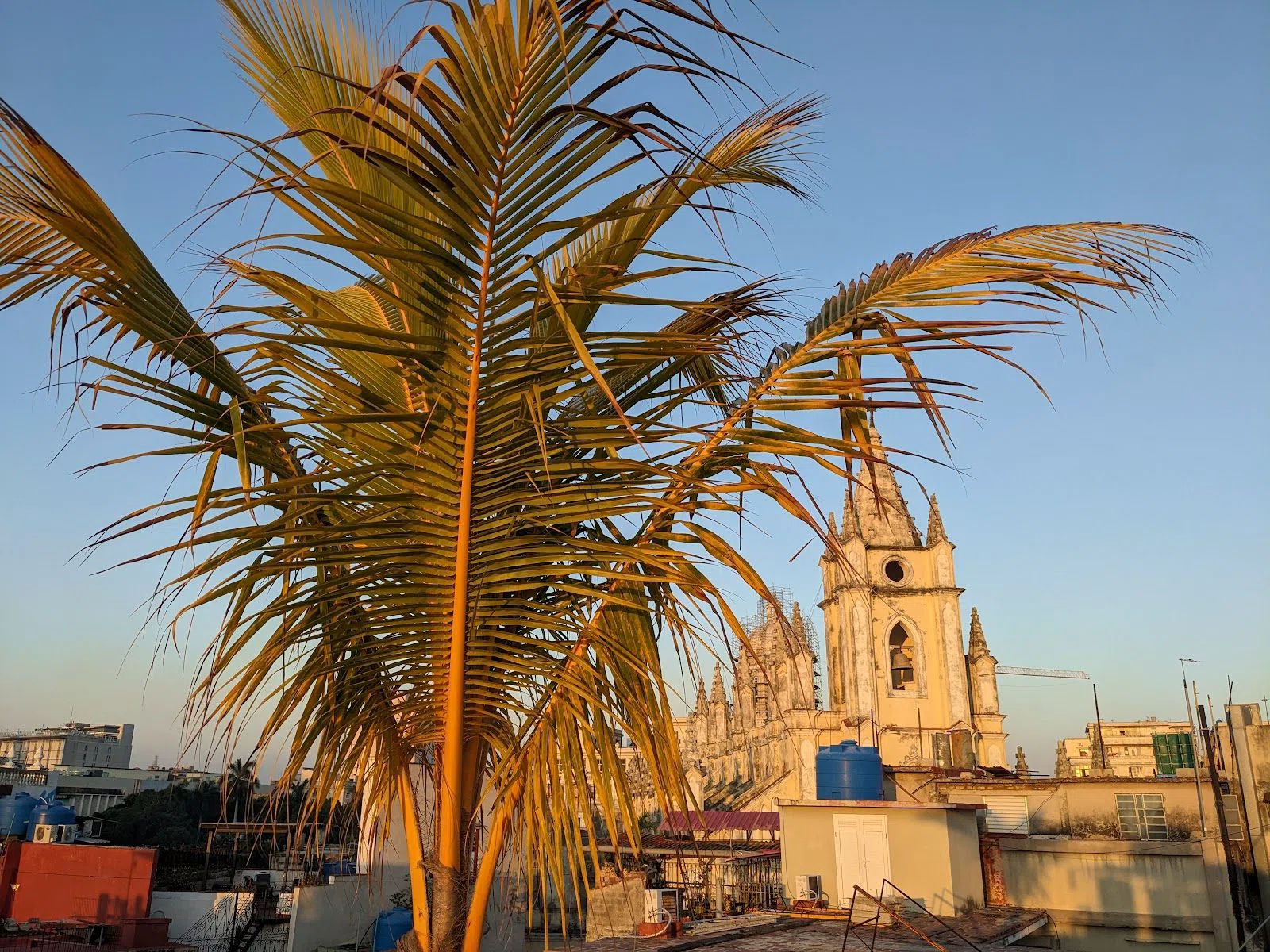
Malecón 663 (Centro Habana) sits on the seafront at number 663 between Gervasio and Belascoaín: three rooms and a sea-view suite at $120 to $200 a night, a private house and so not a restricted entity. The rooftop bar, 'No te bañes en el Malecón', takes walk-in groups, with cocktails and tapas around $6 to $12, live Latin jazz on Mondays and Cuban nights midweek. The house also handles private events and full buy-outs, though at four keys it suits couples better than parties.
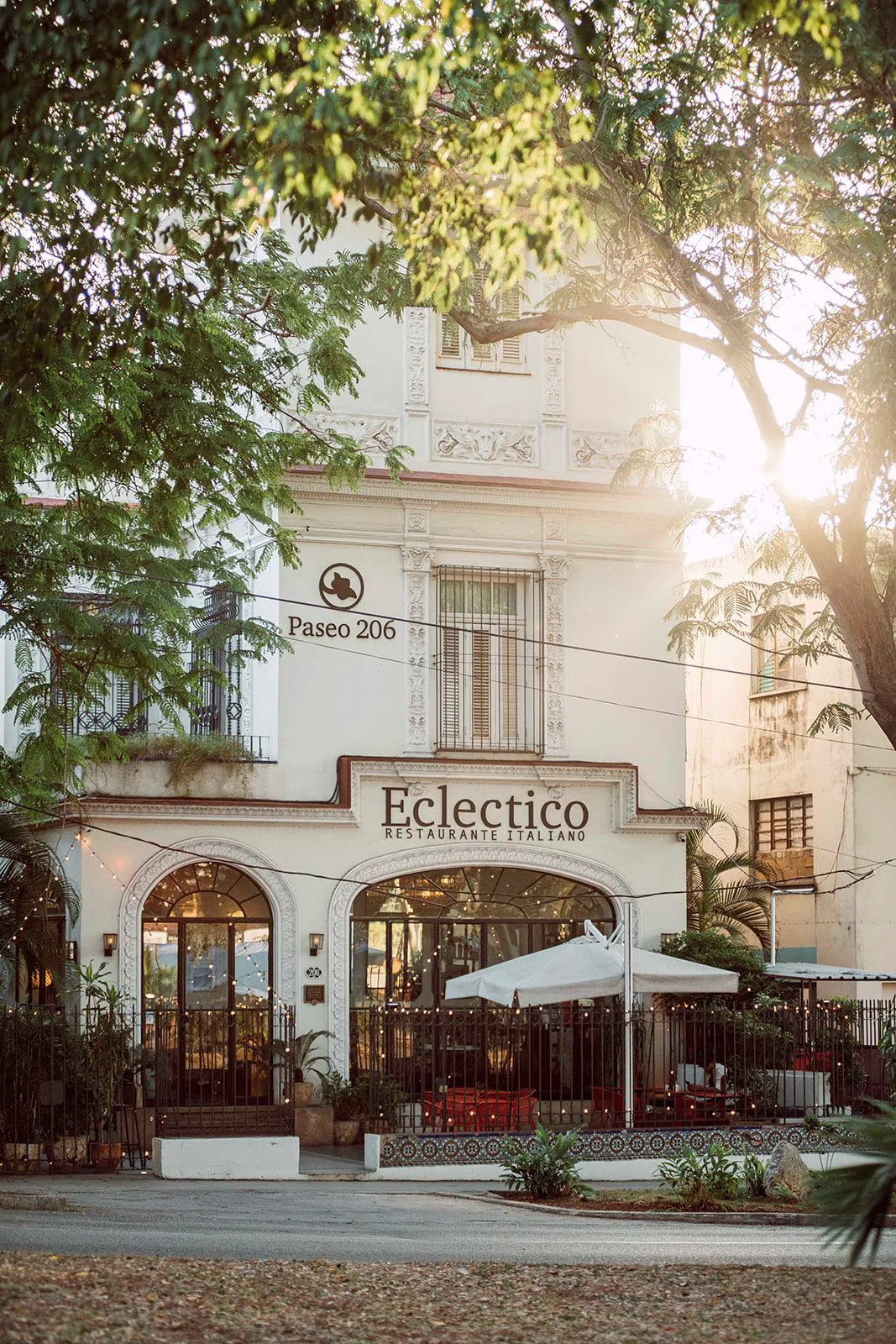
Paseo 206 (Vedado) is the grown-up option: ten rooms and suites in a restored mansion on Paseo, $180 to $350 with breakfast, airport transfers arranged direct with the house. Restaurant Ecléctico is on site, which matters more than it sounds, because on nights when the grid drops, dinner downstairs beats hunting for a kitchen in the dark. A group of up to about twenty can take the house.
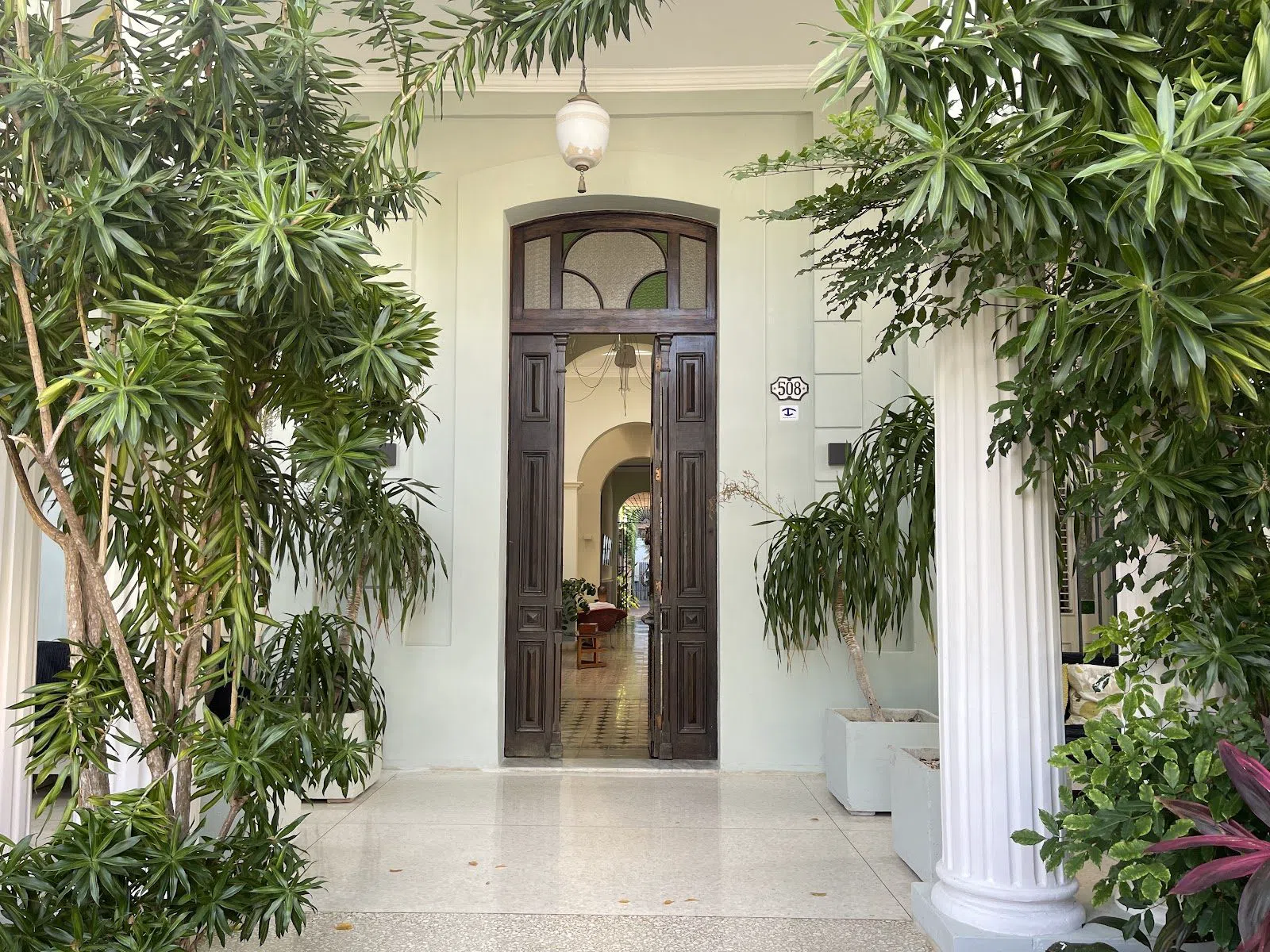
La Reserva Vedado (Vedado) has eleven rooms from standard to presidential suite at $130 to $260 with breakfast, privately owned and restored with local artisans, with parking, a garden that takes dinners for the whole party, and a gallery that gives you an easy, documentable cultural activity. It takes full buy-outs.
If you want to weigh those against the rest of the city's inventory, the Havana hotel search shows what is currently bookable. Read each listing against the restricted list before you pay anyone. And before you confirm any room, ask two questions in writing: does the house have a generator or inverter, and does it have a water tank. A yes to both is worth more than a sea view.
The money comes in your pocket
No US-issued card works in Cuba, not for payment, not in an ATM, and not as a backstop when something goes wrong. You are carrying the whole trip in cash, in US dollars or euros, in small clean notes, split across more than one bag. Amounts above the equivalent of $5,000 must be declared at Cuban customs. Work out your total before you leave (rooms, meals, cars, tips, a contingency for a changed flight or a medical excess), then add a margin, because there is no way to top up.
Private businesses quote and take hard currency directly, which is why the prices in this piece read in dollars. The informal peso rate moves week to week and bears no relation to the official one, so change modest amounts as you go, through your casa or a business you know, rather than a lump sum on day one. Keep pesos for tips, musicians, tiles and the small transactions that would otherwise cost you a whole note.
Budget for one more thing: you cannot take the obvious souvenir home. US rules bar bringing Cuban rum and cigars into the country, whatever the shop tells you at the counter. Art, books and clothes are the exception, which is where Clandestina (Old Havana) earns its place: open 10am to 8pm, $15 to $45 a piece, founded by Idania del Río as Cuba's first independent fashion label. It is a small shop, so a group drifts through in twos and threes, and the receipt is the plainest possible evidence of buying from a private Cuban business.
Book the tables weeks before you book the taxi
La Guarida (Centro Habana) is still the best-known private restaurant in the country and still booked solid, up a grand ruined staircase that looks like a film set because it was one. Reserve weeks ahead and expect slow replies, since the internet is the bottleneck rather than the restaurant, then confirm by WhatsApp the day before. It runs $40 to $70 a head with wine, cash only, and the roof can be hired privately for a group.
Iván Chef Justo (Old Havana) is the steadiest kitchen in the old town for roast pork and seafood risotto, open noon to midnight daily with reservations required, $30 to $50 a head. The upstairs rooms suit parties of eight to twelve, and it is one of the few places that reliably answers a booking request first time.
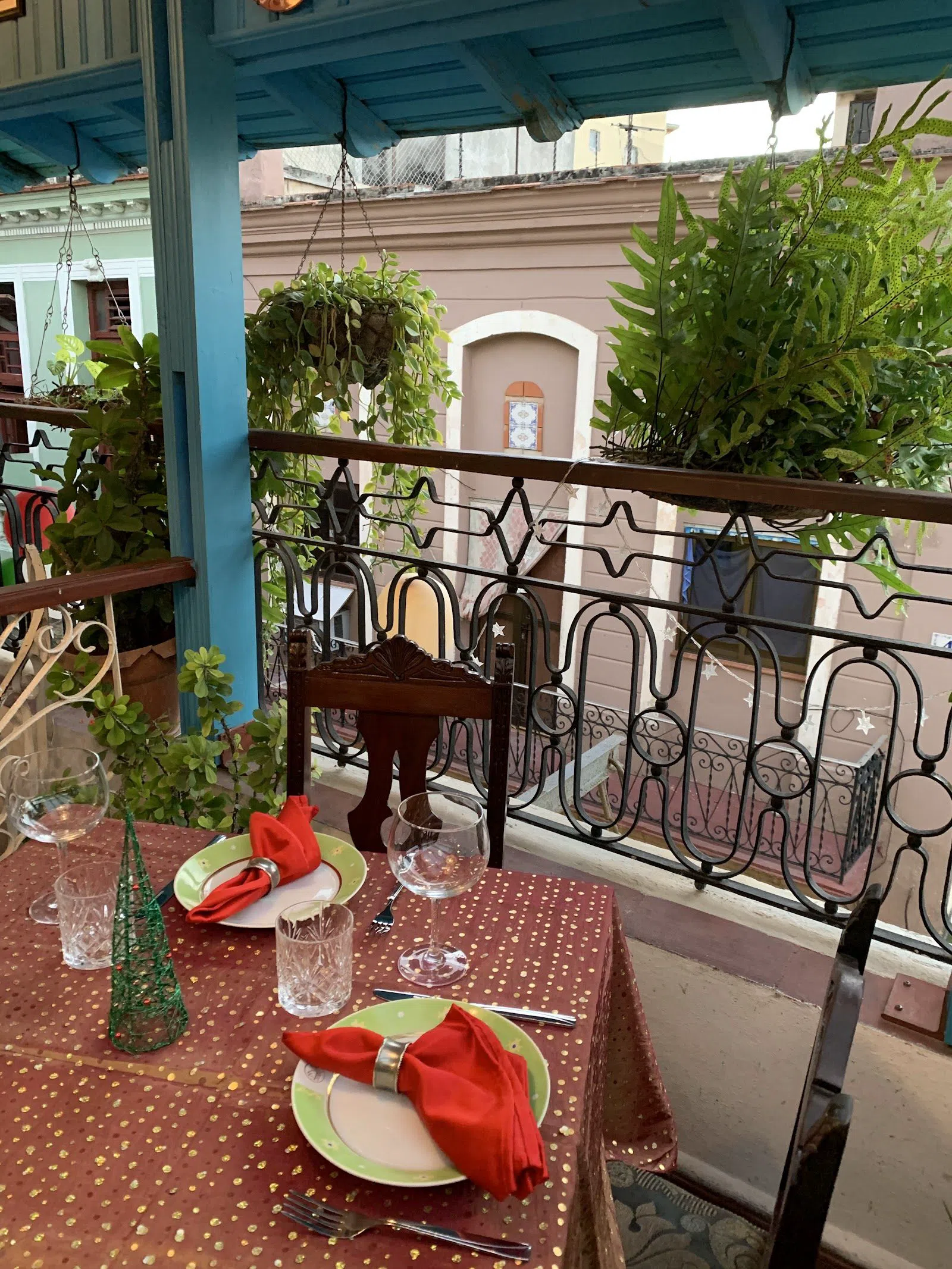
Doña Eutimia (Old Havana) does ropa vieja properly at prices that still make sense: $12 to $25 a head, and a recent family meal ran four plates and two cocktails for about €28. It sits in the alley off the cathedral square that is the picture people come to Havana for, and it has very few tables. Book ahead, and if you are more than six, split the party or eat early.
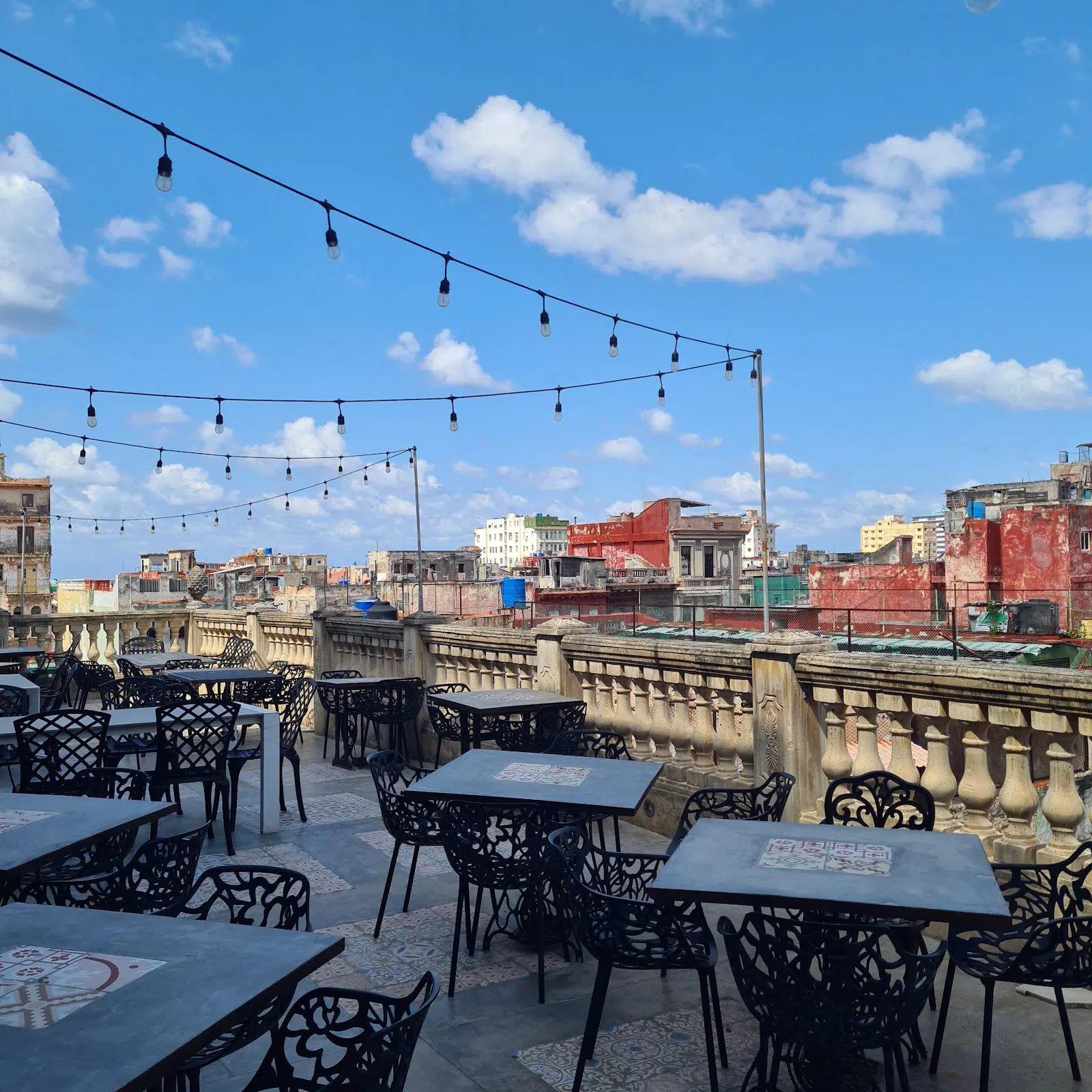
El del Frente (Old Havana) is the roof to take a group to, $20 to $35 a head with drinks, worth booking in the December to March peak. The same family runs O'Reilly 304 downstairs; pick the roof and skip the duplicate booking.
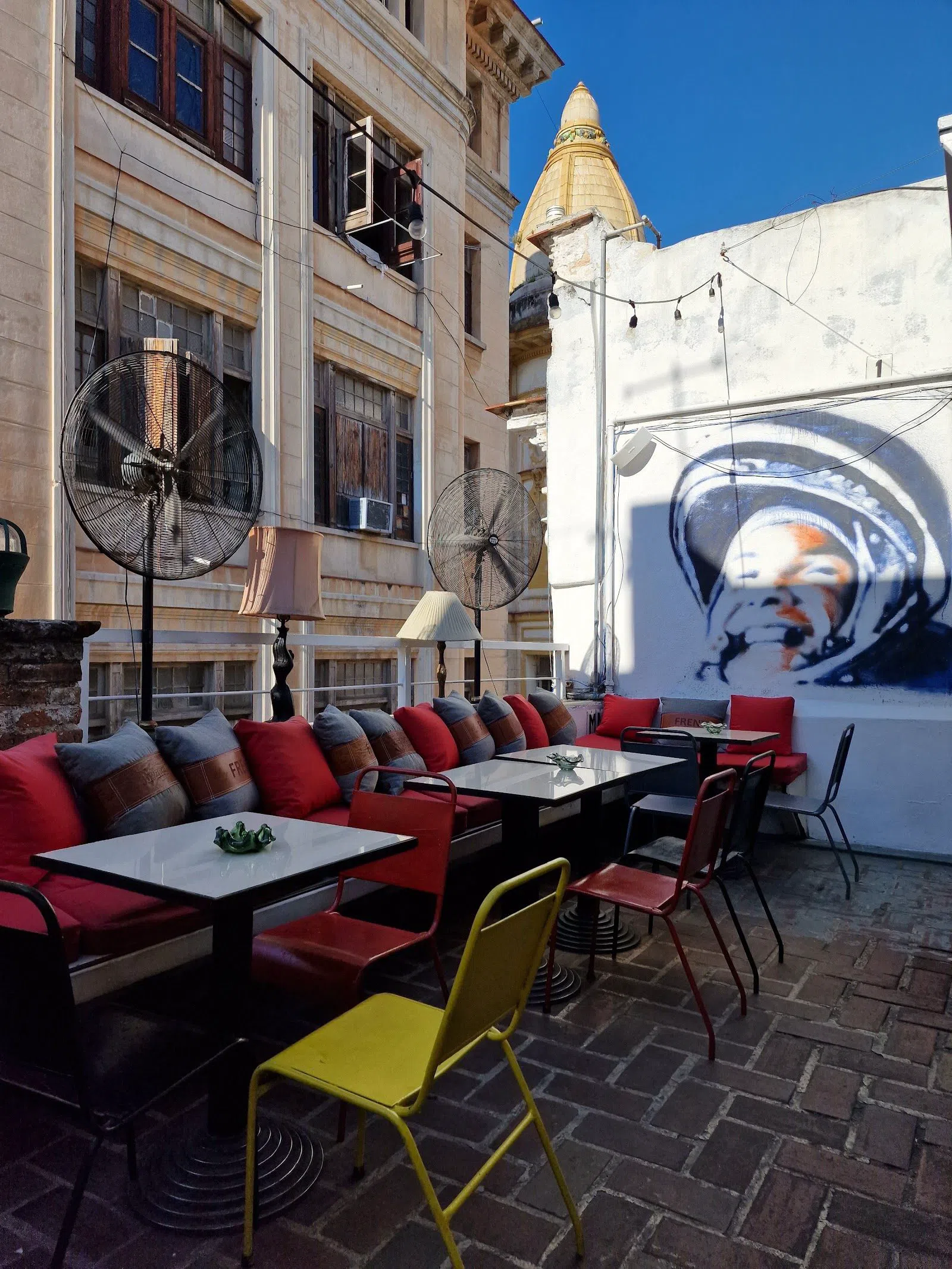
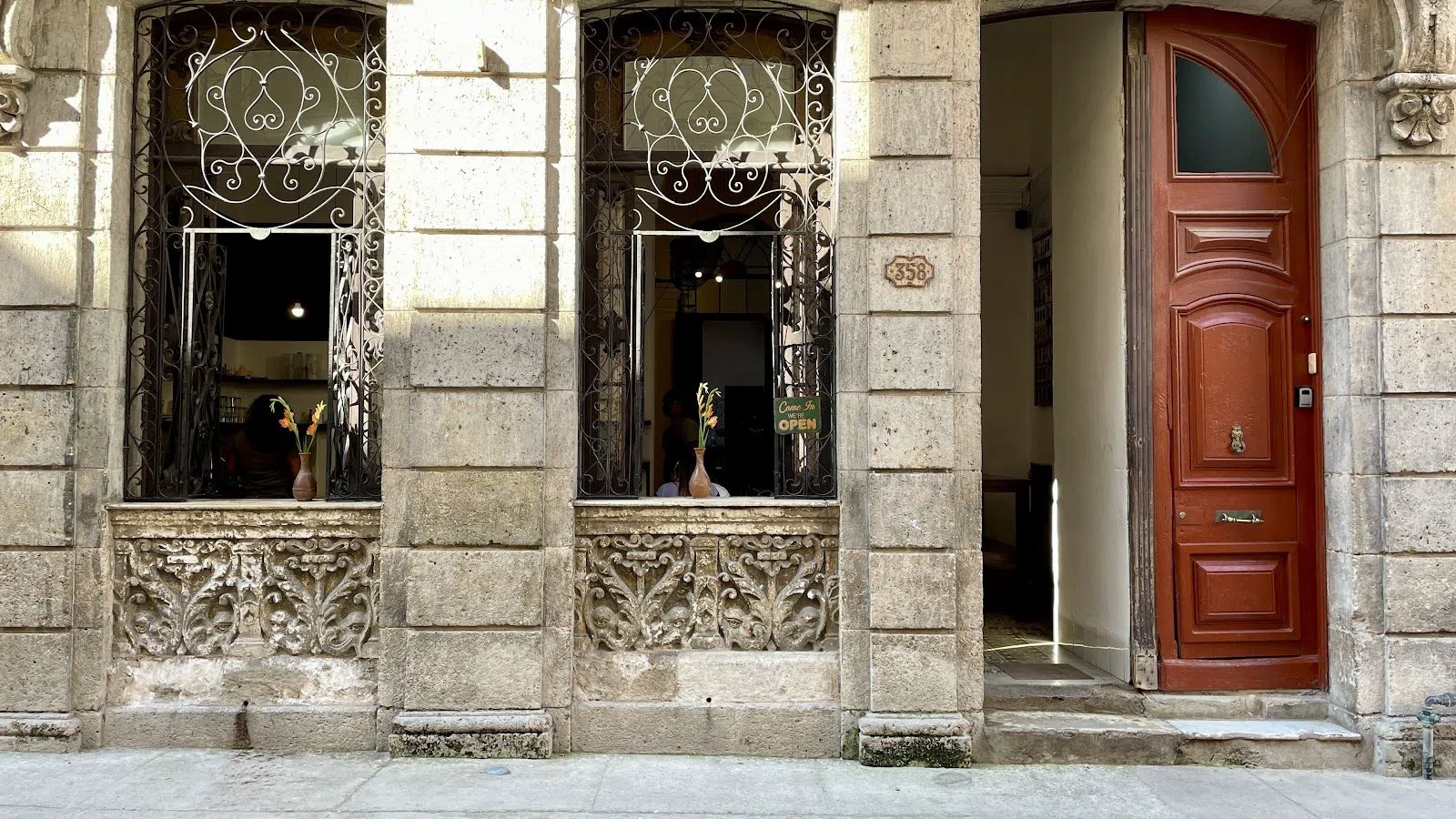
El Café (Old Havana) opens 8am to 5pm daily for walk-ins, bread baked on site and coffee ground to order, $5 to $12 a head. It is the dependable first morning of the trip, while you are still sorting cash and a local SIM. Tables are small, so a group over six should arrive early.
Plan the evening around the grid
Blackouts are a fact of Havana life, scheduled and unscheduled, and they shape a night out more than any door policy does. A dark street here is disorienting rather than dangerous, but a restaurant without a generator simply stops.
El Cocinero (Vedado) is the reliable half of a famous corner: a rooftop terrace beside the old brick chimney, reservations essential, closed Sundays, $30 to $55 a head. Its neighbour Fábrica de Arte Cubano has paused operations and opens only for announced events, so do not build a night around FAC and do not let anyone sell you a package that assumes it.
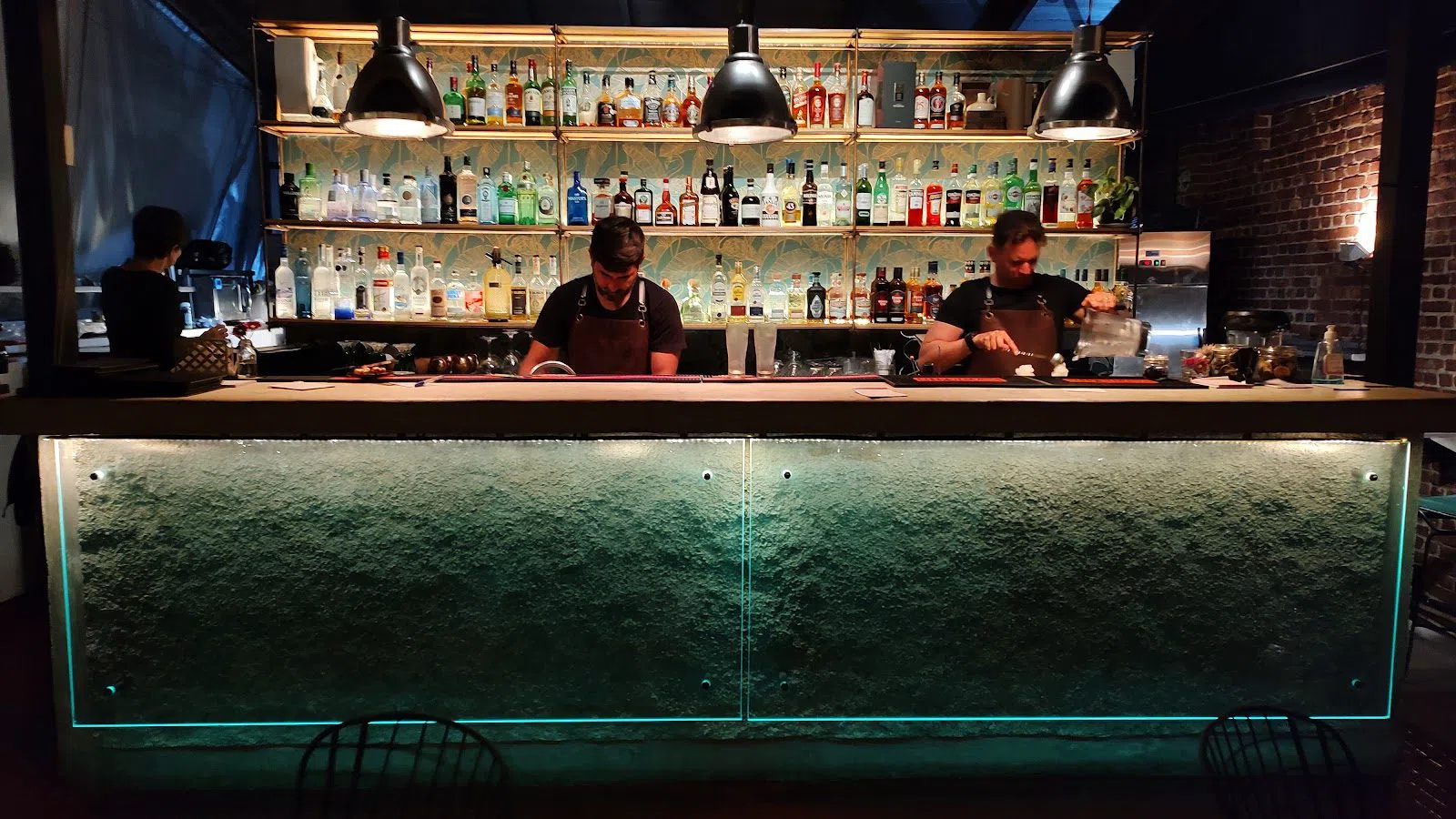
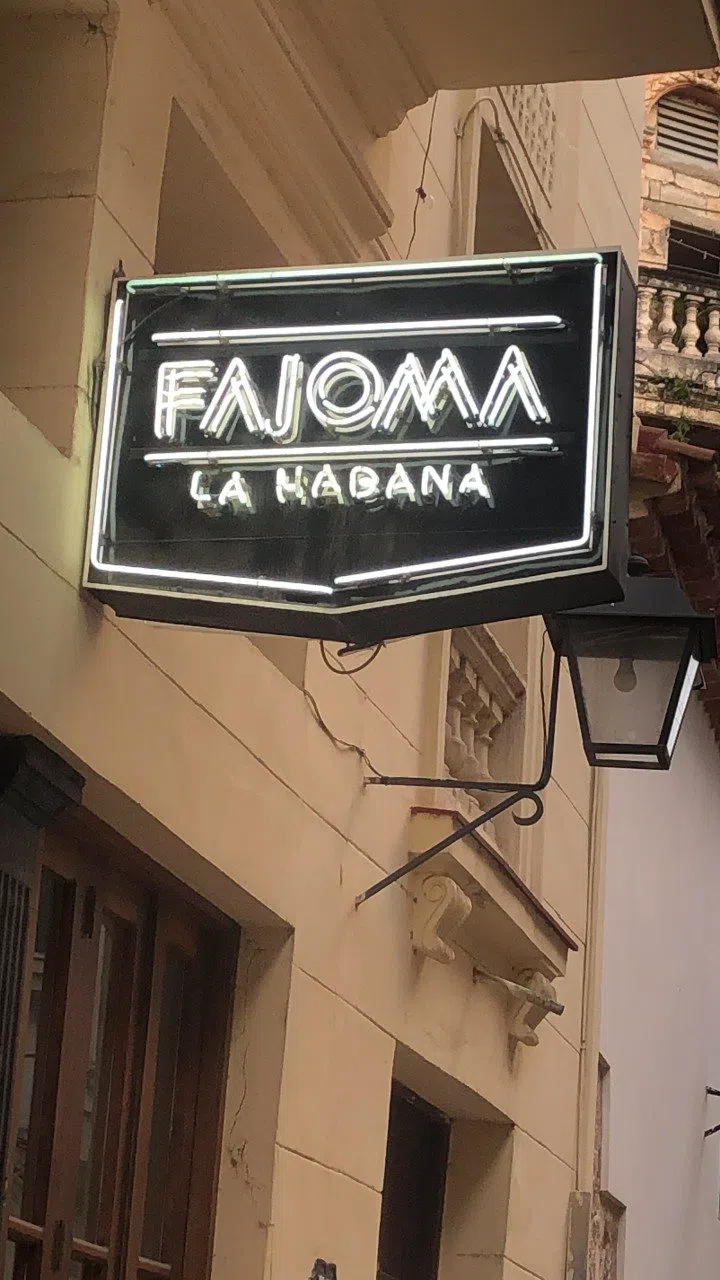
FAJOMA (Vedado) matters more than it used to now that the city's best-known art-club nightlife is dark. It runs noon to 2am daily across four floors, which means it genuinely absorbs a group, with cocktails around $5 to $10 and rooftop seafood at $20 to $35. Reserve on +53 5258 6834.
Between those two, Malecón 663's roof for a Monday jazz night and Paseo 206's Ecléctico for the evenings you would rather not go anywhere, you have enough to keep a week of dinners standing whatever the grid does.
Activities that write your own record
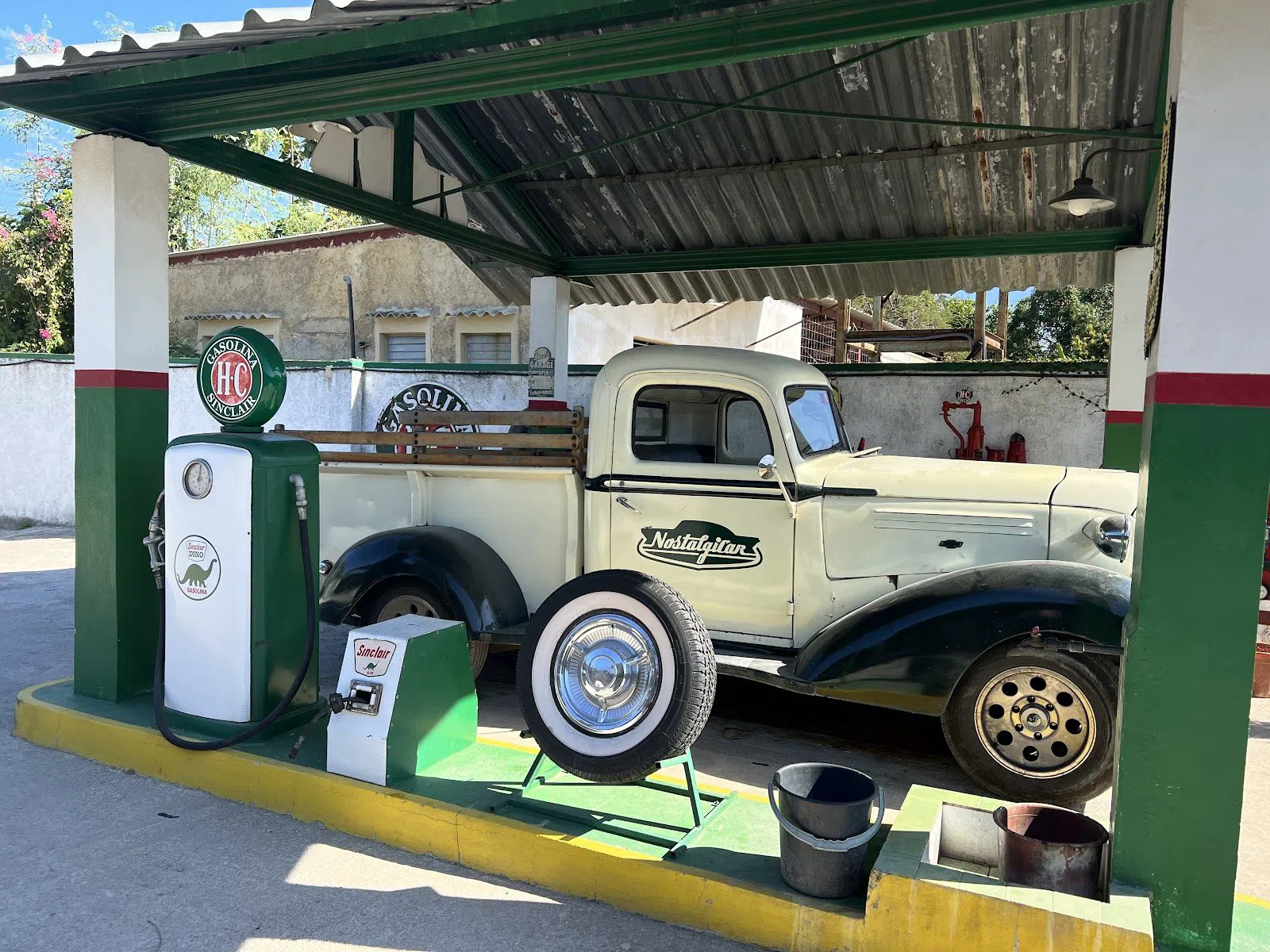
NostalgiCar (pick-up anywhere in the city) is Julio Álvarez and Nidialys Acosta's family workshop, and the garage half of the tour (the lathe, the improvised parts, the economics of keeping a 1950s American car alive for seventy years) is a genuine people-to-people activity rather than a photo op. Four passengers to a car, convoys for larger parties, roughly $60 to $100 an hour a car, with longer runs out of the city costing more. Cash only, dollars or euros.
Bike Rental & Tours Havana (central pick-ups) has been Cuban-owned for ten years, open 9am to 6pm, with guided half-day city rides and multi-day trips, booked for groups on WhatsApp +53 5344 1231. Rental is around $15 to $25 a day, guided half-days roughly $30 to $45 a person. Pedals also sidestep the fuel shortages that strand taxis, which is a practical argument as much as a virtuous one.
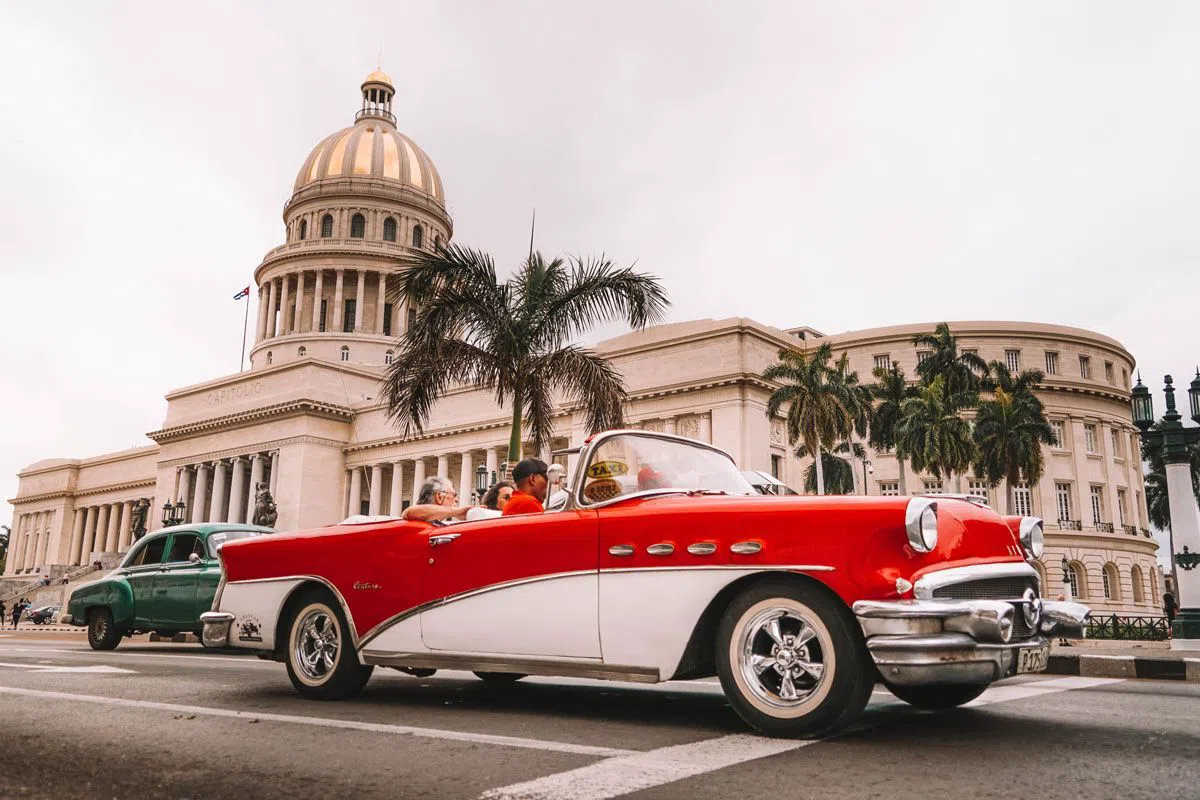
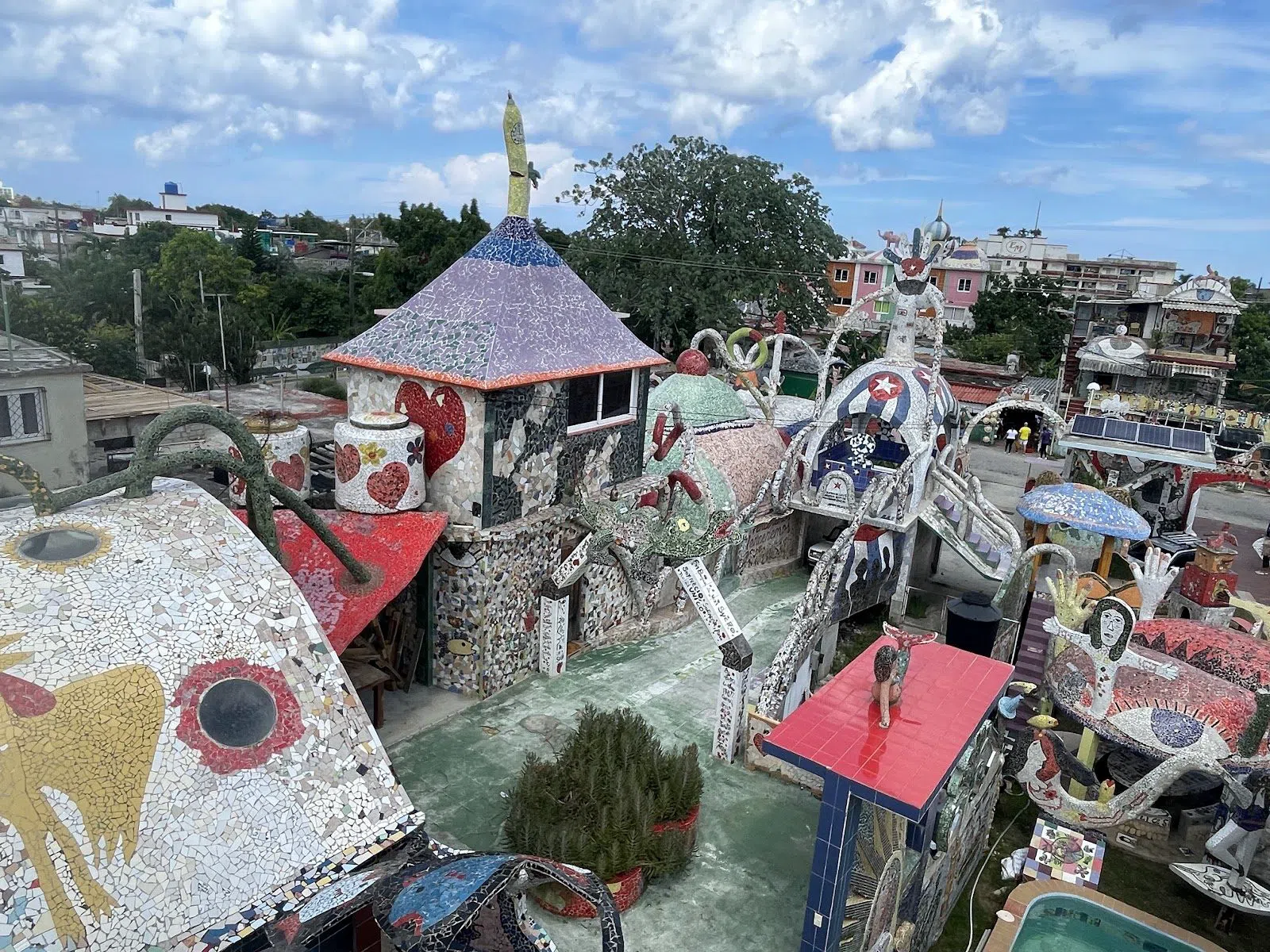
Fusterlandia (Playa, thirty minutes west) is José Fuster's Taller-Estudio, where a mosaic habit spread from one house across a whole street of neighbours. Free entry, morning to about 5pm, coaches arrive daily and the place absorbs them. Go by classic car or bike rather than trusting a bus, and bring pesos for the tiles and signed work that fund the surrounding houses.
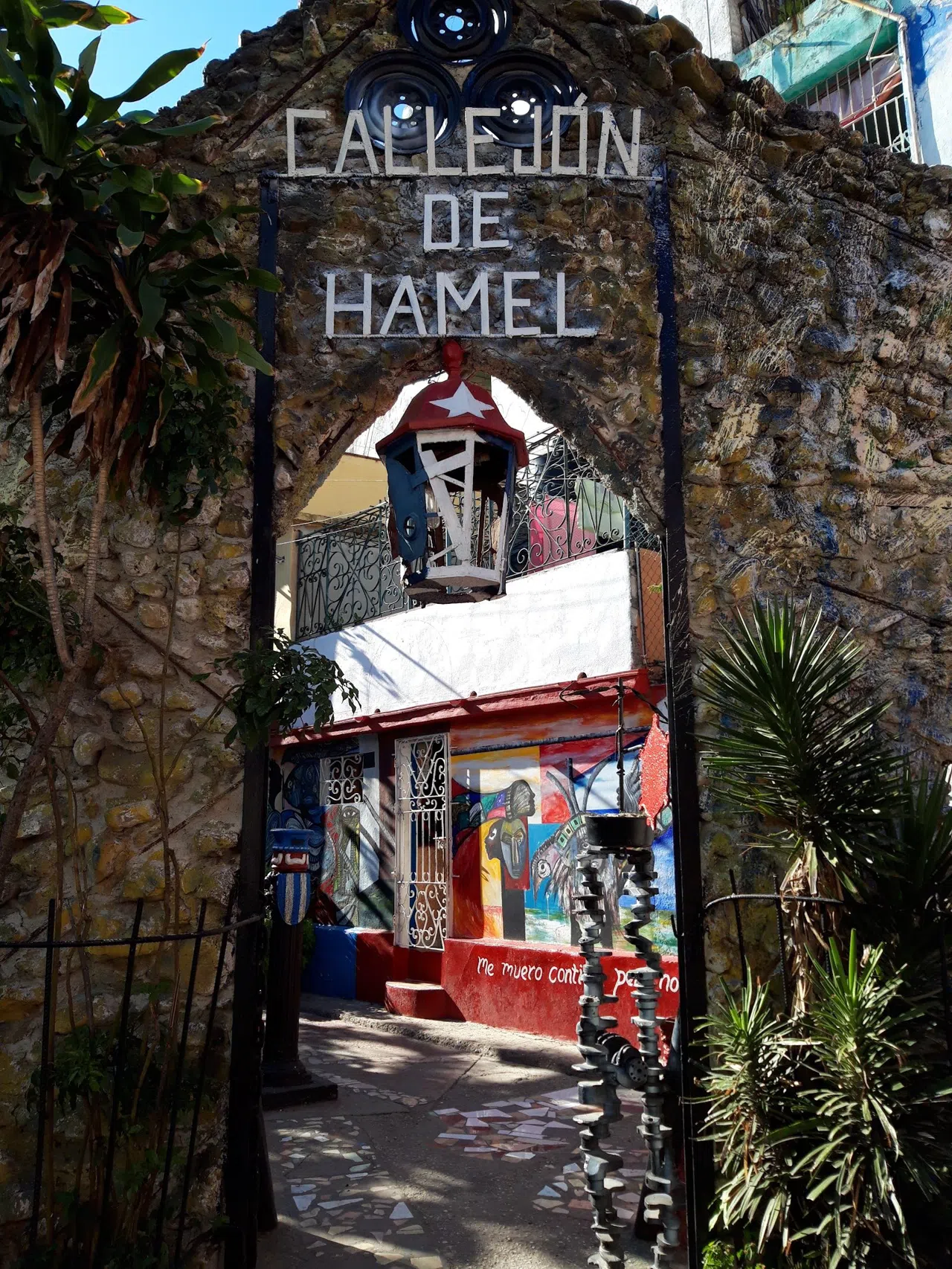
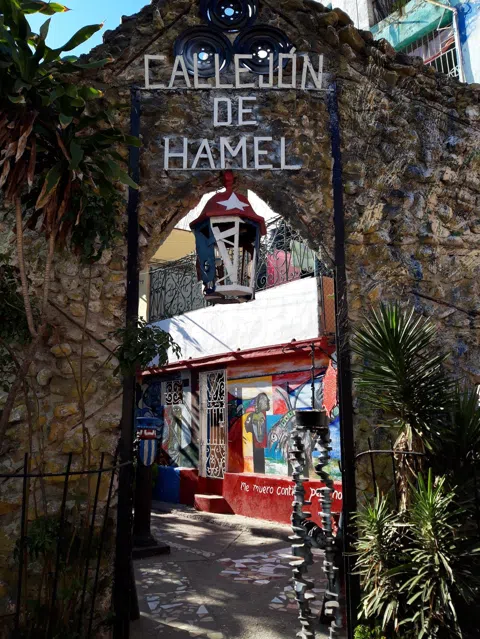
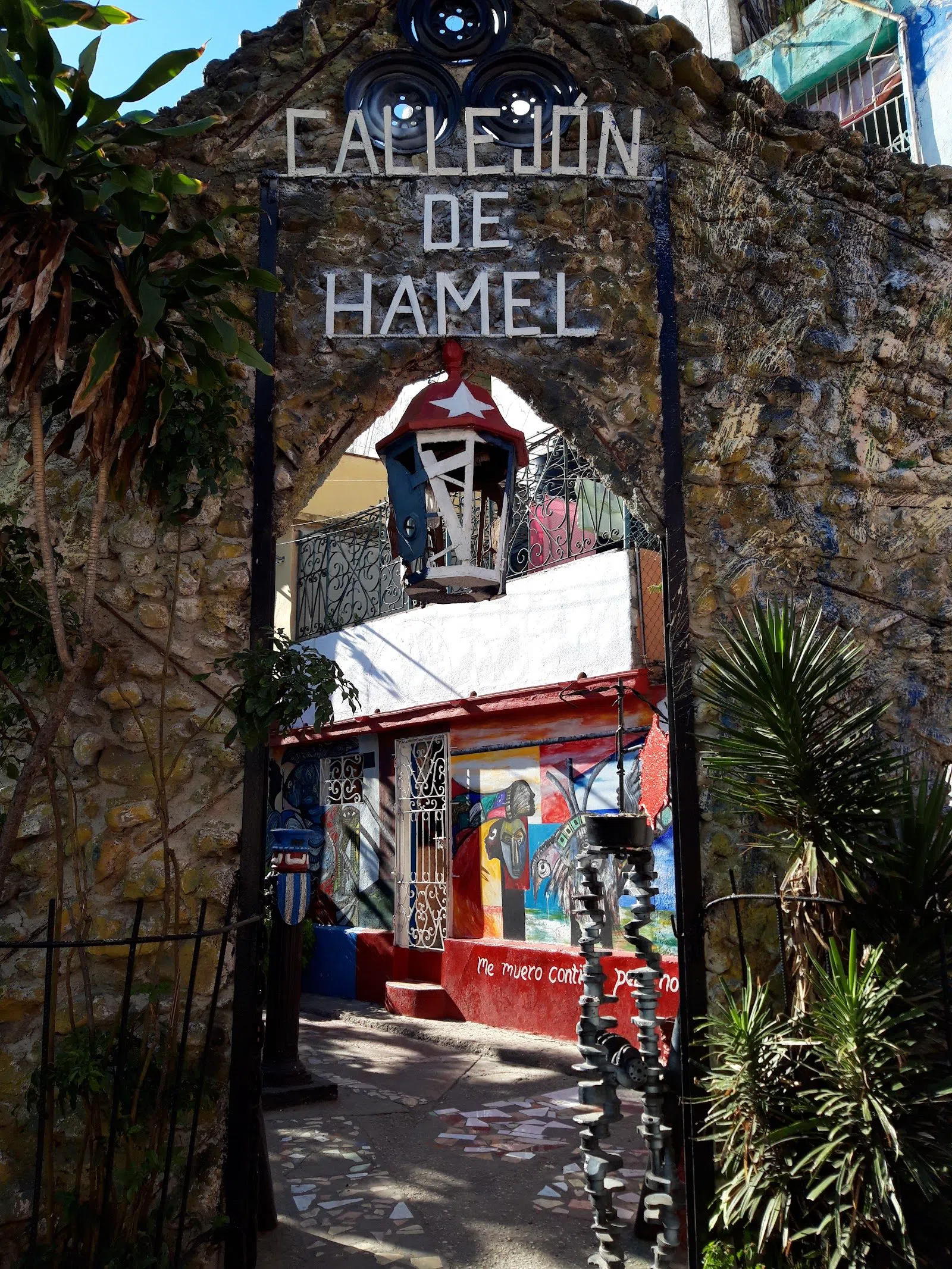
Callejón de Hamel (Cayo Hueso, Centro Habana) is Salvador González Escalona's life's work, an alley painted end to end, with rumba every Sunday around noon and Cuban music on Fridays. Free, tip the musicians, drinks a few dollars. It gets shoulder to shoulder, and it happens in daylight, so a grid failure cannot cancel it.
Groups, couples and who fits where
Havana's private houses are small by design, and that decides most of your itinerary. For a party, the buy-out is the move: Casa Vitrales for six to sixteen, La Reserva Vedado for a group that wants parking and a garden dinner, Paseo 206 for up to about twenty who want a kitchen downstairs. Couples do better at Malecón 663, where four keys and a sea view are the whole point.
Eating is the reverse. FAJOMA and El del Frente take numbers comfortably; Iván Chef Justo has upstairs rooms for eight to twelve; La Guarida will hire you its roof. Doña Eutimia and El Café cannot take a group of ten however nicely you ask, so split into twos and fours and stagger your arrival. Nobody in this city runs a velvet rope, but the tables are finite and the phone lines are slow, and a party of twelve that has not booked will eat late and badly.
The last week before you fly
December to March is dry, mild and busy, so book rooms and peak-season roof tables then. June to November carries hurricane risk and the summer is genuinely heavy. Sunday plans should account for El Cocinero being closed and the rumba at Callejón de Hamel starting around noon.
Your US phone will not roam, so buy a Cuban eSIM before departure or a SIM at the airport, and load enough data to run WhatsApp, which is how every business here answers. Arrange the airport pick-up through your accommodation (Paseo 206 does transfers direct) and agree the price before you get in any car. In the city, walk the old town, take bikes for distance, and treat taxis as weather-dependent while fuel is short.
Two people staying mid-range should plan on roughly $130 to $200 for the room with breakfast, $12 each for lunch, $30 to $40 each for dinner, $20 in drinks and $60 to $100 for one classic-car hour or a guided ride. Call it $300 a day for the pair, more if you eat at La Guarida twice. Carry it all in, keep the receipts, and file the itinerary when you get home; the five-year record is the last piece of the booking, even though you write it afterwards.
For what to do once the paperwork is behind you, the Havana guide covers the rest of the city.
Before you go
Can US citizens legally travel to Havana in 2026?
Yes, but not as tourists. Travel must fit a general licence category, and for independent travellers that is Support for the Cuban People. You self-certify with no application, but you must keep a full-time schedule of activities that engage Cubans and support the private sector, and hold the records for five years. Staying in private houses like Casa Vitrales or La Reserva Vedado, eating at paladares and booking Cuban-owned operators such as NostalgiCar is what that schedule looks like in practice.
Do I need a visa, and what is D'Viajeros?
Cuba's tourist visa is now normally bought online before departure, though some airlines still sell a paper tourist card at check-in. Email your carrier with your flight number when you book to find out which applies. D'Viajeros is separate: an advance customs, health and contact declaration everyone files within 48 hours of arrival. It generates a QR code that immigration scans, so screenshot it before you fly.
Will my US credit card or ATM card work in Havana?
No. US-issued cards do not work for payment or at ATMs, and there is no fallback once you land. Bring the whole trip in cash (US dollars or euros in small notes, split across bags) and declare amounts over the equivalent of $5,000 at Cuban customs. Private businesses take hard currency directly; change modest sums into pesos as you go for tips, musicians and artwork.
How bad are the blackouts, and what should I ask before booking a room?
Blackouts are routine, both scheduled and unscheduled, and they close kitchens rather than streets. Before confirming any room, ask in writing whether the house has a generator or inverter and whether it has a water tank. Places with an on-site restaurant, such as Paseo 206 and its Restaurant Ecléctico, save you hunting for dinner in the dark.
Is Fábrica de Arte Cubano open?
No. FAC has paused operations and opens only for announced events, so do not build an evening or buy a package around it. Its neighbour El Cocinero still runs its rooftop terrace, closed Sundays and reservations essential, and FAJOMA is open noon to 2am daily across four floors. For daytime music that a power cut cannot cancel, the rumba at Callejón de Hamel runs every Sunday around noon.