Havana特集
Walking Havana's Barrio Chino from the arch to Cuchillo
Havana's Chinese quarter is only a few blocks wide: a granite arch on Dragones, a 60-metre alley with eight restaurant doors, a Confucius statue, and a wushu school that still teaches.
文:Oliver NashReading Havana barrio by barrio
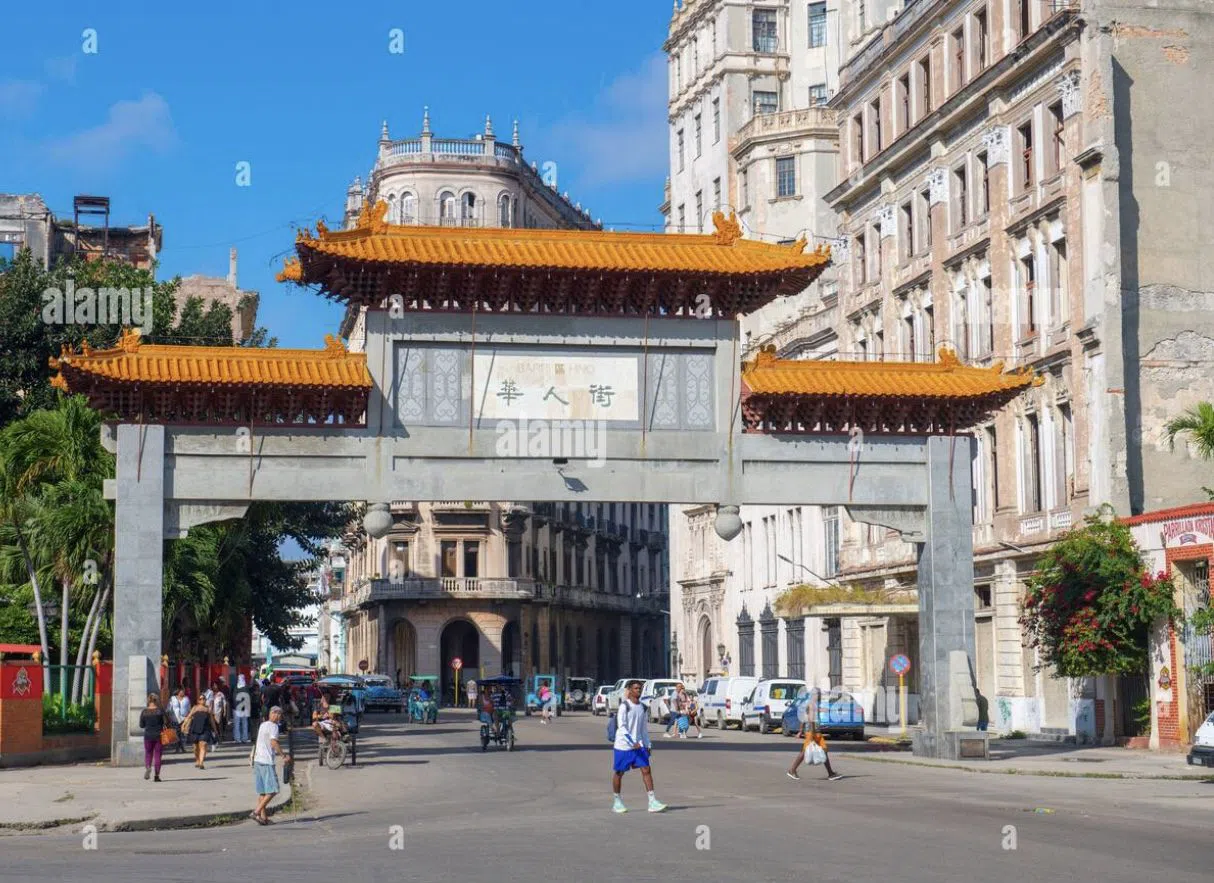
A granite arch 16 metres wide and 12 metres high straddles Calle Dragones at Amistad, its gold glazed roof tiles curling up at the eaves. China shipped the materials and gave Havana the arch in 1999, and it is still the biggest Chinese arch in Latin America. Two streets away, eight restaurant doors share a 60-metre pedestrian alley.
Parque de la Fraternidad and the arch on Dragones
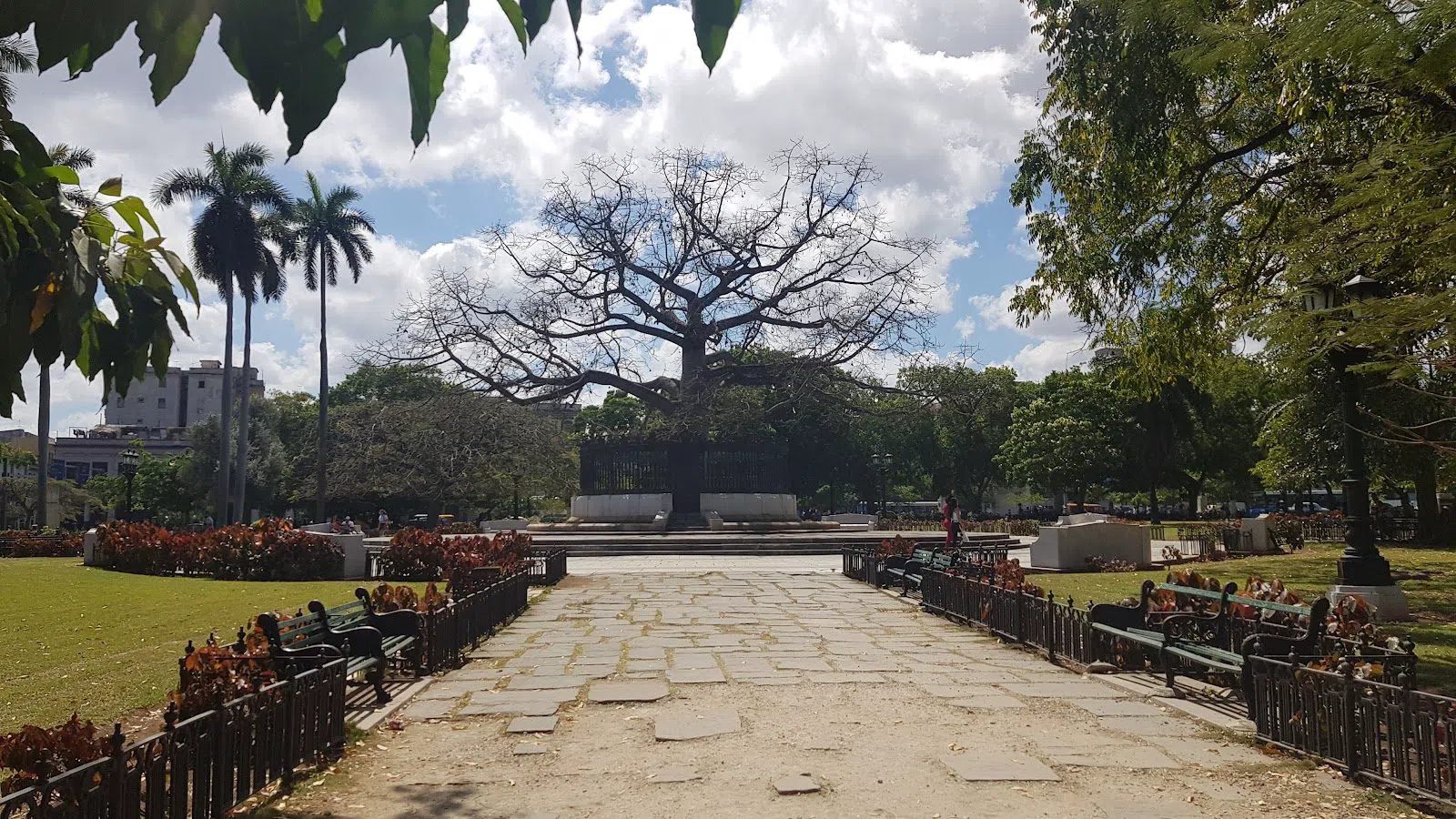
Walking groups meet and get dropped off at Parque de la Fraternidad (Amistad and Dragones), the big leafy park on the quarter's eastern edge, where almendrón taxis queue along the kerb. At its centre is the walled Ceiba de la Fraternidad Americana, planted over soil from 21 countries and circled by busts of the Americas' founding figures. The park is free and public, and it is also the barrio's taxi rank. The restored Capitolio dome is a block east, and Old Havana is 10 minutes on foot.
A Barrio Chino walk then starts at the Pórtico Chino (Calle Dragones at Amistad), also called the Puerta de los Dragones and the Pórtico de la Amistad. There is no door and nothing to pay. Grey granite posts carry a roof of gold glazed ceramic tiles, the eaves curl upward, and red-and-gold Chinese characters run across the lintel. Behind it are crumbling pastel Centro Habana tenements with the Capitolio dome above them. Stand on the Amistad side for the photograph, where the room is; the coach parties and walking tours use that side too. It costs nothing, and it sets up everything else in the quarter.

Havana旅行を計画する
予約パートナーの最新料金です。
多くの客室で無料キャンセルが可能です。ご予約時に当サイトが手数料を受け取る場合があります。
Zanja between Rayo and San Nicolás
Parque Shanghái (Zanja between Rayo and San Nicolás) is a small walled garden on the site of the demolished Teatro Shanghái, which ran the city's notorious burlesque shows. A bronze-toned Confucius statue, unveiled in 2012, holds the centre, with clumps of bamboo around it and a big painted yin-yang on the back wall. The garden is free and open, with room enough to stand and listen to a guide. Come in the late afternoon, when old men work through qigong forms here. No other address in the barrio has changed so completely.
Plaza San Fan Con, off Zanja, is an open paved square with mahjong and domino tables in the shade and flaking pastel façades on every side. Trestle stalls sell incense, candles, paper zodiac cut-outs and semi-precious stones under strings of red lanterns. The name belongs to Guan Gong in his Cuban form, San Fan Con, syncretised with the orisha Changó, and that religion is practised here in the open. The craft fair swells through the Spring Festival weeks, and the 2026 run went to 3 March.
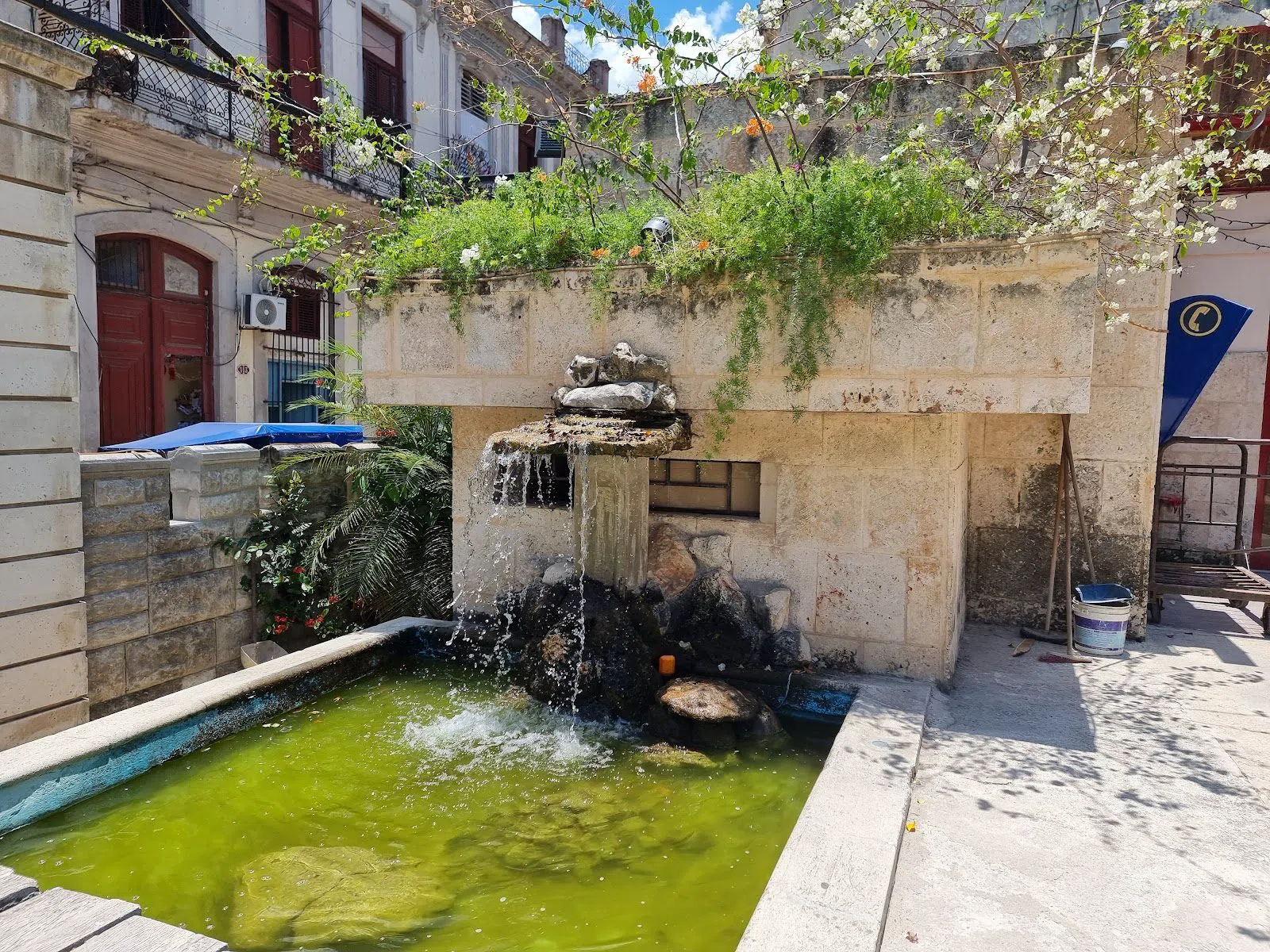
Cuchillo de Zanja and Restaurante Tien Tan

Cuchillo de Zanja (between Rayo and San Nicolás), signed as the Boulevard del Barrio Chino, runs 60 metres under paper lanterns and red-and-gold signage strung wall to wall. Eight restaurant doors line it, each with plastic chairs outside and a waiter working the passing trade. The touts compete hardest for groups and never let up, and the menus are near-identical from door to door. Bonsai and ornamental-plant stalls mark the Zanja end. The alley is said to pack more restaurants per square metre than anywhere else in Havana, so come hungry.
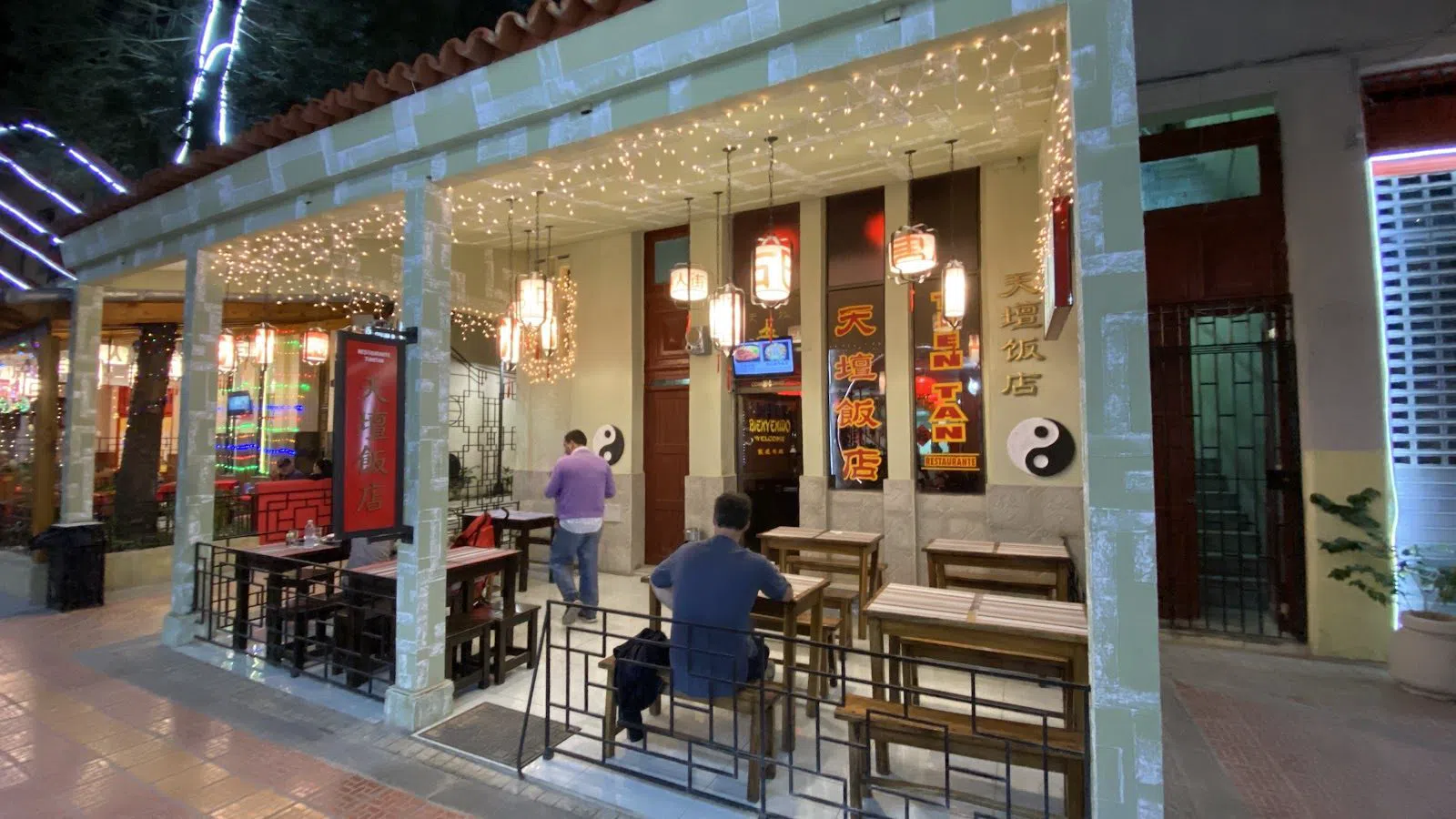
Restaurante Tien Tan (Cuchillo 17) is the best-known restaurant in the quarter and the biggest kitchen on the alley, with an indoor room plus pavement tables under a red-and-gold canopy hung with round lanterns. Peking duck and whole fish come out through a doorway of carved dark wood, carried past long bilingual menu boards. The kitchen is Chinese-trained and the duck is cooked properly. Expect 1,500 to 4,000 CUP a head, more than the neighbours charge, and expect service to wobble when the room fills. Hours are 11 a.m. to midnight, and you reserve by phone.
Tea off Cuchillo
La Casa del Té is just off Cuchillo, a bonsai display beside its door and a dark wood counter inside. Jasmine and pu-erh come in small clay pots and glass cups, lanterns hang over the room, and the tea list is hand-painted in Spanish and Chinese. A cup runs 200 to 600 CUP. It is the one place in the barrio that treats tea as the point, and the 2026 Spring Festival programme pushed it hard. The room is tiny, suited to couples and parties of around four; a bigger group has to book ahead through the barrio office. Opening hours are erratic, so count on luck rather than a plan.
Eating on Salud, San Nicolás and Dragones
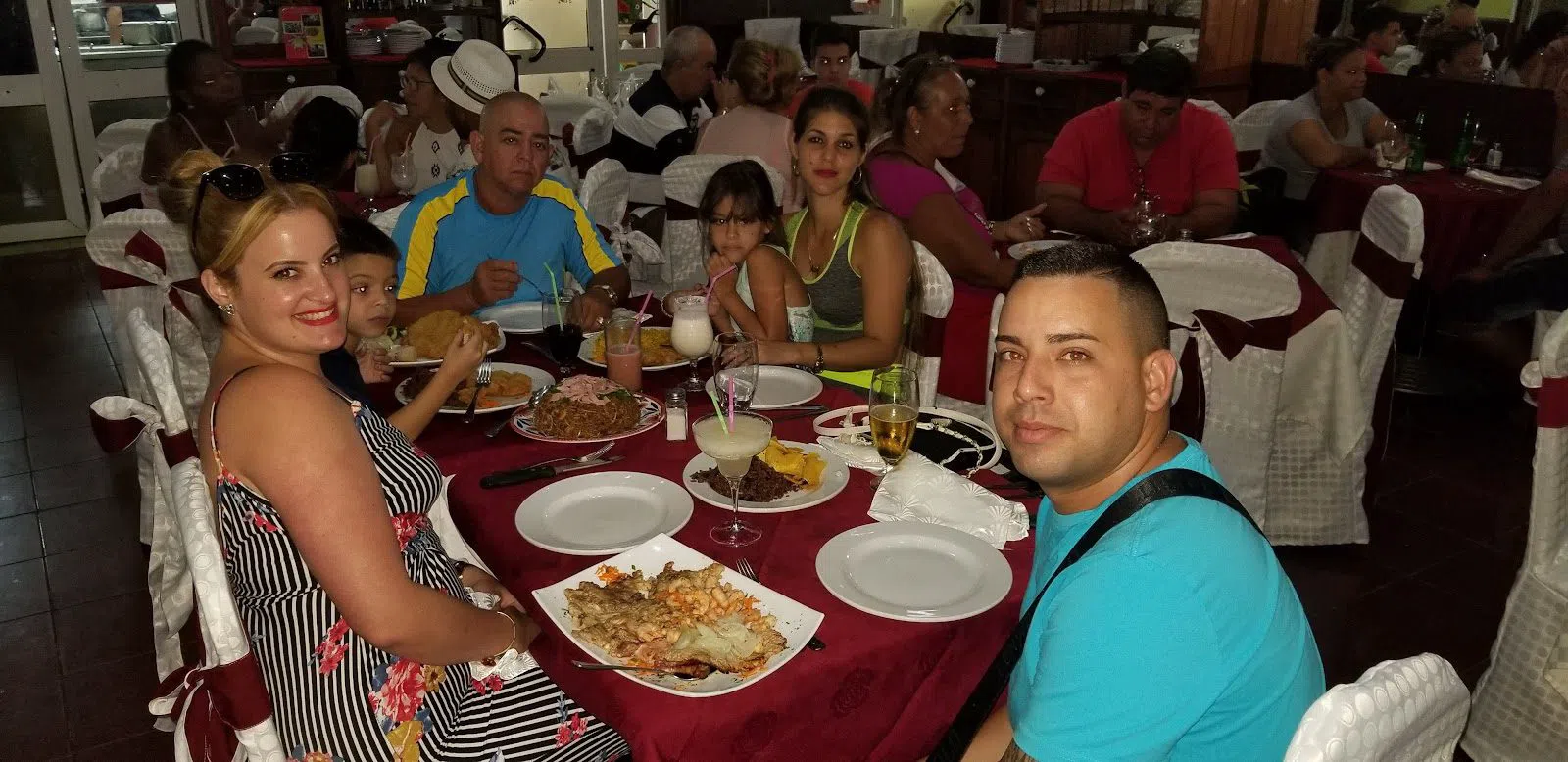
Restaurante La Flor de Loto (Salud 313), also known as Lien Fa, is a few blocks west of the arch, a narrow dining room crammed with Chinese lacquer panels, dragons and fans. Fried rice and prawns arrive on huge platters at 800 to 2,500 CUP a head, local money for the portions served. This is the Chinese place Habaneros queue for themselves, out on the pavement. The kitchen works noon to midnight daily. Bookings do not happen in practice, so everyone waits their turn, and there is takeaway if you would rather not.

Sociedad China Chang Weng Chung Tong (San Nicolás 517) is a surviving Chang-family clan society that feeds non-members as well as its own. A family name board in Chinese characters hangs over the stair up to two plain air-conditioned halls of round banquet tables, ceiling fans above and a small bar at the back. The cooking is regional Chinese carrying criollo seasoning, and the house 'Pizza Chang' puts the Chinese-Cuban mix on one plate. Count on 1,000 to 2,000 CUP a head, daily 11 a.m. to 11 p.m. Two dining rooms, buffet tables, event catering and reserved private rooms make this the barrio's best address for a large party; book on (+53) 7862 1490.
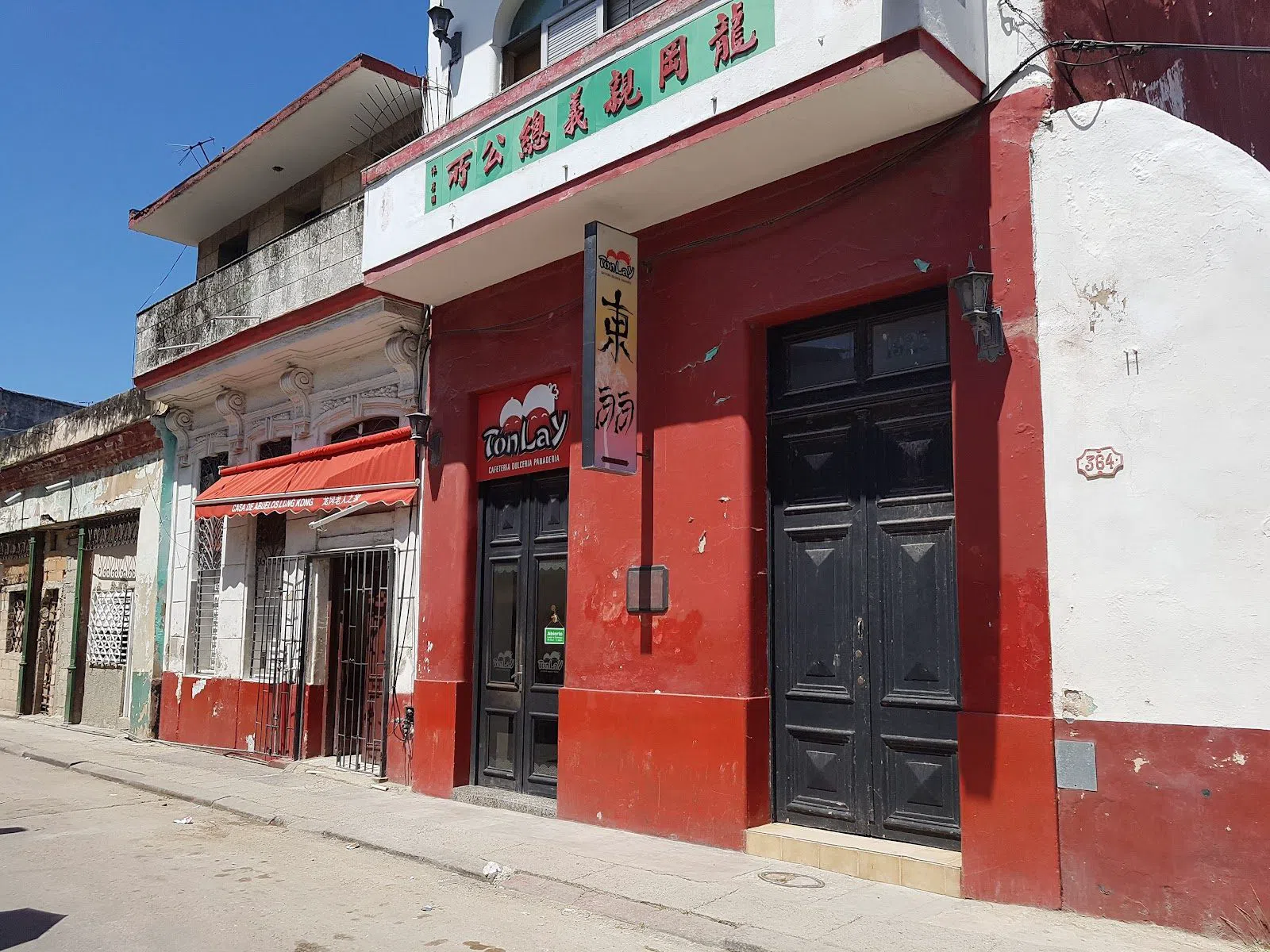
Cafetería-Pizzería Los 3 Chinitos (Dragones 355 to 357) trades as Sue Yuen Tong between Manrique and San Nicolás, its bright strip-lit counter open to the street. Chinese porcelain and big painted panels hang above plastic tables, and the trays hold fat pizzas and 'mariposas chinas' pastries. Order the fried Chinese butterflies with sweet-and-sour sauce. The counter runs 24 hours in a city where almost nothing does, at 300 to 900 CUP a head, and the staff cope with a crowd at odd times of night. Walk in; nobody takes reservations.
Wushu and qigong on Calle Zanja
The Escuela Cubana de Wushu y Qigong (Calle Zanja) fills a converted old cinema, the raked floor turned into a training hall with a mirrored wall and racks of wooden swords and spears. Children in red satin uniforms drill forms under a Chinese-Cuban master. The school was founded in 1995 and reopened its Zanja home in July 2025 after months of closure for structural repairs. It counts 3,000 practitioners in Havana alone, takes students from age five up to pensioners, and asks for no Chinese descent. Classes and booked demonstrations are its daily work, and it will let you watch or join the floor, which makes it the liveliest thing left in the quarter.

Where to stay
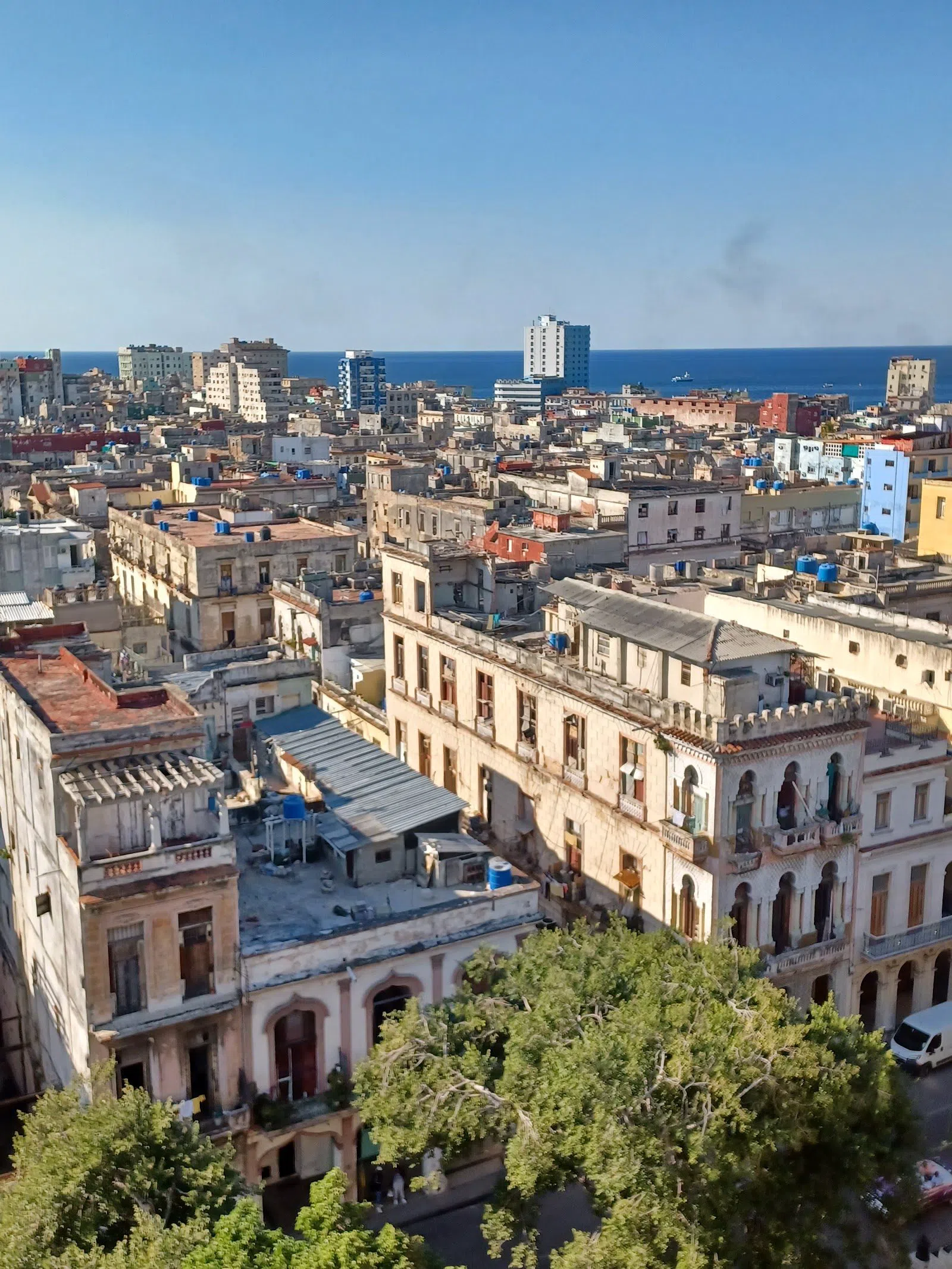
Iberostar Selection Parque Central faces Parque Central in a colonial-fronted block, a 10-minute walk east of the Chinese arch. The rooftop pool and bar look straight at the Capitolio dome and the stone figures on the Gran Teatro, and the lobby is an atrium of palms under a glass roof. It is still operating in 2026, it is the standard tour-operator hotel in central Havana, and it has the reliable water and power the barrio's own lodgings cannot offer. Rates start from 30,000 CUP a night, with rooms quoted to foreigners in hard currency. Coaches pull in on Neptuno. US travellers need a casa particular instead, because the hotel sits on the State Department's Cuba Prohibited Accommodations List.
Hours and booking
Phone Tien Tan and the Sociedad China before you walk over; La Flor de Loto and Los 3 Chinitos take walk-ins, and the tea house keeps no dependable hours. The arch, both parks and the square are free, open and need nothing booked.
See the Havana guide and the Havana hotel search.
出発前に
Where does a Barrio Chino walk start?
Start at Parque de la Fraternidad, on Amistad and Dragones, the standard meeting and drop-off point and the barrio's taxi rank. The Pórtico Chino arch is the first stop from there, the Capitolio dome a block east, Old Havana 10 minutes on foot.
Which restaurant should I book, and which can I just walk into?
Reserve Restaurante Tien Tan by phone. For a large party or a private room, book the Sociedad China Chang Weng Chung Tong on (+53) 7862 1490. La Flor de Loto takes no bookings in practice, and Los 3 Chinitos is walk-in only.
What is the cheapest place to eat in Barrio Chino?
Cafetería-Pizzería Los 3 Chinitos, Dragones 355 to 357, is open 24 hours and costs 300 to 900 CUP a head. Order the fried 'mariposas chinas' with sweet-and-sour sauce.
Can a visitor train at the Escuela Cubana de Wushu y Qigong?
Yes. Classes and booked demonstrations are the school's daily business, it takes students from five-year-olds to pensioners, and it does not require Chinese descent. It reopened its Calle Zanja home in July 2025 after structural repairs.
When is Barrio Chino at its busiest?
Come during the Spring Festival weeks, when the craft fair at Plaza San Fan Con swells; the 2026 run went to 3 March. On an ordinary day, get to Parque Shanghái in the late afternoon for the qigong.