Havana专刊
Plaza de la Revolución and the Havana streets around it
What to see around Havana's biggest square, when to go and what it costs, including the two steel murals and a jazz cellar behind a red telephone box.
作者:Oliver NashReading Havana barrio by barrio
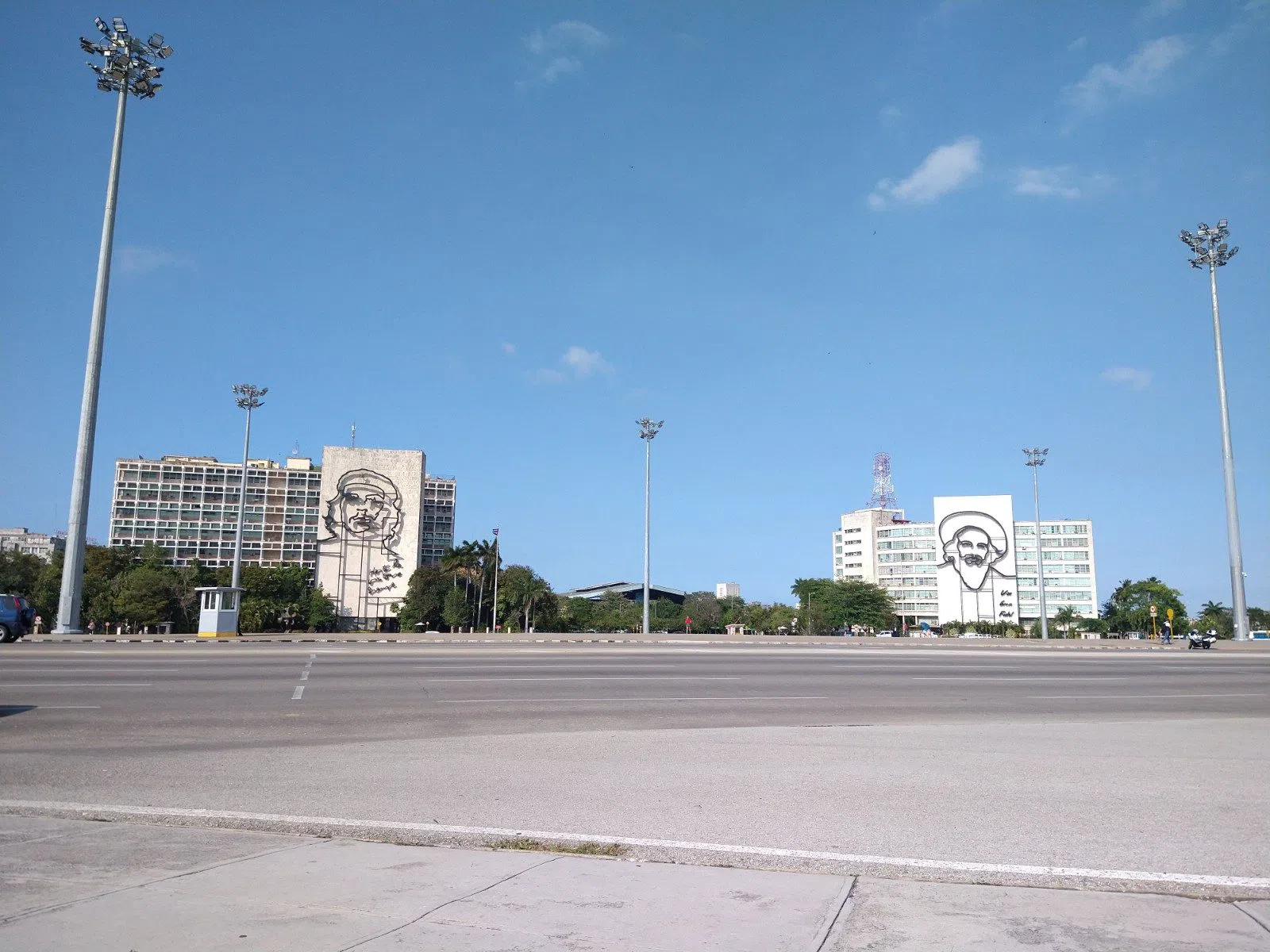
The Ministry of the Interior on the north side of Plaza de la Revolución carries Che Guevara's portrait as a giant outline in black steel wire, with "Hasta la Victoria Siempre" beneath it. Next door, on the Communications ministry, Camilo Cienfuegos appears in the same steel above the words "Vas bien, Fidel". The parade ground in front of them is 72,000 m² of bare concrete with no shade at all.
The murals and the parade ground
Plaza de la Revolución gives the district its name and costs nothing to visit. It is open public space with no door policy, a civic void ringed by ministry slabs, and the two steel portraits on them are the most photographed images in Havana. Coach parties and classic-car convoys pull up all day, and guides marshal their groups on the north side, facing the murals. Low palms and Lada taxis stand at the kerb. Come early or at golden hour.
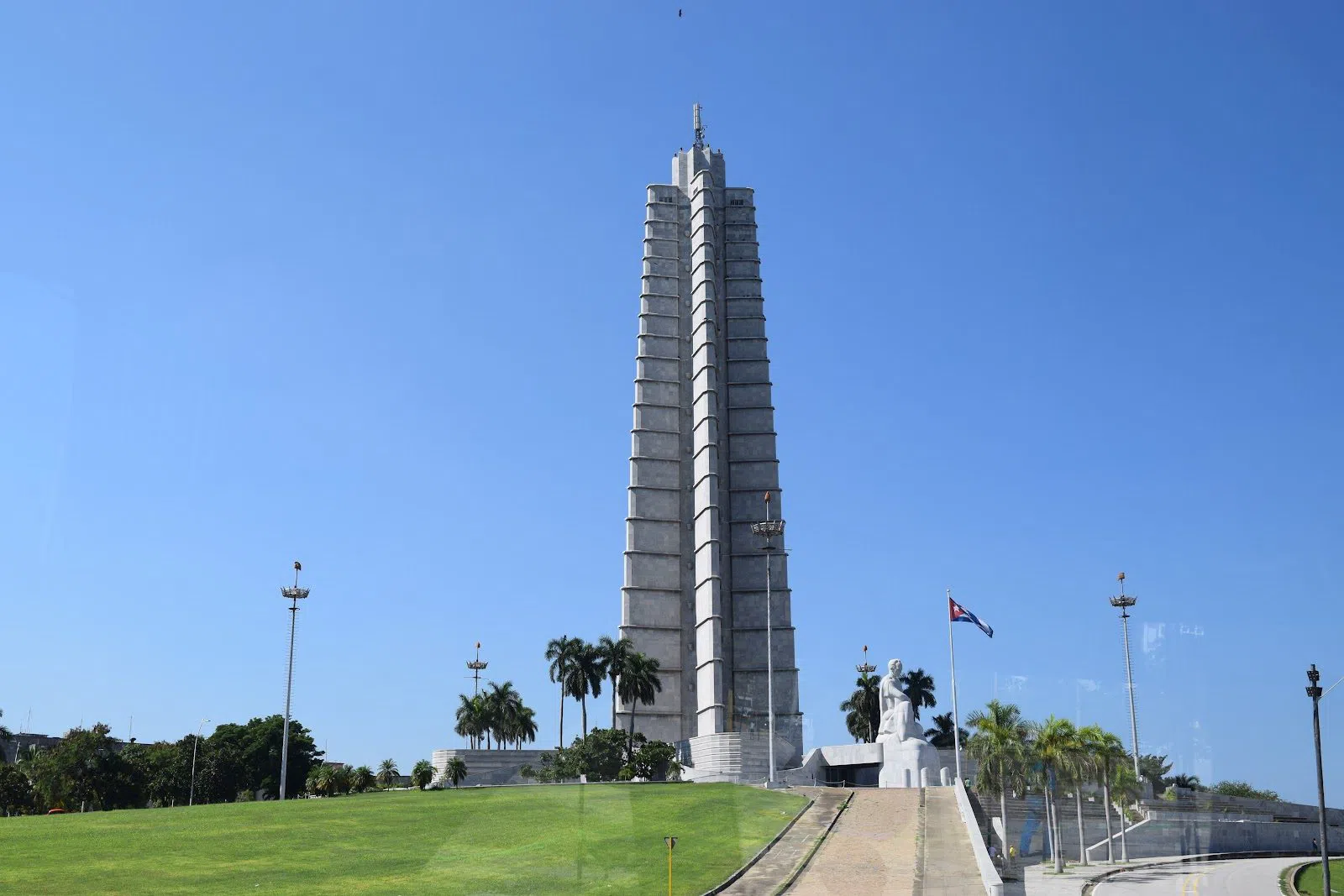
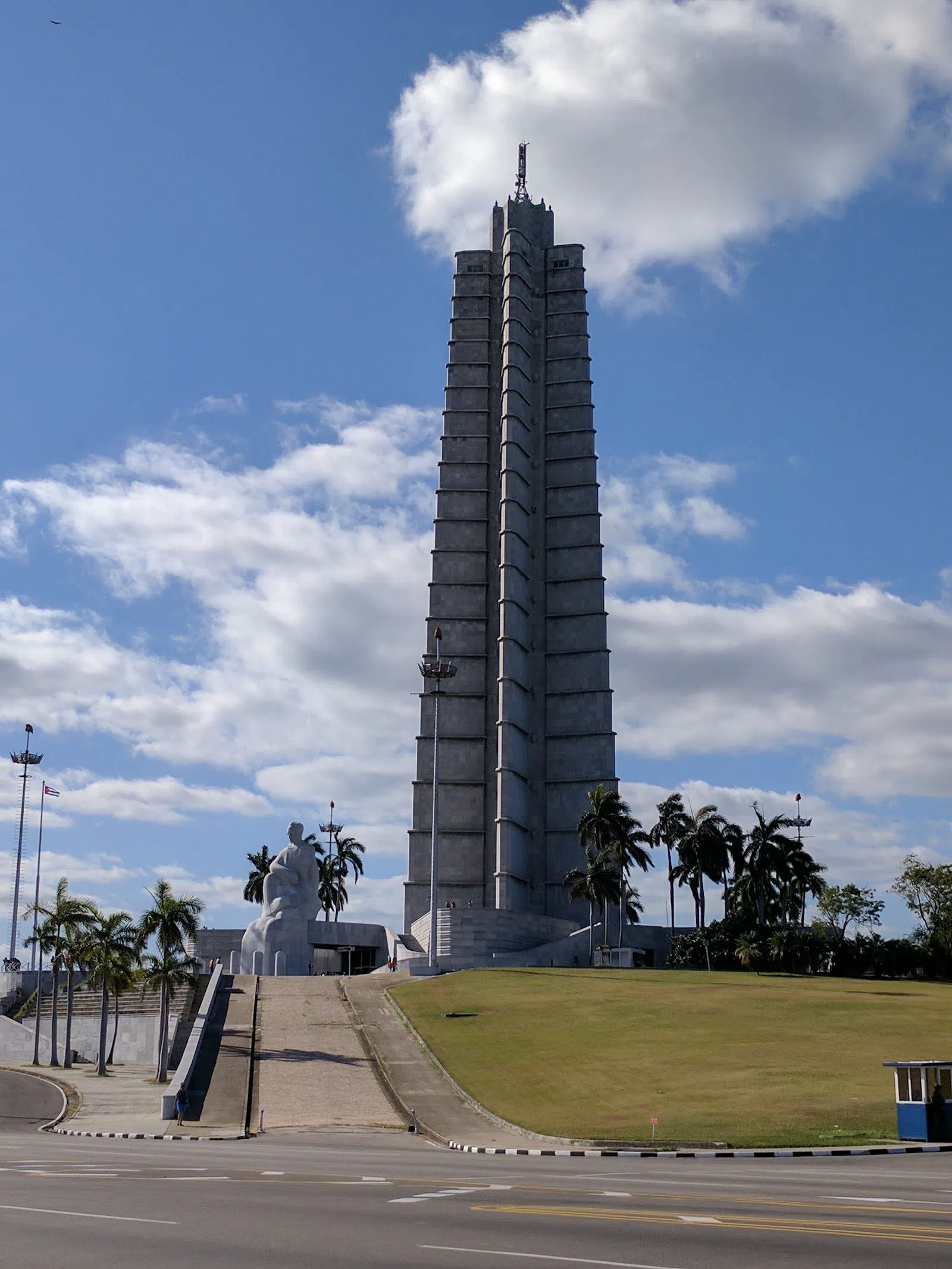
Memorial José Martí holds the south side and is the tallest structure in Havana: a 109 m star-shaped obelisk of grey marble on a six-pointed plan, above a 17 m seated Martí in white marble. A museum fills the base, and a lift runs up to slit windows at 129 m, the only place where the square's geometry and the murals read as one thing. The lift takes a handful of people at a time, so a large party gets split and queues in the lobby. Entry is $, Monday to Saturday from 9:30 a.m., closing between 4 p.m. and 5 p.m. It closes on Sundays and for official ceremonies.
Go up before you walk anything else. From the lookout you can see where the rest of the quarter sits.
规划您的Havana之旅
实时价格,来自我们的预订合作伙伴。
许多客房可免费取消。您预订时,我们可能会获得佣金。
The theatre and library on the square
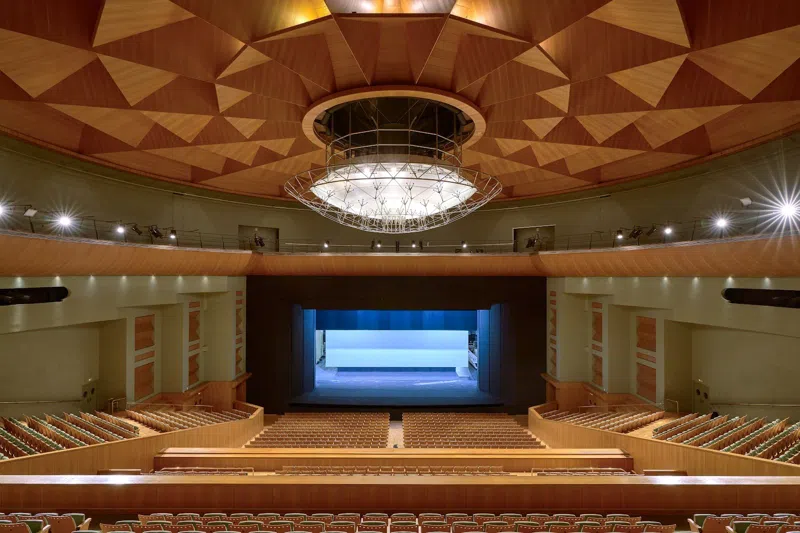
Teatro Nacional de Cuba takes the west side, two 1950s modernist boxes with a curved glass curtain wall and concrete fin brise-soleil, the memorial's marble star visible across the asphalt. The big Sala Avellaneda and the smaller Sala Covarrubias hold 2,500 seats between them, and the programme is active in 2026. Ballet Nacional de Cuba runs its seasons here, and the Alicia Alonso International Ballet Festival takes late October and November.
Programmes shift. Read the posted cartelera on the day you are in the square, then buy at the box office in cash. Seats are $$, and tour-operator blocks are ordinary business here.
Biblioteca Nacional de Cuba José Martí closes the frame on the east side, a severe pale stone 1950s block with a deep-set window grid and broad entrance steps. The marble reading rooms, with their green-shaded lamps and card catalogues still in use, need a reader's pass. The lobby and the exhibition hall do not, and both are free, Monday to Friday from 8:15 a.m. to 5 p.m. and Saturday until 4:15 p.m. Step inside for the exhibitions and the period interiors. Guided visits happen occasionally, by prior arrangement.

The 1.2 km walk to the Necrópolis de Cristóbal Colón
Necrópolis de Cristóbal Colón lies 1.2 km from the square and is the best thing to see in this part of the city, 56 hectares of open-air statuary over two million burials. You enter through a vast triple-arched Romanesque-Byzantine gate, crowned by a sculpted group of the Theological Virtues. Inside, a grid of white marble runs in avenues of Carrara angels toward the domed Capilla Central. The tomb of La Milagrosa is heaped with fresh flowers.
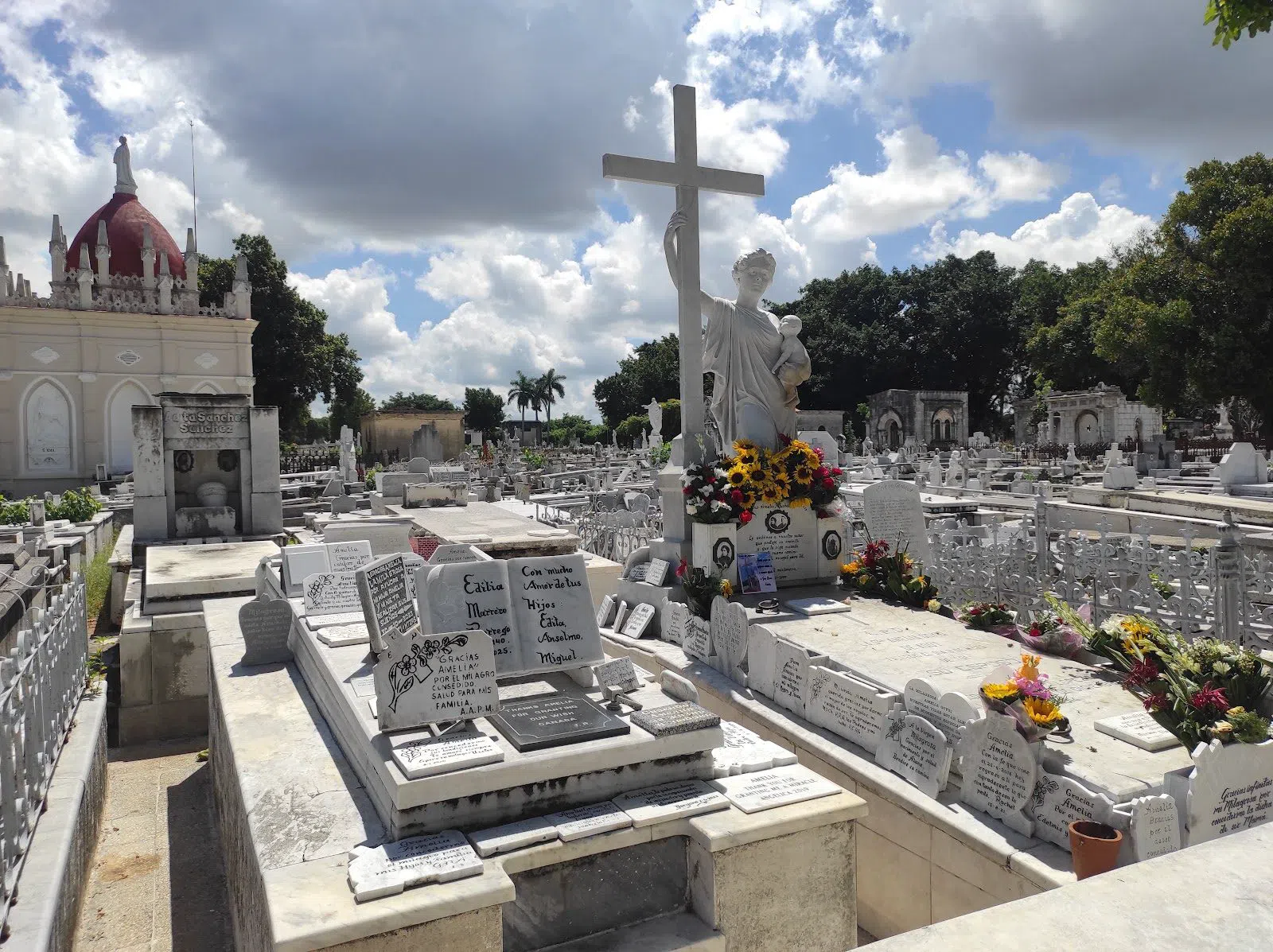
Official guides wait at the gate with maps, and tour companies run walks to a timetable. Foreigner entry plus a small guide and map fee is paid at the gate and comes to $. The gates open daily from 8 a.m. to 5 p.m. Walk it in the morning, and carry water and a hat.
Quinta de los Molinos
Quinta de los Molinos is the green relief on this walk, a 19th-century botanical estate gone overgrown behind a low wall. Royal palms stand over tunnels of bamboo. The ochre Máximo Gómez villa, fronted by a shaded colonnade, holds the museum rooms, and Cuba's first mariposario sits in the grounds, a mesh flight house with racks of chrysalises.

Entry is $ and it closes on Mondays. Hours drift between 7 a.m. to 7 p.m. and 9 a.m. to 5 p.m. Ask at the gate when you arrive, and expect a guided visit.
The university hill and the Museo Napoleónico
Universidad de La Habana was founded in 1728 and moved to this hill in 1902. Its 88-step escalinata is the best free viewpoint in the quarter, public and always open. At the top, Mario Korbel's bronze Alma Mater sits with her arms outstretched in front of a neoclassical colonnade, the limestone quadrangle and the Aula Magna behind her. Sit on the steps for a while. This is the set-piece of the district, and it asks nothing of you.
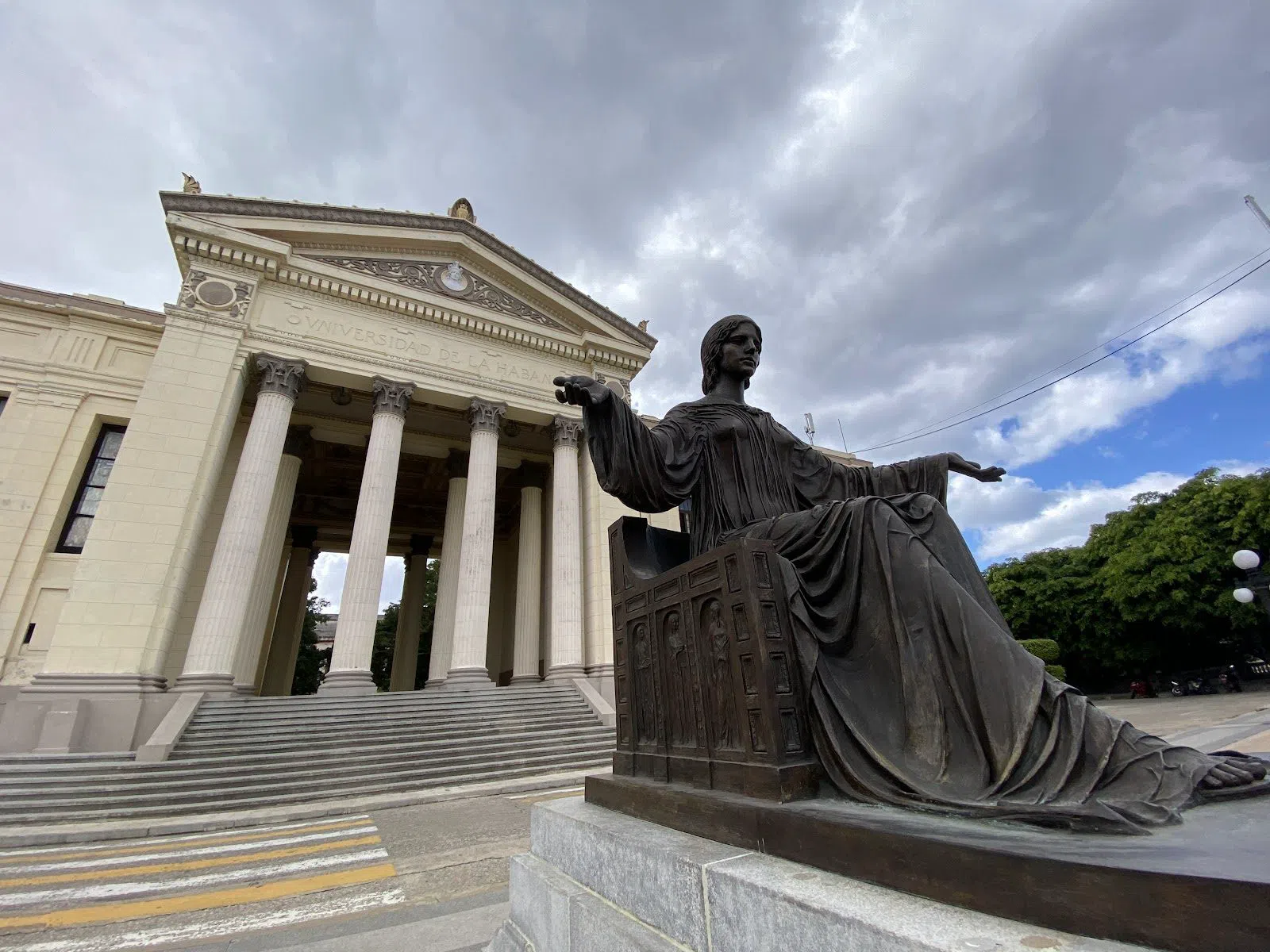
Two museums work the campus, the Montané anthropology collection and the Felipe Poey natural-history collection, both $ and both keeping short, unreliable hours. Access to campus interiors is sometimes refused without notice. Treat the steps as the reason you came.
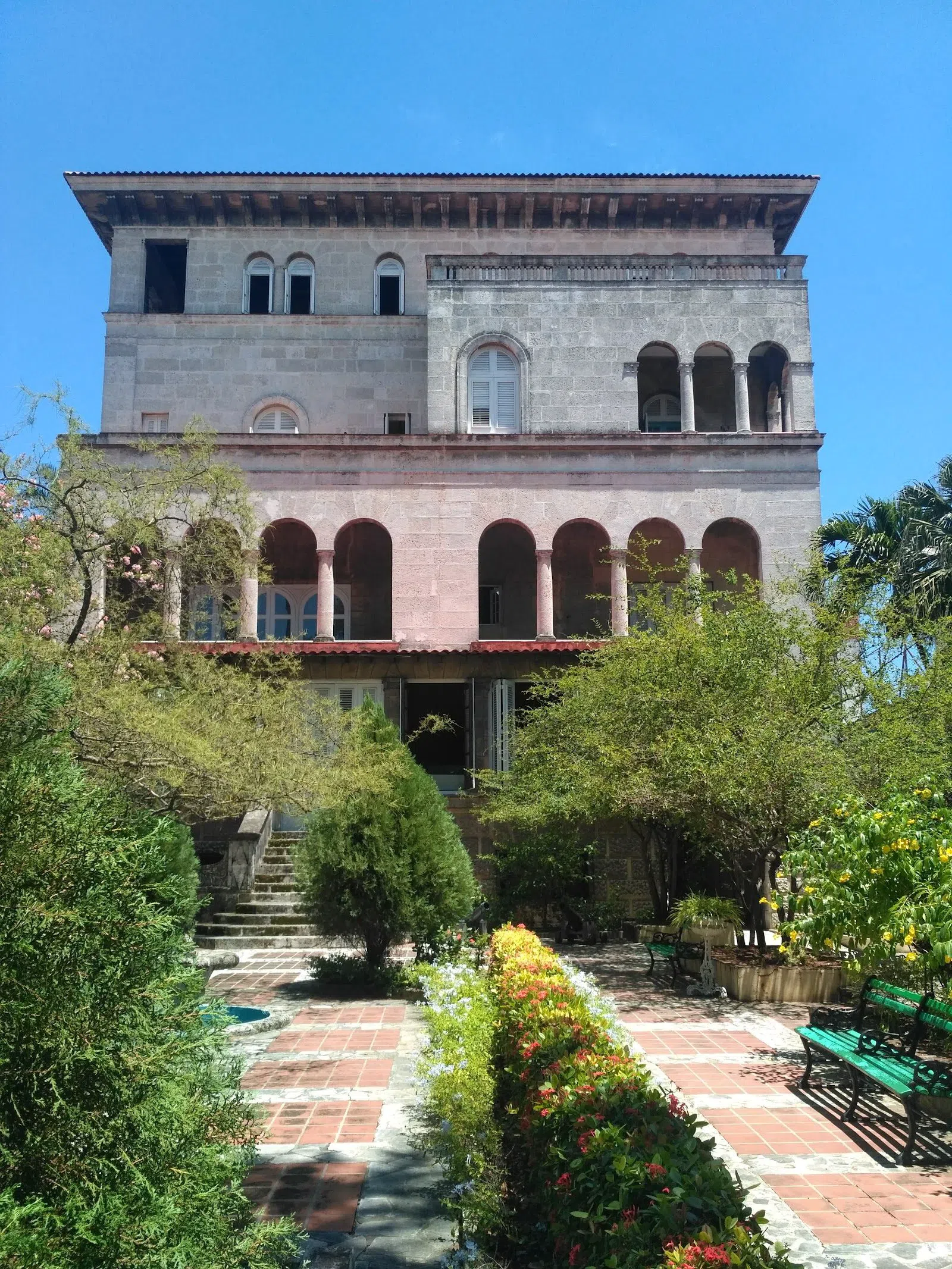
Museo Napoleónico stands beside the university in Dionisio Velasco's 1920s mansion, a four-storey Florentine Renaissance palazzo with a carved stone loggia and a tower. The collection runs to 7,000 pieces and is one of the richest of its kind: Napoleon's death mask by Antommarchi, his bicorne hat, his pistols, and a library of Sèvres under a coffered ceiling. The period rooms and their stairs are narrow, so visits move in guided batches of 10. It opens Tuesday to Saturday from 10 a.m. to 6 p.m., and it was running normally in August 2026 despite the blackouts. Entry is $.
Avenida de los Presidentes and the grill at El Idilio

Avenida de los Presidentes, which everyone calls Calle G, is the spine linking this quarter to the Malecón, free and open at any hour. Walk down the middle of it. The landscaped median runs under laurel and palm between republican mansions, with benches along the way. The colossal white marble monument to José Miguel Gómez closes the 29th Street end. Busts of Bolívar, Allende, Juárez and Torrijos stand on the median, and one plinth holds nothing but the bronze shoes left of Tomás Estrada Palma.
Monuments and benches are weathered and graffitied in places. This is the best feel for everyday Vedado life, and after dark the median fills with Havana teenagers.
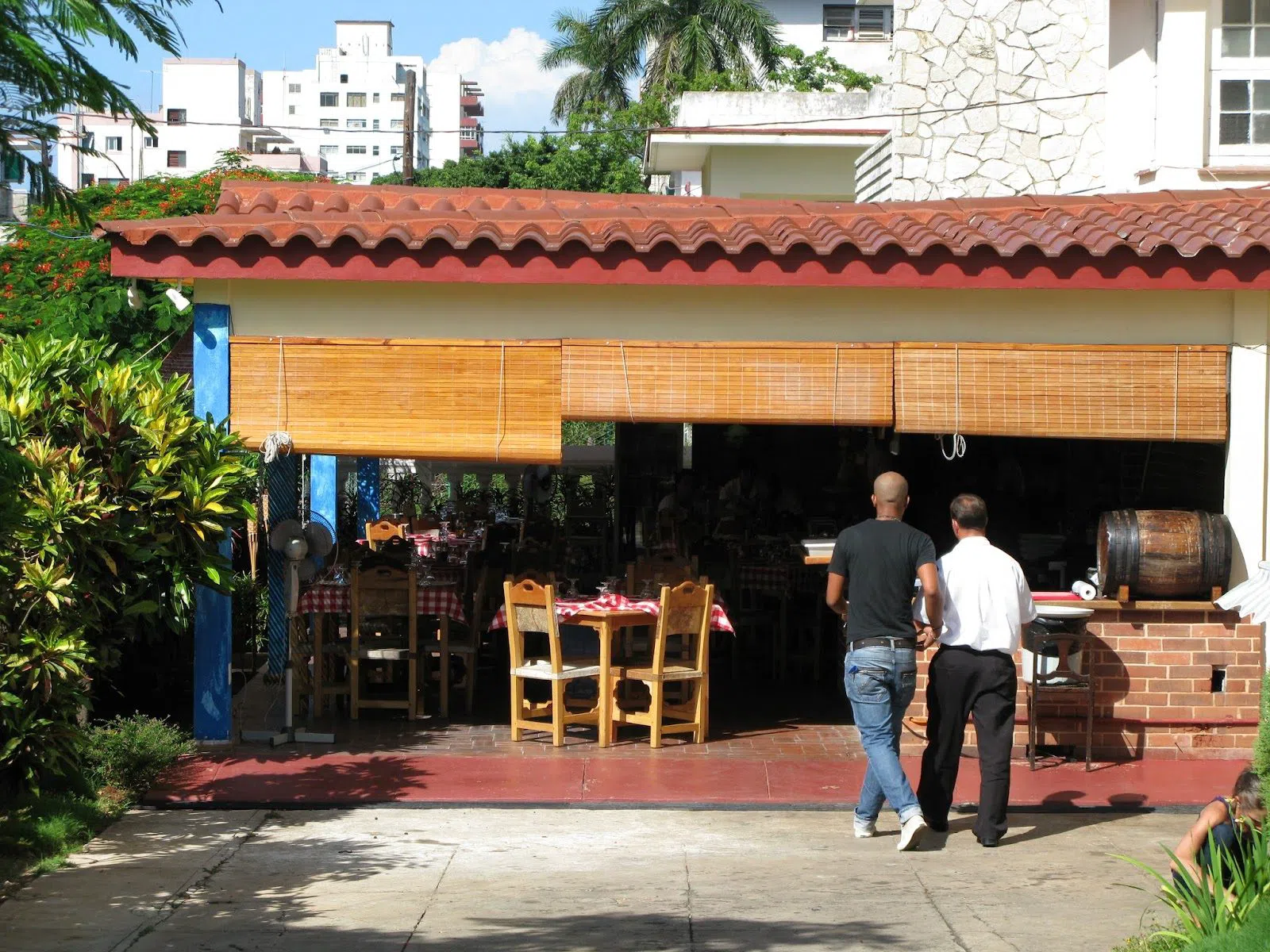
El Idilio holds a corner of Avenida de los Presidentes under a canvas awning and strung bulbs, the charcoal grill smoking at the back, plastic-and-wood tables spilling onto the pavement beneath the laurels. It cooks mixed land-and-sea parrilladas priced for two, for a loud crowd that leans local. Open daily from noon to midnight, $$. Midweek you can walk in without booking.
Ice cream at Coppelia
Heladería Coppelia (Vedado) is Mario Girona's 1966 flying-saucer pavilion, a concrete disc on spindly legs in its own tree-filled block, with stained-glass panels, curved ramps and serving bays, and queues snaking across the lawns. It was built for hundreds at a time, and queueing for it is a social ritual. Cubans wait in the peso lines, and visitors are usually steered to a faster hard-currency counter.
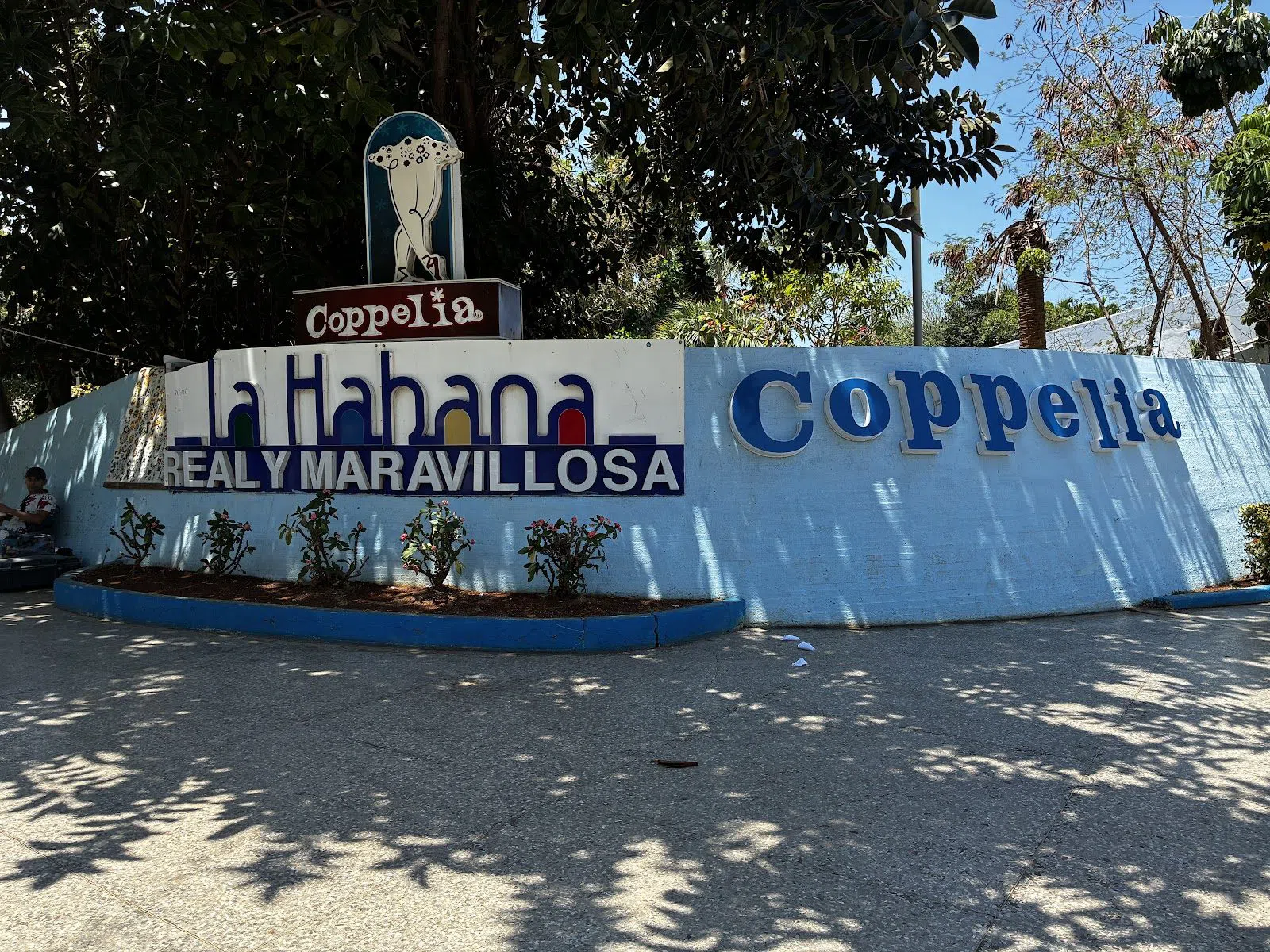
Treat it as a look-in. Coppelia shut for three weeks in early 2026 and reopened on 28 March with a single flavour, and supply has stayed erratic since. Entry to the counters is $.
The rooftop and the jazz cellar
El Cocinero (Vedado) is the best-known rooftop in the quarter, a converted peanut-oil factory with a tall red-brick chimney you climb by spiral iron stair. The terrace at the top is open air, with rattan furniture, string lights, ferns and Vedado rooftops beyond. Order the ceviche. Reserve by phone or on the site; walk-ins queue at peak. It is still trading in 2026, while the Fábrica de Arte Cubano next door has been shut to regular nights since June. Dinner is $$$.
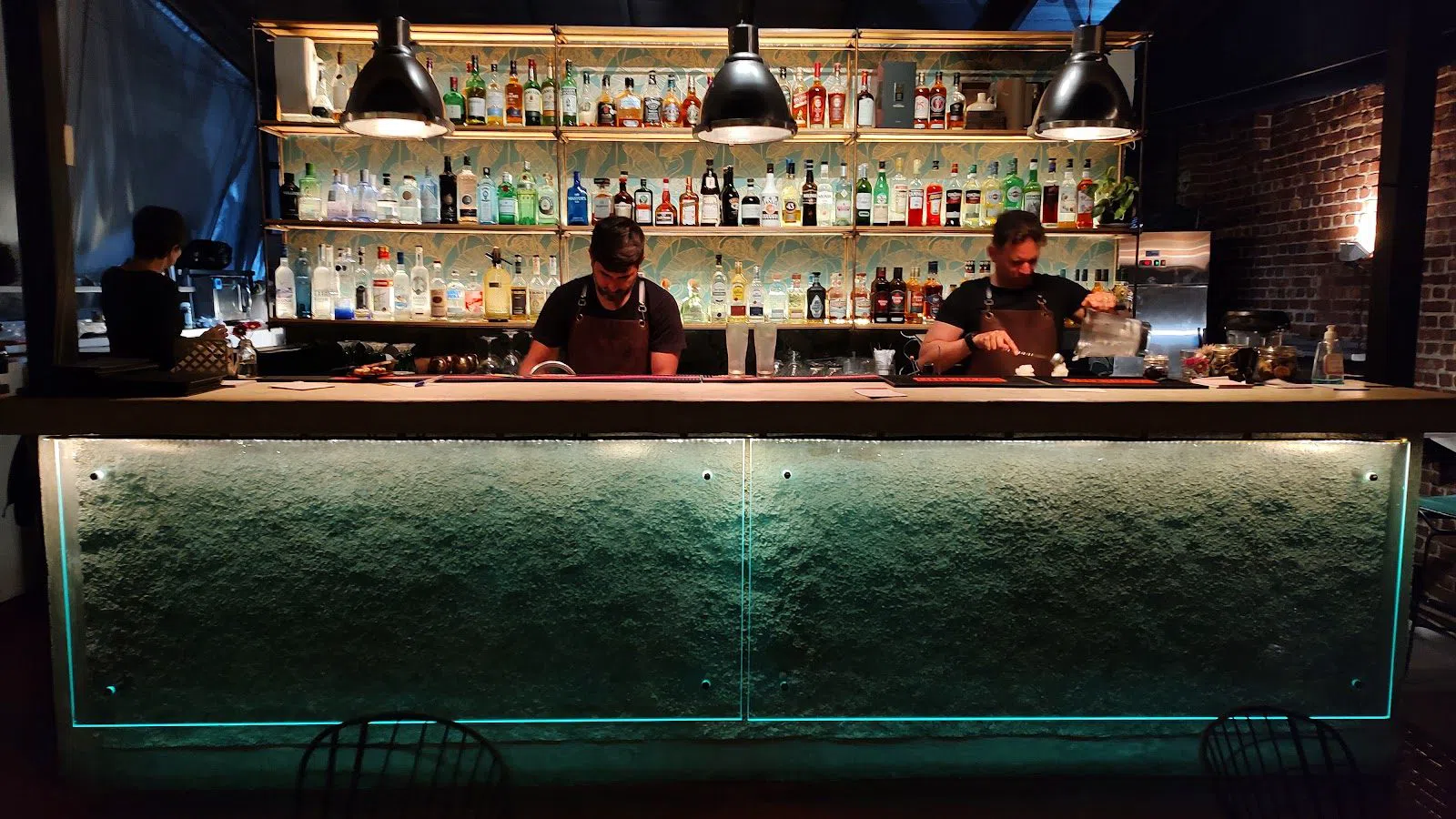
La Zorra y el Cuervo (Calle 23) is the late option, Havana's best-loved jazz basement, running 10 p.m. to 2 a.m. nightly. The door is a bright red British telephone box on the Calle 23 pavement, and the stairs drop into a low brick cellar with a tiny corner stage, exposed pipes and a bar packed shoulder to shoulder. The music is anything from bolero to hip hop. The cover charge at the door includes drinks, $$. The cellar is small, so get there at opening.

Where to stay
Hotel Habana Libre (corner of 23 and L) is the practical base for this quarter, a 25-storey 1958 slab built as a Hilton, with Amelia Peláez's blue-and-white ceramic mural across the porte-cochère and a long marble lobby behind. Fidel Castro ran his 1959 headquarters from the 24th floor. The 572 rooms, the conference space and standard group rates make it the main tour-group hotel here, $$$$, a 20-minute walk from the square and walkable to the university, Coppelia and the jazz clubs. The pool deck is part of the deal.
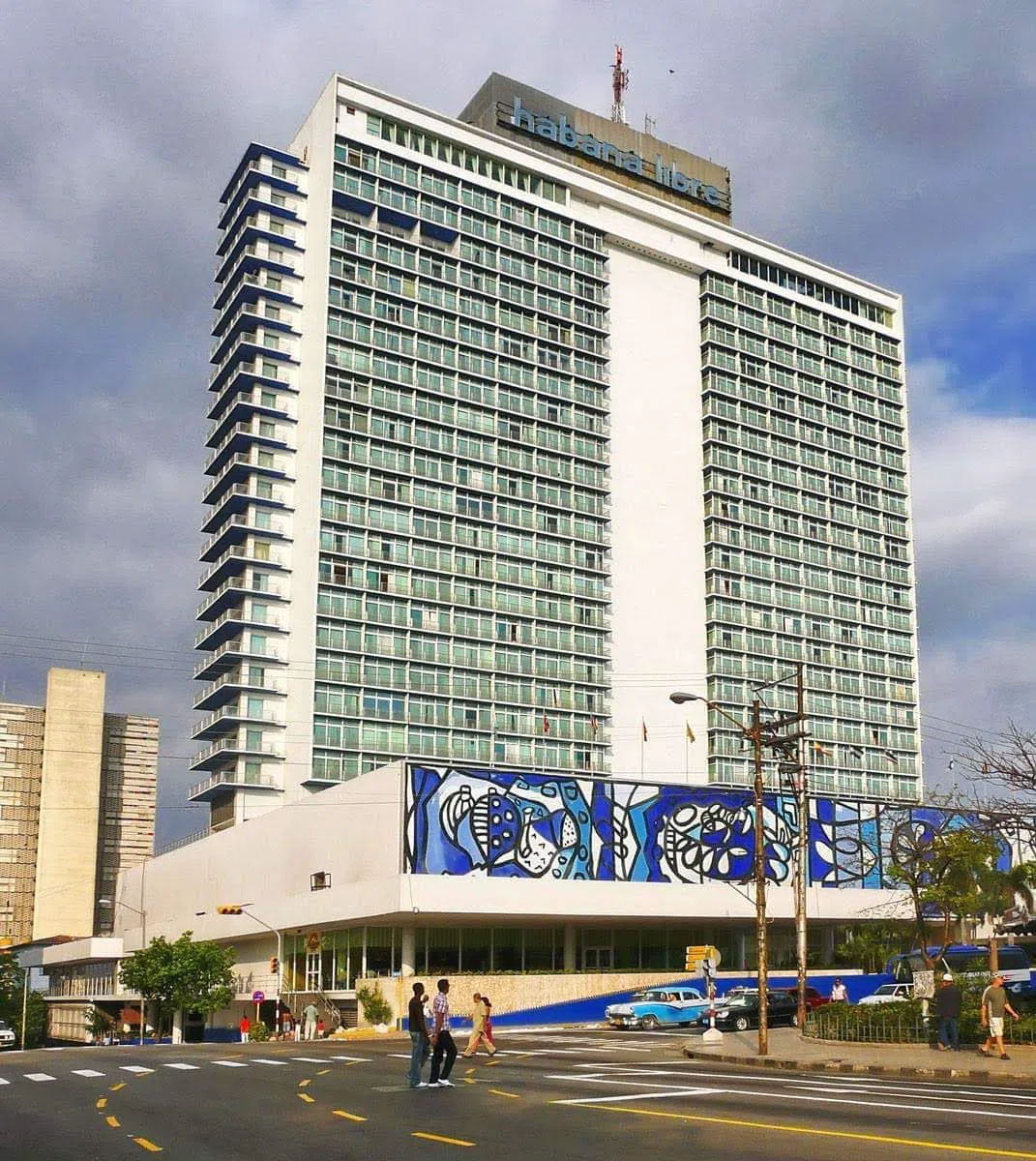
American travellers cannot legally stay here. The hotel sits on the US Cuba Prohibited Accommodations List.
Hours and booking
Sunday closes the memorial, the library and the Napoleonic museum; Monday closes Quinta de los Molinos and the Napoleonic museum. Reserve El Cocinero before you walk over, and read the Teatro Nacional's cartelera on the day.
See the Havana guide and the Havana hotel search.
出发之前
Is Plaza de la Revolución free to visit?
Yes. It is open public space, with no door policy and nothing to pay, and coach parties and classic-car convoys pull in all day. There is no shade at all, so come early or at golden hour.
Can you go up the José Martí memorial?
Yes. A lift runs up to slit windows at 129 m, above the 17 m seated Martí statue, and the museum is in the base. It opens Monday to Saturday from 9:30 a.m. and closes between 4 p.m. and 5 p.m.; it shuts on Sundays and during official ceremonies. Entry is $, and the lift holds only a handful of people at a time, so large parties queue in the lobby.
How far is the Necrópolis de Cristóbal Colón from the square?
It is 1.2 km away and open daily from 8 a.m. to 5 p.m. You pay foreigner entry plus a small guide and map fee at the gate, where the official guides wait. Bring water and a hat.
Where do you stay near Plaza de la Revolución?
Hotel Habana Libre, a 20-minute walk from the square, is the quarter's main tour-group hotel, with 572 rooms and standard group rates, and the university, Coppelia and the jazz clubs are all on foot from it. American travellers cannot legally stay there, since it is on the US Cuba Prohibited Accommodations List.
Is Coppelia open in 2026?
It shut for three weeks in early 2026 and reopened on 28 March with one flavour, and supply has stayed erratic, so treat it as a look-in. Cubans queue in the peso lines, and staff usually steer visitors to a faster hard-currency counter.
What is on at the Teatro Nacional de Cuba?
Ballet Nacional de Cuba runs seasons here, and the Alicia Alonso International Ballet Festival falls in late October and November. Programmes shift, so read the posted cartelera on the day and buy at the box office in cash.